













Carboxylate-assisted ruthenium(ii)-catalyzed C–H activations of monodentate amides with conjugated alkenes
Literature Information
Publication Date
2015-06-18
DOI
10.1039/C5QO00167F
Impact Factor
5.281
Authors
Jie Li, Lutz Ackermann
View Original
Abstract
Carboxylate assistance enabled efficient and chemoselective ruthenium(II)-catalyzed hydroarylations of α,β-unsaturated ketones via C–H activation on monodentate benzamides. Furthermore, the versatile ruthenium(II) catalyst set the stage for oxidative C–H functionalization on acetanilides, furnishing diversely decorated quinolines in a step-economical fashion.
Related Literature
Protonated triplet-excited flavin resolved by step-scan FTIR spectroscopy: implications for photosensory LOV domains
Christian Thöing, Anna Pfeifer, Sergej Kakorin, Tilman Kottke
2013-03-01
Paper
DOI: 10.1039/C3CP43881C
Bioelectrocatalytic oxidation of glucose with antibiotic channel-containing liposomes
Shuji Fujita, Ryuhei Matsumoto, Kenichi Ogawa, Hideki Sakai, Akihiro Maesaka, Yuichi Tokita, Seiya Tsujimura, Osamu Shirai, Kenji Kano
2013-01-22
Communication
DOI: 10.1039/C3CP43998D
What stabilizes close arginine pairing in proteins?
Dongseon Lee, Juyong Lee, Chaok Seok
2013-02-20
Paper
DOI: 10.1039/C3CP00160A
Synthesis and application of FePt/CNTs nanocomposite as a sensor and novel amideligand as a mediator for simultaneous determination of glutathione, nicotinamide adenine dinucleotide and tryptophan
R. Moradi, S. A. Sebt, Roya Sadeghi, F. Karimi, A. Bahari, H. Arabi
2013-02-07
Paper
DOI: 10.1039/C3CP00033H
Hydrogen storage by physisorption on dodecahydro-closo-dodecaboranes
Julia Haug, Guntram Rauhut, Emil Roduner
2013-02-19
Paper
DOI: 10.1039/C3CP43848A
Impact of surface steps and oxygen pre-coverage on the adsorption of methylamine on gold
April D. Lewoczko, Joseph J. BelBruno
2013-02-11
Paper
DOI: 10.1039/C3CP44471F
Structure of pH sensitive self-assembled amphiphilic di- and triblock copolyelectrolytes: micelles, aggregates and transient networks
Céline Charbonneau, Christophe Chassenieux, Olivier Colombani, Taco Nicolai
2013-01-11
Paper
DOI: 10.1039/C3CP43653E
Electrostatic spectral tuning mechanism of the green fluorescent protein
Ville R. I. Kaila, Robert Send, Dage Sundholm
2013-02-11
Communication
DOI: 10.1039/C3CP00058C
2nd TYC workshop on energy materials
F. Baletto, J. Blumberger, A. Shluger
2013-02-20
Editorial
DOI: 10.1039/C2CP90214A
You might also like
Compound Q&A
How should waste containing (6-Bromo-2-naphthyl)oxy](dimethyl)(2-methyl-2-propanyl)silane be handled?
Waste containing (6-Bromo-2-naphthyl)oxy](dimethyl)(2-methyl-2-propanyl)silane (...
100751-65-3[(6-Bromo-2-naphthyl...
Compound Q&A
How is 7-Fluoro-4-isoquinolinecarboxylic acid (CAS: 1841081-40-0) typically synthesized?
7-Fluoro-4-isoquinolinecarboxylic acid can be synthesized via a multi-step proce...
1841081-40-07-Fluoro-4-isoquinol...
Compound Q&A
What are the physical and chemical properties of 2,3,5,6-Tetrabromothieno[3,2-b]thiophene (CAS: 124638-53-5)?
2,3,5,6-Tetrabromothieno[3,2-b]thiophene is a crystalline compound with a high m...
124638-53-52,3,5,6-Tetrabromoth...
Compound Q&A
Is 1-[4-(Benzylamino)-7,8-dihydro-5H-pyrano[4,3-d]pyrimidin-2-yl]-2-methyl-1H-indole-4-carboxamide (CAS: 1542705-92-9) safe?
1-[4-(Benzylamino)-7,8-dihydro-5H-pyrano[4,3-d]pyrimidin-2-yl]-2-methyl-1H-indol...
1542705-92-91-[4-(Benzylamino)-7...
Compound Q&A
What is the market or research trend for imidazo[5,1-d]-1,2,3,5-tetrazine-8-carboxylic acid, 3,4-dihydro-3-methyl-4-oxo- (CAS: 113942-30-6)?
The market for imidazo[5,1-d]-1,2,3,5-tetrazine-8-carboxylic acid, 3,4-dihydro-3...
113942-30-6Imidazo[5,1-d]-1,2,3...
Compound Q&A
What is 3-(Triisopropylsilyl)propiolaldehyde (CAS: 163271-80-5)?
3-(Triisopropylsilyl)propiolaldehyde is a synthetic organic compound with the CA...
163271-80-53-(Triisopropylsilyl...
Compound Q&A
What regulatory guidelines apply to 6-Nitro-2H-1,4-benzoxazin-3(4H)-one (CAS: 81721-87-1)?
6-Nitro-2H-1,4-benzoxazin-3(4H)-one (CAS: 81721-87-1) is subject to various regu...
81721-87-16-Nitro-2H-1,4-benzo...
Compound Q&A
How should waste containing (3-Fluorophenyl)(4-{[(2-methyl-2-propanyl)oxy]carbonyl}-1-piperazinyl)acetic acid (CAS: 885272-91-3) be handled?
Waste containing (3-Fluorophenyl)(4-{[(2-methyl-2-propanyl)oxy]carbonyl}-1-piper...
885272-91-3(3-Fluorophenyl)(4-{...
Compound Q&A
What are the physical and chemical properties of N,N'-4,4'-Biphenyldiyldiisonicotinamide (CAS: 55119-40-9)?
N,N'-4,4'-Biphenyldiyldiisonicotinamide is a white crystalline solid with a mole...
55119-40-9N,N'-4,4'-Biphenyldi...
Compound Q&A
What industries use 6-Bromo-8-fluoro-2-quinazolinol (CAS: 1036756-15-6)?
6-Bromo-8-fluoro-2-quinazolinol is primarily used in the pharmaceutical industry...
1036756-15-66-Bromo-8-fluoro-2-q...
Source Journal
Organic Chemistry Frontiers

CiteScore:
7.8
Self-citation Rate:
8.7%
Articles per Year:
724
Organic Chemistry Frontiers publishes high-quality research from across organic chemistry. Emphases are placed on studies that make significant contributions to the field of organic chemistry by reporting either new or significantly improved protocols or methodologies. Topics include, but are not limited to the following: Organic synthesis Development of synthetic methodologies Catalysis Natural products Functional organic materials Supramolecular and macromolecular chemistry Physical and computational organic chemistry
Recommended Compounds
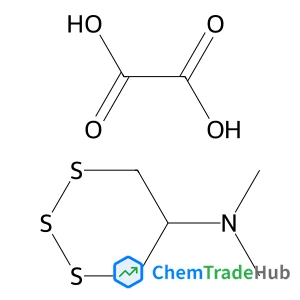
Oxalic acid compound with cyclohexylsulfamothioic O-acid (11)
CAS Number:
31895-22-4
Molecular Formula:
C7H13NO4S3

Recommended Suppliers





Disclaimer
This page provides academic journal information for reference and research purposes only. We are not affiliated with any journal publishers and do not handle publication submissions. For publication-related inquiries, please contact the respective journal publishers directly.
If you notice any inaccuracies in the information displayed, please contact us at support@chemtradehub.com. We will promptly review and address your concerns.