


Catalysis by electrons and holes: formal potential scales and preparative organic electrochemistry
Literature Information
Publication Date
2015-05-07
DOI
10.1039/C5QO00075K
Impact Factor
5.281
Authors
Oana R. Luca, Jeffrey L. Gustafson, Sean M. Maddox, Aidan Q. Fenwick, Daryl C. Smith
View Original
Abstract
The present review surveys current chemical understanding of catalysis by addition and removal of an electron. As an overarching theme of this type of catalysis, we introduce the role of redox scales in oxidation and reduction reactions as a direct analogue of pKa scales in acid/base catalysis. Each scale is helpful in determining the type of reactivity to be expected. In addition, we describe several means of generating electrons and holes via chemical reactions, plasmonic resonance, radiolytic, photochemical and electrochemical methods. We specifically draw parallels between the now well-established fields of photoredox catalysis and chemical opportunities made available by electrochemical methods. We highlight accessible potential ranges for a series of electrochemical solvents and provide a discussion on experimental design, pitfalls and some remaining challenges in preparative organic electrochemistry.
Recommended Journals

Journal of Asian Natural Products Research

Main Group Chemistry

Bioorganic & Medicinal Chemistry

Biocatalysis and Biotransformation

Polycyclic Aromatic Compounds

Topics in Catalysis

Bioorganic & Medicinal Chemistry Letters

Herald of the Russian Academy of Sciences

Atomization and Sprays

Journal of the Indian Institute of Science
Related Literature
A novel three-component coupling reaction of aryne, CN derivatives, and acrylonitrile
Yangang Wu, Wenbo Cai, Lulu Yu, Junbiao Chang, Chuanjun Song
2023-11-13
Research Article
DOI: 10.1039/D3QO01454A
Porphyrin- and Bodipy-helicene conjugates: syntheses, separation of enantiomers and chiroptical properties
Vincent Silber, Marion Jean, Nicolas Vanthuyne, Natalia Del Rio, Paola Matozzo, Jeanne Crassous, Romain Ruppert
2023-10-25
Paper
DOI: 10.1039/D3OB01459B
Pulsed electrolysis: enhancing primary benzylic C(sp3)–H nucleophilic fluorination
Alexander P. Atkins, Atul K. Chaturvedi, Joseph A. Tate, Alastair J. J. Lennox
2023-12-13
Research Article
DOI: 10.1039/D3QO01865B
Iridium/nickel dual catalyzed hydroacylation of hetero-bicyclic alkenes under visible-light irradiation
Li Meng, Chunhui Yang, Jun Dong, Wanliu Wen, Jingchao Chen
2023-11-14
Research Article
DOI: 10.1039/D3QO01377D
Syntheses of 3H-1,2,4-triazol-3-ones by copper-promoted oxidative N–N bond formation of amidines with isocyanates
Baihui Liang, Xiangya Cai, JingYu Liu, Jie Huang, Youzhi Chen, Haiyin Deng, Quanquan Zhou, Tianxiang Chen, Xiuwen Chen, Zhongzhi Zhu
2023-11-21
Research Article
DOI: 10.1039/D3QO01565C
Asymmetric total synthesis of montanine-type amaryllidaceae alkaloids
Fang Wang, Xiaohan Xu, Yangtian Yan, Jiayang Zhang, Yang Yang
2023-12-03
Research Article
DOI: 10.1039/D3QO01835K
Electrochemical synthesis of CN-substituted imidazo[1,5-a]pyridines via a cascade process using NH4SCN as both an electrolyte and a non-trivial cyanating agent
Olga M. Mulina, Vera A. Vil’
2023-11-21
Research Article
DOI: 10.1039/D3QO01690K
Visible light photoredox-catalyzed deoxydisulfuration of alcohols
Chaoyang Liu, Xiaoman Lin, Delie An
2023-11-22
Research Article
DOI: 10.1039/D3QO01742G
Cu-catalyzed arylation of S-tosyl peptides with arylboronic acids
Junjie Ying, Jingrong Huang, Chenguang Liu, Fa-Jie Chen
2023-11-08
Research Article
DOI: 10.1039/D3QO01534C
Access to disulfides through ligand-controlled nickel-catalyzed dithiosulfonate and alkyl halides
Wang Chen, Xin-yu Liu, Yi-Fan Jiang, Weidong Rao, Shu-Su Shen, Zhao-Ying Yang, Shun-Yi Wang
2023-12-19
Research Article
DOI: 10.1039/D3QO01868G
You might also like
Compound Q&A
How should 2-Methylbenzene-1,4-diamine dihydrochloride (CAS: 615-45-2) be stored?
2-Methylbenzene-1,4-diamine dihydrochloride (CAS: 615-45-2) should be stored in ...
615-45-22-Methylbenzene-1,4-...
Compound Q&A
Is (1S,4S)-2,5-Diazabicyclo[2.2.1]heptane dihydrobromide (CAS: 132747-20-7) safe?
(1S,4S)-2,5-Diazabicyclo[2.2.1]heptane dihydrobromide is generally considered sa...
132747-20-7(1S,4S)-2,5-Diazabic...
Compound Q&A
What industries use (6-Chloropyridazin-3-YL)methanamine (CAS: 871826-15-2)?
(6-Chloropyridazin-3-YL)methanamine finds applications in the pharmaceutical ind...
871826-15-2(6-Chloropyridazin-3...
Compound Q&A
What are the main uses of 2-Fluoro-3-methylphenol (CAS: 77772-72-6)?
2-Fluoro-3-methylphenol is primarily used in the synthesis of pharmaceuticals, p...
77772-72-62-Fluoro-3-methylphe...
Compound Q&A
What precautions should be taken when handling 3-Methoxy-4-nitrobenzonitrile (CAS: 177476-75-4)?
When handling 3-Methoxy-4-nitrobenzonitrile, it is important to wear appropriate...
177476-75-43-Methoxy-4-nitroben...
Compound Q&A
What precautions should be taken when handling 1,3-Oxazolo[4,5-b]pyridine-2(3H)-thione (CAS: 211949-57-4)?
When handling 1,3-Oxazolo[4,5-b]pyridine-2(3H)-thione (CAS: 211949-57-4), it is ...
211949-57-4[1,3]Oxazolo[4,5-b]p...
Compound Q&A
What regulatory guidelines apply to 4-Ethynylbenzamide (CAS: 90347-86-7)?
4-Ethynylbenzamide (CAS: 90347-86-7) falls under various regulatory guidelines i...
90347-86-74-Ethynylbenzamide
Compound Q&A
What are the main uses of 3-(2-Ethylphenyl)-2-thioxo-4-imidazolidinone (CAS: 186822-57-1)?
3-(2-Ethylphenyl)-2-thioxo-4-imidazolidinone is primarily used as an intermediat...
186822-57-13-(2-Ethylphenyl)-2-...
Compound Q&A
What is (2-Fluoro-6-methoxyphenyl)acetic acid (CAS: 500912-19-6)?
(2-Fluoro-6-methoxyphenyl)acetic acid, also known as 4-fluoro-3-methoxybenzoic a...
500912-19-6(2-Fluoro-6-methoxyp...
Compound Q&A
What is the market or research trend for 2-[4-(Hydroxymethyl)phenoxy]ethanol (CAS: 102196-18-9)?
Market trends for 2-[4-(Hydroxymethyl)phenoxy]ethanol (CAS: 102196-18-9) indicat...
102196-18-92-[4-(Hydroxymethyl)...
Source Journal
Organic Chemistry Frontiers

CiteScore:
7.8
Self-citation Rate:
8.7%
Articles per Year:
724
Organic Chemistry Frontiers publishes high-quality research from across organic chemistry. Emphases are placed on studies that make significant contributions to the field of organic chemistry by reporting either new or significantly improved protocols or methodologies. Topics include, but are not limited to the following: Organic synthesis Development of synthetic methodologies Catalysis Natural products Functional organic materials Supramolecular and macromolecular chemistry Physical and computational organic chemistry
Recommended Compounds
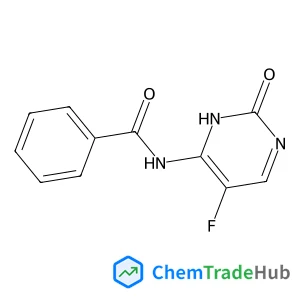
N-(5-Fluoro-2-oxo-2,3-dihydro-4-pyrimidinyl)benzamide
CAS Number:
10357-07-0
Molecular Formula:
C11H8FN3O2

Recommended Suppliers







Disclaimer
This page provides academic journal information for reference and research purposes only. We are not affiliated with any journal publishers and do not handle publication submissions. For publication-related inquiries, please contact the respective journal publishers directly.
If you notice any inaccuracies in the information displayed, please contact us at support@chemtradehub.com. We will promptly review and address your concerns.