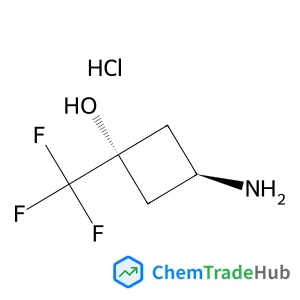
cis-3-Amino-1-(trifluoromethyl)cyclobutanol hydrochloride (1:1)
CAS Number:
1408075-16-0
Molecular Formula:
C5H9ClF3NO
Xi Jiang, Jinjie Lu, Feng Zhou, Zhengbiao Zhang, Xiangqiang Pan, Wei Zhang, Yong Wang, Nianchen Zhou, Xiulin Zhu
The synthesis and properties of macrocyclic structures have attracted continuous attention since the cyclic topology effect may offer unique performances. As is well-known, the properties of polymers/oligomers are dependent on molecular weight (chain length). Therefore, the precise synthesis of molecularly-defined macrocycles is undoubtedly a prerequisite to precisely explore the structure–property relationship. Herein, a series of molecularly-defined macrocycles with main-chain azobenzene-containing oligomers (sixth generation) is prepared efficiently, based on click chemistry and a stepwise chain-growth strategy. The cyclic topology and chain-length effects on the properties/functions of the cyclic oligomers are investigated in detail by comparison with the linear analogues. This work undoubtedly illustrates an example for demonstrating properties/functions dependent on both cyclic topology and chain-length, allowing in-depth insight into the structure–property relationship. Moreover, the current modular strategy can be extended to various molecularly-defined macrocycles with a wide variety of functions.
T. T. Nguyen, A. Wynckel, M. Fere, L. Van-Gulick, V. Untereiner, P. Birembaut
DOI: 10.1039/C5AN00821B
Chang Liu, J. C. Yves Le Blanc, Jefry Shields, John S. Janiszewski, Christian Ieritano, Gene F. Ye, Gillian F. Hawes, W. Scott Hopkins, J. Larry Campbell
DOI: 10.1039/C5AN00842E
Sandilya V. B. Garimella, Yehia. M. Ibrahim, Ian K. Webb, Andreas B. Ipsen, Tsung-Chi Chen, Aleksey V. Tolmachev, Erin S. Baker, Gordon A. Anderson, Richard D. Smith
DOI: 10.1039/C5AN00844A
Julie Docherty, Samuel Mabbott, W. Ewen Smith, John Reglinski, Karen Faulds, Christine Davidson, Duncan Graham
DOI: 10.1039/C5AN01525A
Michael E. Pettit, Brett Harper, Matthew R. Brantley, Touradj Solouki
DOI: 10.1039/C5AN00940E
Eric Moore
DOI: 10.1039/C2AN35236B
Xuan Zhang, Wenjuan Zhou, Zhiqin Yuan, Chao Lu
DOI: 10.1039/C5AN01665G
M. Groessl, S. Graf, R. Knochenmuss
DOI: 10.1039/C5AN00838G
4-Nitrophenyl phosphate disodium salt hexahydrate is primarily used as a substra...
2-(Trifluoromethyl)-1,3-oxazole-4-carboxylic Acid (CAS: 1060816-01-4) is widely ...
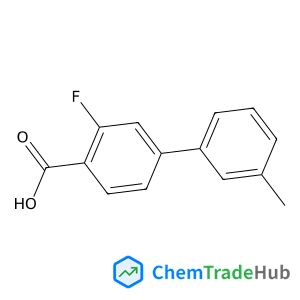
2-Fluoro-4-biphenylcarboxylic acid should be stored in a cool, dry place at room...
Prednisolone-21-Carboxylic Acid is primarily used in the pharmaceutical industry...
4-(Hydrazinomethyl)-1,2,3-benzenetriol (CAS: 3614-72-0) should be stored in a co...
4-Amino-1-methyl-1H-pyrazole-5-carboxylic acid hydrochloride (CAS: 92534-70-8) i...
Dehydropachymic acid (CAS: 77012-31-8) is regulated by various agencies. It fall...
The market and research trends for 6-[(2,2-Dimethylpropanoyl)amino]nicotinic aci...
1,10-Phenanthroline-2,9-dicarbaldehyde should be stored in a cool, dry place awa...
5-Carbamoyl-11-oxo-10,11-dihydro-5H-dibenzo[b,f]azepin-10-yl acetate can be synt...

Polymer Chemistry welcomes submissions in all areas of polymer science that have a strong focus on macromolecular chemistry. Manuscripts may cover a broad range of fields, yet no direct application focus is required.

![[(1S,2S,3R,4S,7R,9S,10S,12R,15S)-4,12-Diacetyloxy-15-[(2R,3S)-3-benzamido-3-phenyl-2-(2,2,2-trichloroethoxycarbonyloxy)propanoyl]oxy-1,9-dihydroxy-10,14,17,17-tetramethyl-11-oxo-6-oxatetracyclo[11.3.1.03,10.04,7]heptadec-13-en-2-yl] benzoate structure](https://static.chemtradehub.com/structs/100/100431-55-8-7104.webp "[(1S,2S,3R,4S,7R,9S,10S,12R,15S)-4,12-Diacetyloxy-15-[(2R,3S)-3-benzamido-3-phenyl-2-(2,2,2-trichloroethoxycarbonyloxy)propanoyl]oxy-1,9-dihydroxy-10,14,17,17-tetramethyl-11-oxo-6-oxatetracyclo[11.3.1.03,10.04,7]heptadec-13-en-2-yl] benzoate structure")