












![(4-Methyl-1H-benzo[d]imidazol-2-yl)methanamine structure](https://static.chemtradehub.com/structs/933/933756-31-1-7b0b.webp "(4-Methyl-1H-benzo[d]imidazol-2-yl)methanamine structure")
Fluorinated bottlebrush polymers based on poly(trifluoroethyl methacrylate): synthesis and characterization
Literature Information
Publication Date
2015-11-25
DOI
10.1039/C5PY01514F
Impact Factor
5.582
Authors
Yuewen Xu, Weiyu Wang, Yangyang Wang, Jiahua Zhu, David Uhrig, Xinyi Lu, Jimmy W. Mays, Kunlun Hong
View Original
Abstract
Bottlebrush polymers are densely grafted polymers with long side-chains attached to a linear polymeric backbone. Their unusual structures endow them with a number of unique and potentially useful properties in solution, in thin films, and in bulk. Despite the many studies of bottlebrushes that have been reported, the structure–property relationships for this class of materials are still poorly understood. In this contribution, we report the synthesis and characterization of fluorinated bottlebrush polymers based on poly(2,2,2-trifluoroethyl methacrylate). The synthesis was achieved by atom transfer radical polymerization (ATRP) using an α-bromoisobutyryl bromide functionalized norbornene initiator, followed by ring-opening metathesis polymerization (ROMP) using a third generation Grubbs’ catalyst (G3). Rheological characterization revealed that the bottlebrush polymer backbones remained unentangled as indicated by the lack of a rubbery plateau in the modulus. By tuning the size of the backbone of the bottlebrush polymers, near-spherical and elongated particles representing single brush molecular morphologies were observed in a good solvent as evidenced by TEM imaging, suggesting a semi-flexible nature of their backbones in dilute solutions. Thin films of bottlebrush polymers exhibited noticeably higher static water contact angles as compared to that of the macromonomer reaching the hydrophobic regime, where little differences were observed between each bottlebrush polymer. Further investigation by AFM revealed that the surface of the macromonomer film was relatively smooth; in contrast, the surface of bottlebrush polymers displayed certain degrees of nano-scale roughness (Rq = 0.8–2.4 nm). The enhanced hydrophobicity of these bottlebrushes likely results from the preferential enrichment of the fluorine containing end groups at the periphery of the molecules and the film surface due to the side chain crowding effect. Our results provide key information towards the design of architecturally tailored fluorinated polymers with desirable properties.
Related Literature
Enzymatically crosslinked alginate hydrogels with improved adhesion properties‡
Junxia Hou, Chong Li, Ying Guan, Yongjun Zhang, X. X. Zhu
2015-01-13
Paper
DOI: 10.1039/C4PY01757A
Regulation of the self-assembly morphology of azobenzene-bearing double hydrophobic block copolymers in aqueous solution by shifting the dynamic host–guest complexation
Zai-Zai Tong, Rui-Yang Wang, Jie Huang, Jun-Ting Xu, Zhi-Qiang Fan
2015-01-16
Paper
DOI: 10.1039/C5PY00004A
Nitrogen-enriched hierarchically porous carbon materials fabricated by graphene aerogel templated Schiff-base chemistry for high performance electrochemical capacitors
Xiangwen Yang, Xiaodong Zhuang, Yinjuan Huang, Jianzhong Jiang, Hao Tian, Dongqing Wu, Fan Zhang, Yiyong Mai
2014-11-13
Paper
DOI: 10.1039/C4PY01408A
A photo-stable and electrochemically stable poly(dumbbell-shaped molecules) for blue electrophosphorescent host materials
Lu Li, Tian-Qing Hu, Cheng-Rong Yin, Ling-Hai Xie, Yang Yang, Chao Wang, Jin-Yi Lin, Ming-Dong Yi, Shang-Hui Ye
2014-11-05
Paper
DOI: 10.1039/C4PY01016G
Asymmetric neutral, cationic and anionic PEO-based double-hydrophilic block copolymers (DHBCs): synthesis and reversible micellization triggered by temperature or pH
Jérôme Warnant, Corine Gérardin, Patrick Lacroix-Desmazes
2014-11-18
Paper
DOI: 10.1039/C4PY01502A
Unraveling the forming mechanism of hierarchical helices via self-assembly of an achiral supramolecular polymer brush
Shanshan Liu, Qibin Chen, Yujie Sheng, Jincheng Shen, Changjun Peng, Honglai Liu
2015-03-23
Paper
DOI: 10.1039/C5PY00163C
In vitro and in vivo evaluation of PEG-conjugated ketal-based chitosan micelles as pH-sensitive carriers
Daquan Chen, Jingfang Sun
2014-12-04
Paper
DOI: 10.1039/C4PY01639D
You might also like
Compound Q&A
What are the main uses of (5-Sulfamoyl-3-pyridinyl)boronic acid (CAS: 951233-61-7)?
(5-Sulfamoyl-3-pyridinyl)boronic acid is primarily used in chemical synthesis, p...
951233-61-7(5-Sulfamoyl-3-pyrid...
Compound Q&A
How is Benzyl 2-methyl-2-(methylsulfonyl)-4-pentenoate (CAS: 1942858-50-5) typically synthesized?
Benzyl 2-methyl-2-(methylsulfonyl)-4-pentenoate is typically synthesized via est...
1942858-50-5Benzyl 2-methyl-2-(m...
Compound Q&A
What precautions should be taken when handling 8-Fluoroquinolin-6-ol (CAS: 209353-22-0)?
When handling 8-Fluoroquinolin-6-ol (CAS: 209353-22-0), it is important to use p...
209353-22-08-Fluoroquinolin-6-o...
Compound Q&A
What are the physical and chemical properties of 1,3-Dibromo-5-(2-methyl-2-propanyl)benzene (CAS: 129316-09-2)?
1,3-Dibromo-5-(2-methyl-2-propanyl)benzene (CAS: 129316-09-2) is a crystalline c...
129316-09-21,3-Dibromo-5-(2-met...
Compound Q&A
What industries use Ethyl 7-chloro-4-oxo-1-(1,3-thiazol-2-yl)-1,4-dihydro-1,8-naphthyridine-3-carboxylate (CAS: 174726-87-5)?
Ethyl 7-chloro-4-oxo-1-(1,3-thiazol-2-yl)-1,4-dihydro-1,8-naphthyridine-3-carbox...
174726-87-5Ethyl 7-chloro-4-oxo...
Compound Q&A
What precautions should be taken when handling Delta-7-Avenasterol (CAS: 23290-26-8)?
When handling Delta-7-Avenasterol (CAS: 23290-26-8), it is important to wear app...
23290-26-8Delta-7-Avenasterol
Compound Q&A
What precautions should be taken when handling N-({(5R)-3-[3-Fluoro-4-(4-morpholinyl)phenyl]-2-oxo-1,3-oxazolidin-5-yl}methyl)acetamide (CAS: 872992-20-6)?
Proper handling involves the use of personal protective equipment such as gloves...
872992-20-6N-({(5R)-3-[3-Fluoro...
Compound Q&A
What precautions should be taken when handling 2-Methyl-2-proanyl 4-[(2-aminophenyl)amino]-1-piperidinecarboxylate (CAS: 79099-00-6)?
When handling 2-Methyl-2-proanyl 4-[(2-aminophenyl)amino]-1-piperidinecarboxylat...
79099-00-62-Methyl-2-propanyl ...
Compound Q&A
What is N-Methyl-4-chlorobenzylamine hydrochloride (CAS: 65542-24-7)?
N-Methyl-4-chlorobenzylamine hydrochloride (CAS: 65542-24-7) is a organic compou...
65542-24-7N-Methyl-4-chloroben...
Compound Q&A
Is [2-(Dodecyloxy)ethoxy]acetic acid (CAS: 27306-90-7) safe?
[2-(Dodecyloxy)ethoxy]acetic acid (CAS: 27306-90-7) is generally considered safe...
27306-90-7[2-(Dodecyloxy)ethox...
Source Journal
Polymer Chemistry

CiteScore:
8.6
Self-citation Rate:
7.3%
Articles per Year:
457
Polymer Chemistry welcomes submissions in all areas of polymer science that have a strong focus on macromolecular chemistry. Manuscripts may cover a broad range of fields, yet no direct application focus is required.
Recommended Compounds
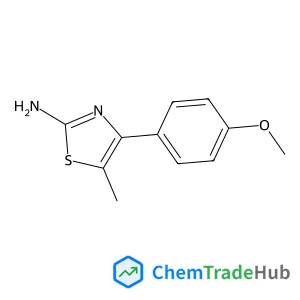
4-(4-Methoxyphenyl)-5-methyl-1,3-thiazol-2-amine
CAS Number:
105512-88-7
Molecular Formula:
C11H12N2OS
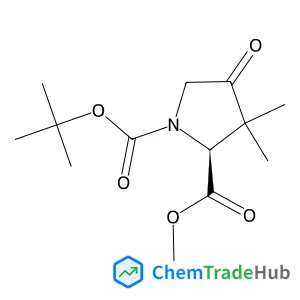
2-Methyl 1-(2-methyl-2-propanyl) (2S)-3,3-dimethyl-4-oxo-1,2-pyrrolidinedicarboxylate
CAS Number:
478698-30-5
Molecular Formula:
C13H21NO5
Recommended Suppliers




Disclaimer
This page provides academic journal information for reference and research purposes only. We are not affiliated with any journal publishers and do not handle publication submissions. For publication-related inquiries, please contact the respective journal publishers directly.
If you notice any inaccuracies in the information displayed, please contact us at support@chemtradehub.com. We will promptly review and address your concerns.