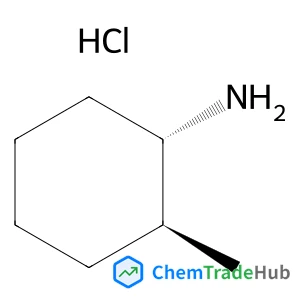
(1R,2R)-2-Methylcyclohexanamine hydrochloride (1:1)
CAS Number:
39558-31-1
Molecular Formula:
C7H16ClN
Lu Li, Tian-Qing Hu, Cheng-Rong Yin, Ling-Hai Xie, Yang Yang, Chao Wang, Jin-Yi Lin, Ming-Dong Yi, Shang-Hui Ye
Hindrance functionalization at the reactive sites makes π-stacked polymers highly stable for applications related to organic electroluminescent devices. Herein, a novel stable polymer host material, poly(3,6-bis(9-phenylfluoren-9-yl)-9-vinyl-carbazole) (PVKDPF), has been designed and synthesized from dumbbell-shaped monomers by introducing two bulky 9-phenylfluorenyl moieties (PFMs) to the carbazole units. PVKDPF, with a high triplet energy level of 2.85 eV, shows outstanding thermal and morphological stability. Interestingly, as compared to its precursor, poly(N-vinylcarbazole) (PVK), PFMs-capped PVKDPF shows enhanced anti-photoaging against UV light, along with a much better electrochemical stability, without any obvious change even after repeated scanning during cyclic voltammetry. The prototype blue phosphorescent polymer light-emitting devices (PhPLEDs) using PVKDPF as the host and doped with the FIrpic guest exhibit excellent blue electroluminescence with the Commission Internationale de L'Eclairage (CIE) coordinate of (0.184, 0.381), luminous efficiency corresponding to 17.3 cd A−1, and power efficiency corresponding to 9.0 lm W−1. Hindrance-capped dumbbell-shaped polymers are robust polymer semiconductors that can be used in mechatronic devices.
Karolina Kasperkiewicz, Jan-Willem G. Bos, Andrew N. Fitch, Kosmas Prassides, Serena Margadonna
DOI: 10.1039/B815830D
Aaron E. Engelhart, Thomas Hellman Morton, Nicholas V. Hud
DOI: 10.1039/B818409G
Na Tian, Zhi-You Zhou, Shi-Gang Sun
DOI: 10.1039/B819751B
Yong Yan, Xiang Lin, Sihai Yang, Alexander J. Blake, Anne Dailly, Neil R. Champness, Peter Hubberstey, Martin Schröder
DOI: 10.1039/B900013E
Marco Bella, Daniele M. Scarpino Schietroma, Pier Paolo Cusella, Tecla Gasperi, Valerio Visca
DOI: 10.1039/B816550E
Junfeng Xiang, Yalin Tang, Guangzhi Xu
DOI: 10.1039/B820101C
Serena Silvi, Edwin C. Constable, Catherine E. Housecroft, Jonathon E. Beves, Emma L. Dunphy, Massimiliano Tomasulo, Françisco M. Raymo, Alberto Credi
DOI: 10.1039/B900712A
Dae-Wi Yoon, Dustin E. Gross, Vincent M. Lynch, Chang-Hee Lee, Philip C. Bennett, Jonathan L. Sessler
DOI: 10.1039/B818077F
Aggelos Philippidis, Thomas Bakas, Pantelis N. Trikalitis
DOI: 10.1039/B821859E
(5-Sulfamoyl-3-pyridinyl)boronic acid is primarily used in chemical synthesis, p...
Benzyl 2-methyl-2-(methylsulfonyl)-4-pentenoate is typically synthesized via est...
When handling 8-Fluoroquinolin-6-ol (CAS: 209353-22-0), it is important to use p...
1,3-Dibromo-5-(2-methyl-2-propanyl)benzene (CAS: 129316-09-2) is a crystalline c...
Ethyl 7-chloro-4-oxo-1-(1,3-thiazol-2-yl)-1,4-dihydro-1,8-naphthyridine-3-carbox...
When handling Delta-7-Avenasterol (CAS: 23290-26-8), it is important to wear app...
Proper handling involves the use of personal protective equipment such as gloves...
When handling 2-Methyl-2-proanyl 4-[(2-aminophenyl)amino]-1-piperidinecarboxylat...
N-Methyl-4-chlorobenzylamine hydrochloride (CAS: 65542-24-7) is a organic compou...
[2-(Dodecyloxy)ethoxy]acetic acid (CAS: 27306-90-7) is generally considered safe...

Polymer Chemistry welcomes submissions in all areas of polymer science that have a strong focus on macromolecular chemistry. Manuscripts may cover a broad range of fields, yet no direct application focus is required.