












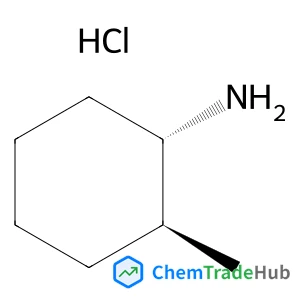
(1R,2R)-2-Methylcyclohexanamine hydrochloride (1:1)
CAS Number:
39558-31-1
Molecular Formula:
C7H16ClN
Zai-Zai Tong, Rui-Yang Wang, Jie Huang, Jun-Ting Xu, Zhi-Qiang Fan
The double hydrophobic azobenzene-containing diblock copolymers, namely, poly(L-lactide)-b-poly[6-(4-(4-methoxyphenylazo)phenoxy)hexyl methacrylate] (PLLA-b-PMMAZO), were successfully prepared by sequential atom transfer radical polymerization (ATRP) and ring opening polymerization. These block copolymers (BCPs) can self-assemble into various morphologies in aqueous solution via host–guest interaction between the azobenzene (azo) groups and methyl-β-cyclodextrin (β-CD). The complexation equilibrium between azo and β-CD can be shifted by changing the length of the hydrophobic PLLA block, the micelle concentration or the β-CD/azo molar ratio; thus the micellar morphology and the size of the PLLA-b-PMMAZO/β-CD complexes are altered. A vesicle-to-sphere-to-entrapped vesicle transition was observed at β-CD/azo = 1 as the PLLA block length increases. In addition, a large β-CD/azo ratio or higher micelle concentration leads to a vesicle-like morphology, while entrapped vesicles tend to be formed at a smaller β-CD/azo ratio or a lower micelle concentration. It is found that prolongation of the UV irradiation time can also induce a vesicle-to-sphere-to-entrapped vesicle transition of the micellar morphology. Such a transition is reversible upon irradiation of visible light. In summary, the self-assembly behavior of PLLA-b-PMMAZO/β-CD complexes can be readily regulated by different methods. Moreover, the complexation between the azo groups and β-CD is inhomogeneous, which is responsible for the formation of entrapped vesicles and the microphase separation in the core of the spherical micelles and entrapped vesicles.
Joel Y. Y. Loh
DOI: 10.1039/D0CP03217D
Martin Schäfer, David Budina, Karl-Michael Weitzel
DOI: 10.1039/C9CP05194E
Brielle L. Van Orman, Hoi-Ting Wu, Ryan R. Julian
DOI: 10.1039/D0CP04111D
Yi Gao
DOI: 10.1039/C9CP05562B
Amlan J. Kalita, Shahnaz S. Rohman, Chayanika Kashyap, Sabnam S. Ullah, Ankur K. Guha
DOI: 10.1039/D0CP03436C
DOI: 10.1039/D0CP04035E
Zi-Chen Lu, Rui Chen, Ju-Guang Han
DOI: 10.1039/C9CP90284H
Maja Feierabend, Samuel Brem, Ermin Malic
DOI: 10.1039/C9CP05763C
Miguel Rivera-Torrente, Matthias Filez, Christian Schneider, Ewout C. van der Feltz, Konrad Wolkersdörfer, Dereje H. Taffa, Michael Wark, Roland A. Fischer, Bert M. Weckhuysen
DOI: 10.1039/C9CP05082E
DOI: 10.1039/C9CP05044B
(5-Sulfamoyl-3-pyridinyl)boronic acid is primarily used in chemical synthesis, p...
Benzyl 2-methyl-2-(methylsulfonyl)-4-pentenoate is typically synthesized via est...
When handling 8-Fluoroquinolin-6-ol (CAS: 209353-22-0), it is important to use p...
1,3-Dibromo-5-(2-methyl-2-propanyl)benzene (CAS: 129316-09-2) is a crystalline c...
Ethyl 7-chloro-4-oxo-1-(1,3-thiazol-2-yl)-1,4-dihydro-1,8-naphthyridine-3-carbox...
When handling Delta-7-Avenasterol (CAS: 23290-26-8), it is important to wear app...
Proper handling involves the use of personal protective equipment such as gloves...
When handling 2-Methyl-2-proanyl 4-[(2-aminophenyl)amino]-1-piperidinecarboxylat...
N-Methyl-4-chlorobenzylamine hydrochloride (CAS: 65542-24-7) is a organic compou...
[2-(Dodecyloxy)ethoxy]acetic acid (CAS: 27306-90-7) is generally considered safe...

Polymer Chemistry welcomes submissions in all areas of polymer science that have a strong focus on macromolecular chemistry. Manuscripts may cover a broad range of fields, yet no direct application focus is required.
![2-Methyl-2-propanyl 4-oxo-3,9-diazabicyclo[4.2.1]nonane-9-carboxylate structure](https://static.chemtradehub.com/structs/131/1312456-05-5-9a15.webp "2-Methyl-2-propanyl 4-oxo-3,9-diazabicyclo[4.2.1]nonane-9-carboxylate structure")
![2-Azaspiro[4.5]decane-3,8-dione structure](https://static.chemtradehub.com/structs/914/914780-96-4-e94b.webp "2-Azaspiro[4.5]decane-3,8-dione structure")





