












![5-Chloropyrrolo[2,1-f][1,2,4]triazin-4(3H)-one structure](https://static.chemtradehub.com/structs/888/888720-60-3-4f7c.webp "5-Chloropyrrolo[2,1-f][1,2,4]triazin-4(3H)-one structure")
In vitro and in vivo evaluation of PEG-conjugated ketal-based chitosan micelles as pH-sensitive carriers
Literature Information
Publication Date
2014-12-04
DOI
10.1039/C4PY01639D
Impact Factor
5.582
Authors
Daquan Chen, Jingfang Sun
View Original
Abstract
A novel ketal-based PEGylated chitosan conjugate, mPEG-Chitosan-Ketal (PCK), as a pH-sensitive drug carrier for cancer therapy, was found to have lower toxicity and to form self-assembled micelles for curcumin (Cur) delivery in our previous study. In this study, the PCK micelle encapsulated curcumin (Cur-PCK) with higher entrapment efficiency (EE) was prepared with an enhanced method with a smaller diameter of about 50 nm. An in vitro cellular uptake test indicated that the PCK micelles could be good intracellular carriers for anti-tumor drugs. Curcumin was incorporated into the PCK micelles not only as a therapeutic drug but also a fluorescence marker. Ex vivo imaging showed that the fluorescence signals of the PCK micelles in the liver and spleen were much higher from 5 h to 12 h, indicating that the PCK micelles improved blood circulation time and caused selective accumulation in the liver and spleen. Pharmacokinetic studies indicated that the PCK micelles had a long circulating time. In tissue distribution, the Cur-PCK micelles decreased in the following order: spleen > liver > heart > lung. In an in vivo anti-tumor efficacy assay, Cur-PCK micelles showed the most effective tumor inhibiting ability. These findings have shed some light on the PCK polymer as a potential pH-sensitive carrier of curcumin.
Related Literature
Ultrafast pump–probe spectroscopy of neutral FenOm clusters (n, m < 16)
2020-10-16
Paper
DOI: 10.1039/D0CP03889J
Artificial neural networks for the prediction of solvation energies based on experimental and computational data
Jiyoung Yang, Matthias J. Knape, Oliver Burkert, Virginia Mazzini, Alexander Jung, Vincent S. J. Craig, Ramón Alain Miranda-Quintana, Erich Bluhmki
2020-10-12
Paper
DOI: 10.1039/D0CP03701J
Strain effects in core–shell PtCo nanoparticles: a comparison of experimental observations and computational modelling
Tom Ellaby, Aakash Varambhia, Xiaonan Luo, Ludovic Briquet, Misbah Sarwar, Dogan Ozkaya, David Thompsett, Peter D. Nellist, Chris-Kriton Skylaris
2020-10-20
Paper
DOI: 10.1039/D0CP04318D
A statistical thermodynamics view of electron density polarisation: application to chemical selectivity
Frédéric Guégan, Vincent Tognetti, Jorge I. Martínez-Araya, Henry Chermette, Lynda Merzoud, Alejandro Toro-Labbé, Christophe Morell
2020-09-21
Paper
DOI: 10.1039/D0CP03228J
Conformational topography of tris(2-methylbutyl) phosphate and the influence of methyl branching at the non-hyperconjugative carbon on the conformational landscape: insights from matrix isolation infrared spectroscopy and DFT computations
Subramee Sarkar, Swaroop Chandra, B. Suryaprasad, N. Ramanathan, K. Sundararajan, A. Suresh
2020-10-05
Paper
DOI: 10.1039/D0CP03403G
Structure–thermodynamics relationship of schoepite from first-principles
Philippe F. Weck, Carlos F. Jové-Colón, Eunja Kim
2019-09-24
Paper
DOI: 10.1039/C9CP04117F
Pd/Pt embedded CN monolayers as efficient catalysts for CO oxidation
Yong-Chao Rao, Xiang-Mei Duan
2019-10-23
Paper
DOI: 10.1039/C9CP04636D
A2AgCrCl6 (A = Li, Na, K, Rb, Cs) halide double perovskites: a transition metal-based semiconducting material series with appreciable optical characteristics
2020-08-31
Paper
DOI: 10.1039/D0CP01896A
Protonation structure of the photosynthetic water oxidizing complex in the S0 state as revealed by normal mode analysis using quantum mechanics/molecular mechanics calculations
Masao Yamamoto, Shin Nakamura, Takumi Noguchi
2020-10-15
Paper
DOI: 10.1039/D0CP04079G
Theoretical research on the oxidation mechanism of doped carbon based catalysts for oxygen reduction reaction
Na Yang, Lanlan Peng, Li Li, Jing Li, Zidong Wei
2019-11-05
Paper
DOI: 10.1039/C9CP04691G
You might also like
Compound Q&A
What are the main uses of (5-Sulfamoyl-3-pyridinyl)boronic acid (CAS: 951233-61-7)?
(5-Sulfamoyl-3-pyridinyl)boronic acid is primarily used in chemical synthesis, p...
951233-61-7(5-Sulfamoyl-3-pyrid...
Compound Q&A
How is Benzyl 2-methyl-2-(methylsulfonyl)-4-pentenoate (CAS: 1942858-50-5) typically synthesized?
Benzyl 2-methyl-2-(methylsulfonyl)-4-pentenoate is typically synthesized via est...
1942858-50-5Benzyl 2-methyl-2-(m...
Compound Q&A
What precautions should be taken when handling 8-Fluoroquinolin-6-ol (CAS: 209353-22-0)?
When handling 8-Fluoroquinolin-6-ol (CAS: 209353-22-0), it is important to use p...
209353-22-08-Fluoroquinolin-6-o...
Compound Q&A
What are the physical and chemical properties of 1,3-Dibromo-5-(2-methyl-2-propanyl)benzene (CAS: 129316-09-2)?
1,3-Dibromo-5-(2-methyl-2-propanyl)benzene (CAS: 129316-09-2) is a crystalline c...
129316-09-21,3-Dibromo-5-(2-met...
Compound Q&A
What industries use Ethyl 7-chloro-4-oxo-1-(1,3-thiazol-2-yl)-1,4-dihydro-1,8-naphthyridine-3-carboxylate (CAS: 174726-87-5)?
Ethyl 7-chloro-4-oxo-1-(1,3-thiazol-2-yl)-1,4-dihydro-1,8-naphthyridine-3-carbox...
174726-87-5Ethyl 7-chloro-4-oxo...
Compound Q&A
What precautions should be taken when handling Delta-7-Avenasterol (CAS: 23290-26-8)?
When handling Delta-7-Avenasterol (CAS: 23290-26-8), it is important to wear app...
23290-26-8Delta-7-Avenasterol
Compound Q&A
What precautions should be taken when handling N-({(5R)-3-[3-Fluoro-4-(4-morpholinyl)phenyl]-2-oxo-1,3-oxazolidin-5-yl}methyl)acetamide (CAS: 872992-20-6)?
Proper handling involves the use of personal protective equipment such as gloves...
872992-20-6N-({(5R)-3-[3-Fluoro...
Compound Q&A
What precautions should be taken when handling 2-Methyl-2-proanyl 4-[(2-aminophenyl)amino]-1-piperidinecarboxylate (CAS: 79099-00-6)?
When handling 2-Methyl-2-proanyl 4-[(2-aminophenyl)amino]-1-piperidinecarboxylat...
79099-00-62-Methyl-2-propanyl ...
Compound Q&A
What is N-Methyl-4-chlorobenzylamine hydrochloride (CAS: 65542-24-7)?
N-Methyl-4-chlorobenzylamine hydrochloride (CAS: 65542-24-7) is a organic compou...
65542-24-7N-Methyl-4-chloroben...
Compound Q&A
Is [2-(Dodecyloxy)ethoxy]acetic acid (CAS: 27306-90-7) safe?
[2-(Dodecyloxy)ethoxy]acetic acid (CAS: 27306-90-7) is generally considered safe...
27306-90-7[2-(Dodecyloxy)ethox...
Source Journal
Polymer Chemistry

CiteScore:
8.6
Self-citation Rate:
7.3%
Articles per Year:
457
Polymer Chemistry welcomes submissions in all areas of polymer science that have a strong focus on macromolecular chemistry. Manuscripts may cover a broad range of fields, yet no direct application focus is required.
Recommended Compounds
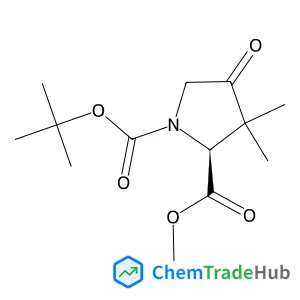
2-Methyl 1-(2-methyl-2-propanyl) (2S)-3,3-dimethyl-4-oxo-1,2-pyrrolidinedicarboxylate
CAS Number:
478698-30-5
Molecular Formula:
C13H21NO5
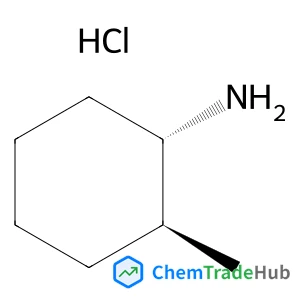
(1R,2R)-2-Methylcyclohexanamine hydrochloride (1:1)
CAS Number:
39558-31-1
Molecular Formula:
C7H16ClN
Recommended Suppliers







Disclaimer
This page provides academic journal information for reference and research purposes only. We are not affiliated with any journal publishers and do not handle publication submissions. For publication-related inquiries, please contact the respective journal publishers directly.
If you notice any inaccuracies in the information displayed, please contact us at support@chemtradehub.com. We will promptly review and address your concerns.