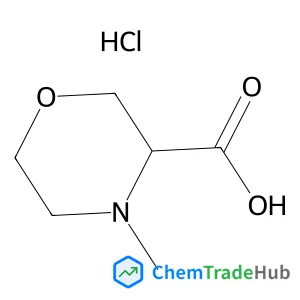
4-Methyl-3-morpholinecarboxylic acid hydrochloride (1:1)
CAS Number:
1240518-90-4
Molecular Formula:
C6H12ClNO3
T. J. White
The ability to program the local mechanical response of liquid crystalline polymer networks has been shown to generate complex mechanical responses. A facile two-step method to synthesize these anisotropic materials to realize either reversible or irreversible shape change behavior is reported. The first reaction is the addition of a nematic diacrylate to a primary amine to build macromers within a liquid crystal alignment cell. Subsequently, these macromers are crosslinked to trap the order of the liquid crystal into a crosslinked film. In unaligned samples, mechanical reorientation of the nematic director is used to isothermally program shapes at room temperature that can be recovered on heating. Under a load, the mechanically aligned materials exhibit tensile actuation behavior comparable to human skeletal muscle in stroke and specific work capacity. We also report spatially aligned films that reversibly morph from flat to a complex 3D shape with tunable strain from 3% to 55%.
Marcus Wegmann, Michael Henkel, Thorsten Bach
DOI: 10.1039/C8OB01025K
Yasuhiro Kubota, Masato Nakazawa, Junheon Lee, Ryoma Naoi, Motoki Tachikawa, Toshiyasu Inuzuka, Kazumasa Funabiki, Masaki Matsui, Taekyeong Kim
DOI: 10.1039/D1QO01169C
Behabitu Ergette Tebikachew, Kasper Moth-Poulsen, Mogens Brøndsted Nielsen
DOI: 10.1039/C8OB01470A
Chuan-Hua Qu, Gui-Ting Song, Jiu-Hong Huang, Run Huang, Yuan Chen, Tong Liu, Dian-Yong Tang, Zhi-Gang Xu, Zhong-Zhu Chen
DOI: 10.1039/D1QO01256H
Víctor Blasco, Juan Murga, Eva Falomir, Miguel Carda, Santiago Royo, Ana C. Cuñat, Juan F. Sanz-Cervera, J. Alberto Marco
DOI: 10.1039/C8OB01148F
Kennosuke Itoh, Mukund P. Sibi
DOI: 10.1039/C8OB01010B
Zhanqun Liang, Shaofang Zhou, Changlei Zhu, Xiaoguang Bao
DOI: 10.1039/D1QO01076J
Tuong A. To, Yen H. Vo, Anh T. Nguyen, Anh N. Q. Phan, Thanh Truong, Nam T. S. Phan
DOI: 10.1039/C8OB01064A
4-Nitrophenyl phosphate disodium salt hexahydrate is primarily used as a substra...
2-(Trifluoromethyl)-1,3-oxazole-4-carboxylic Acid (CAS: 1060816-01-4) is widely ...
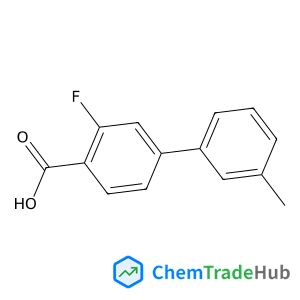
2-Fluoro-4-biphenylcarboxylic acid should be stored in a cool, dry place at room...
Prednisolone-21-Carboxylic Acid is primarily used in the pharmaceutical industry...
4-(Hydrazinomethyl)-1,2,3-benzenetriol (CAS: 3614-72-0) should be stored in a co...
4-Amino-1-methyl-1H-pyrazole-5-carboxylic acid hydrochloride (CAS: 92534-70-8) i...
Dehydropachymic acid (CAS: 77012-31-8) is regulated by various agencies. It fall...
The market and research trends for 6-[(2,2-Dimethylpropanoyl)amino]nicotinic aci...
1,10-Phenanthroline-2,9-dicarbaldehyde should be stored in a cool, dry place awa...
5-Carbamoyl-11-oxo-10,11-dihydro-5H-dibenzo[b,f]azepin-10-yl acetate can be synt...

Polymer Chemistry welcomes submissions in all areas of polymer science that have a strong focus on macromolecular chemistry. Manuscripts may cover a broad range of fields, yet no direct application focus is required.
phosphoryl}methyl 4-methylbenzenesulfonate structure](https://static.chemtradehub.com/structs/864/864068-45-1-ba7c.webp "{[3-(Hexadecyloxy)propoxy](hydroxy)phosphoryl}methyl 4-methylbenzenesulfonate structure")