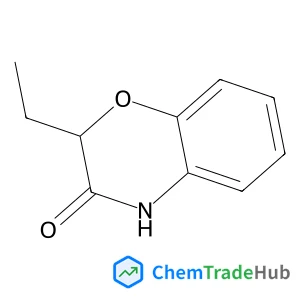
![1-{[5-(4,4,5,5-Tetramethyl-1,3,2-dioxaborolan-2-yl)-2-thienyl]methyl}piperidine structure](https://static.chemtradehub.com/structs/121/1218790-44-3-baef.webp "1-{[5-(4,4,5,5-Tetramethyl-1,3,2-dioxaborolan-2-yl)-2-thienyl]methyl}piperidine structure")
1-{[5-(4,4,5,5-Tetramethyl-1,3,2-dioxaborolan-2-yl)-2-thienyl]methyl}piperidine
CAS Number:
1218790-44-3
Molecular Formula:
C16H26BNO2S
Germán J. Soldano, Franco M. Zanotto, Marcelo M. Mariscal
Formation of monoatomic chains by axial stretching of zinc oxide nanowires is investigated using molecular dynamics and supported by density functional calculations. Special focus is made on the mechanical properties of these structures. Using a state-of-the-art force field it was found that O2 species are commonly formed within the chain. This species drastically weakens the chain strength. Previous simulations, based on a pair potential, failed to predict O2 formation. Moreover, the superductility of zinc oxide nanowires observed in earlier studies, was found to be an artifact of the pair potential. Simulations revealed that the chain length before rupture (usually of 6 atoms) is independent of the nanowire diameter. The electronic structure and the charge distribution of the chains were also studied.
Nolene Byrne, C. Austen Angell
DOI: 10.1039/B817590J
Hideyuki Otsuka, Takatoshi Muta, Masahide Sakada, Takeshi Maeda, Atsushi Takahara
DOI: 10.1039/B818014H
Aaron E. Engelhart, Thomas Hellman Morton, Nicholas V. Hud
DOI: 10.1039/B818409G
Jing Huang, Guorui Li, Zhiguo Wu, Zhibin Song, Yangyang Zhou, Liang Shuai, Xiaocheng Weng, Xiang Zhou, Guangfu Yang
DOI: 10.1039/B819789J
Teruyasu Yamamoto
DOI: 10.1039/B818792D
Mark Bartholomä, John Valliant, Kevin P. Maresca, John Babich, Jon Zubieta
DOI: 10.1039/B814903H
Huan Pang, Feng Gao, Qingyi Lu
DOI: 10.1039/B816670F
Tamas Szabo, Ali Siavosh-Haghighi, Carol A. Deakyne, John E. Adams, Jerry L. Atwood
DOI: 10.1039/B819276F
Dragoslav Vidovic, Glesni A. Pierce, Simon Aldridge
DOI: 10.1039/B816042B
Daniela Pucci, Iolinda Aiello, Alessia Aprea, Anna Bellusci, Alessandra Crispini, Mauro Ghedini
DOI: 10.1039/B818603K
When handling 2-Methyl-2-propanyl 5-amino-2-thiophenecarboxylate (CAS: 1498311-5...
5-Bromo-1,2-dichloro-3-fluorobenzene (CAS: 1000572-93-9) is a crystalline solid ...
(2R)-2-Amino-2-(4-bromophenyl)ethanol (CAS: 354153-64-3) should be stored in a c...
Methyl 4-(aminomethyl)tetrahydro-2H-pyran-4-carboxylate hydrochloride (CAS: 3627...
1,4-Dimethyl-1H-pyrazole-5-sulfonyl chloride is primarily used as an intermediat...
Dinaphtho[1,2-b:2',1'-d]furan is generally safe when handled with appropriate pe...
The market for 7-Methyl-7,9-dihydro-1H-purine-2,6,8(3H)-trione (CAS: 612-37-3) i...
2-(4-Chlorophenyl)malonaldehyde (CAS: 205676-17-1) is a colorless or light yello...
2-Methylchrysene (CAS: 3351-32-4) is typically synthesized via the reaction of c...
N-(6-aminopyrimidin-4-yl)acetamide (CAS: 89533-23-3) is generally considered saf...

Physical Chemistry Chemical Physics (PCCP) is an international journal co-owned by 19 physical chemistry and physics societies from around the world. This journal publishes original, cutting-edge research in physical chemistry, chemical physics and biophysical chemistry. To be suitable for publication in PCCP, articles must include significant innovation and/or insight into physical chemistry; this is the most important criterion that reviewers and Editors will judge against when evaluating submissions. The journal has a broad scope and welcomes contributions spanning experiment, theory, computation and data science. Topical coverage includes spectroscopy, dynamics, kinetics, statistical mechanics, thermodynamics, electrochemistry, catalysis, surface science, quantum mechanics, quantum computing and machine learning. Interdisciplinary research areas such as polymers and soft matter, materials, nanoscience, energy, surfaces/interfaces, and biophysical chemistry are welcomed if they demonstrate significant innovation and/or insight into physical chemistry. Joined experimental/theoretical studies are particularly appreciated when complementary and based on up-to-date approaches.
![2-Bromo-7-chloro-4H-pyrrolo[2,3-b]pyrazine structure](https://static.chemtradehub.com/structs/115/1150617-58-5-0b0a.webp "2-Bromo-7-chloro-4H-pyrrolo[2,3-b]pyrazine structure")
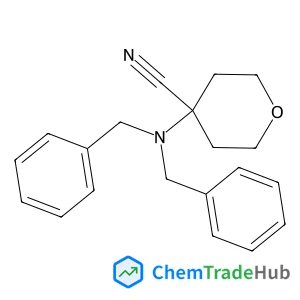
![2-[2-(2-Methoxyethoxy)ethoxy]-2-methylpropane structure](https://static.chemtradehub.com/structs/527/52788-79-1-71c1.webp "2-[2-(2-Methoxyethoxy)ethoxy]-2-methylpropane structure")