


Green metrics evaluation of isoprene production by microalgae and bacteria
Literature Information
Publication Date
2013-07-24
DOI
10.1039/C3GC40997J
Impact Factor
10.182
Authors
Cristina T. Matos, Luisa Gouveia, Ana Rita C. Morais, Alberto Reis, Rafał Bogel-Łukasik
View Original
Abstract
Isoprene is a key intermediate compound for the production of synthetic rubber and adhesives and is also used as a building block in the chemical industry. Traditionally, isoprene is obtained from crude oil during the refinery process. Nevertheless, plants and animals are also able to synthesize this important compound. This work compares two renewable approaches for isoprene production: by photosynthetic organisms (autotrophic microalgae/cyanobacteria) and by heterotrophic organisms (bacteria). These are two alternative pathways for the conventional isoprene production obtained from the petrochemical-based refinery process, which were assessed in this work using green metrics. Their performance was evaluated in terms of: material efficiency, energy efficiency, economic evaluation and land use. A 10-tonne scale was chosen to perform the green metrics evaluation for both biological processes leading to isoprene. For each process, a comparison was made between a scenario considering the highest isoprene produced reported in the literature and a scenario considering the maximum theoretical stoichiometric isoprene productivity.
Recommended Journals

Biocatalysis and Biotransformation

Acta Metallurgica Sinica-English Letters

Medicinal Chemistry Research

Bioorganic & Medicinal Chemistry Letters

Cellulose

Critical Reviews in Solid State and Materials Sciences

NDT & E International

Bioorganic & Medicinal Chemistry

Herald of the Russian Academy of Sciences

Journal of the Indian Institute of Science
Related Literature
2-(1-Pyrenyl) benzimidazole as a ratiometric and “turn-on” fluorescent probe for iron(iii) ions in aqueous solution
Meili Zhao, Zhifu Deng, Jian Tang, Xiufen Zhou, Zhi Chen, Xutian Li, Liting Yang
2016-02-10
Paper
DOI: 10.1039/C5AN02565F
Sequential sandwich immunoassay for simultaneous detection in trace samples using single-channel surface plasmon resonance
Yinqiang Xia, Peiqian Zhang, Hui Yuan, Renliang Huang, Zhimin He
2019-08-21
Paper
DOI: 10.1039/C9AN01183H
Thermo-responsive polymer aided spheroid culture in cryogel based platform for high throughput drug screening
J. Sarkar, A. Kumar
2016-03-30
Paper
DOI: 10.1039/C6AN00356G
Enhanced fluorescent resonant energy transfer of DNA conjugates complexed with surfactants and divalent metal ions
Taeseok Oh, Jae-Young Choi
2016-03-08
Communication
DOI: 10.1039/C5AN02516H
Electrochemical redox signaling of hemoglobin in human whole blood and its relevance to anemia and thalassemia diagnosis
Khairunnisa Amreen, Annamalai Senthil Kumar
2016-02-15
Communication
DOI: 10.1039/C5AN02646F
A near infrared fluorescent probe for the detection and imaging of prolyl aminopeptidase activity in living cells
Xianjun Liu, Quan-Yu Zhang, Fenglin Wang, Jian-Hui Jiang
2019-08-27
Paper
DOI: 10.1039/C9AN01303B
Fluorescence turn-on for the highly selective detection of nitric oxide in vitro and in living cells
Xiaomei Liu, Shuang Liu, Gaolin Liang
2016-03-18
Paper
DOI: 10.1039/C6AN00110F
A sensitive and versatile method for characterization of protein-mediated transformations of quantum dots
Magdalena Matczuk, Joanna Legat, Andrei R. Timerbaev, Maciej Jarosz
2016-03-15
Paper
DOI: 10.1039/C6AN00276E
Profiling embryonic stem cell differentiation by MALDI TOF mass spectrometry: development of a reproducible and robust sample preparation workflow
Rachel E. Heap, Anna Segarra-Fas, Alasdair P. Blain, Greg M. Findlay, Matthias Trost
2019-09-30
Paper
DOI: 10.1039/C9AN00771G
You might also like
Compound Q&A
What precautions should be taken when handling 4-(2-Furylmethyl)thiomorpholine 1,1-dioxide (CAS: 79206-94-3)?
When handling 4-(2-Furylmethyl)thiomorpholine 1,1-dioxide (CAS: 79206-94-3), it ...
79206-94-34-(2-Furylmethyl)thi...
Compound Q&A
What precautions should be taken when handling 4-Chloro-N-[2-(4-morpholinyl)ethyl]benzamide (CAS: 71320-77-9)?
When handling 4-Chloro-N-[2-(4-morpholinyl)ethyl]benzamide (CAS: 71320-77-9), it...
71320-77-94-Chloro-N-[2-(4-mor...
Compound Q&A
How should waste containing 2-[2-(2-Methoxyethoxy)ethoxy]ethyl 4-methylbenzenesulfonate (CAS: 62921-74-8) be handled?
Waste containing this compound (CAS: 62921-74-8) should be handled according to ...
62921-74-82-[2-(2-Methoxyethox...
Compound Q&A
How should waste containing (S)-Methyl 2-amino-3-cyclohexylpropanoate be handled?
Waste containing (S)-Methyl 2-amino-3-cyclohexylpropanoate should be collected i...
40056-18-6(S)-Methyl 2-amino-3...
Compound Q&A
How is 5-({4-[(2S,4R)-4-Hydroxy-2-methyltetrahydro-2H-pyran-4-yl]-2-thienyl}sulfanyl)-1-methyl-1,3-dihydro-2H-indol-2-one (CAS: 166882-70-8) typically synthesized?
This compound can be synthesized using a multi-step process involving the conjug...
166882-70-85-({4-[(2S,4R)-4-Hyd...
Compound Q&A
Are there alternatives to (2E)-3-(3,4-Dichlorophenyl)acrylic acid (CAS: 7312-27-8) in synthesis?
There are several alternatives to (2E)-3-(3,4-Dichlorophenyl)acrylic acid in syn...
7312-27-8(2E)-3-(3,4-Dichloro...
Compound Q&A
How should Ethyl 6-(2-nitrophenyl)imidazo[2,1-b][1,3]thiazole-3-carboxylate (CAS: 925437-84-9) be stored?
Ethyl 6-(2-nitrophenyl)imidazo[2,1-b][1,3]thiazole-3-carboxylate (CAS: 925437-84...
925437-84-9Ethyl 6-(2-nitrophen...
Compound Q&A
How should waste containing 2-(1,3-Thiazol-2-yl)ethanamine (CAS: 18453-07-1) be handled?
Waste containing 2-(1,3-Thiazol-2-yl)ethanamine (CAS: 18453-07-1) should be coll...
18453-07-12-(1,3-Thiazol-2-yl)...
Compound Q&A
How is Methyl 5-iodo-2-methylbenzoate (CAS: 103440-54-6) typically synthesized?
Methyl 5-iodo-2-methylbenzoate can be synthesized through the iodination of meth...
103440-54-6Methyl 5-iodo-2-meth...
Compound Q&A
How is 5-Chloro[1,2,4]triazolo[1,5-a]pyridine (CAS: 1427399-34-5) typically synthesized?
5-Chloro[1,2,4]triazolo[1,5-a]pyridine is commonly synthesized via the condensat...
1427399-34-55-Chloro[1,2,4]triaz...
Source Journal
Green Chemistry

CiteScore:
16.1
Self-citation Rate:
7.5%
Articles per Year:
944
Green Chemistry provides a unique forum for the publication of innovative research on the development of alternative green and sustainable technologies. The scope of Green Chemistry is based on, but not limited to, the definition proposed by Anastas and Warner (Green Chemistry: Theory and Practice, P T Anastas and J C Warner, Oxford University Press, Oxford, 1998). Green chemistry is the utilisation of a set of principles that reduces or eliminates the use or generation of hazardous substances in the design, manufacture and application of chemical products. Green Chemistry is at the frontiers of this continuously-evolving interdisciplinary science and publishes research that attempts to reduce the environmental impact of the chemical enterprise by developing a technology base that is inherently non-toxic to living things and the environment. Submissions on all aspects of research relating to the endeavour are welcome. The journal publishes original and significant cutting-edge research that is likely to be of wide general appeal. To be published, work must present a significant advance in green chemistry. Papers must contain a comparison with existing methods and demonstrate advantages over those methods before publication can be considered. For more information please see this Editorial. Coverage includes the following, but is not limited to: Design (e.g. biomimicry, design for degradation/recycling/reduced toxicity…) Reagents & Feedstocks (e.g. renewables, CO2, solvents, auxiliary agents, waste utilization…) Synthesis (e.g. organic, inorganic, synthetic biology…) Catalysis (e.g. homogeneous, heterogeneous, enzyme, whole cell…) Process (e.g. process design, intensification, separations, recycling, efficiency…) Energy (e.g. renewable energy, fuels, photovoltaics, fuel cells, energy storage, energy carriers…) Applications (e.g. electronics, dyes, consumer products, coatings, pharmaceuticals, preservatives, building materials, chemicals for industry/agriculture/mining…) Impact (e.g. safety, metrics, LCA, sustainability, (eco)toxicology…) Green chemistry is, by definition, a continuously-evolving frontier. Therefore, the inclusion of a particular material or technology does not, of itself, guarantee that a paper is suitable for the journal. To be suitable, the novel advance should have the potential for reduced environmental impact relative to the state of the art. Green Chemistry does not normally deal with research associated with 'end-of-pipe' or remediation issues.
Recommended Compounds
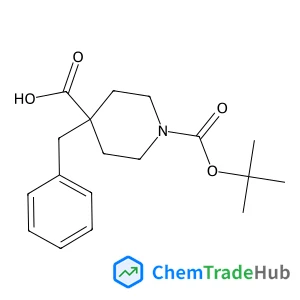
4-Benzyl-1-(tert-butoxycarbonyl)piperidine-4-carboxylic acid
CAS Number:
170838-87-6
Molecular Formula:
C18H25NO4
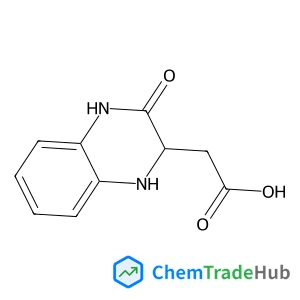
(3-Oxo-1,2,3,4-tetrahydro-2-quinoxalinyl)acetic acid
CAS Number:
136584-14-0
Molecular Formula:
C10H10N2O3
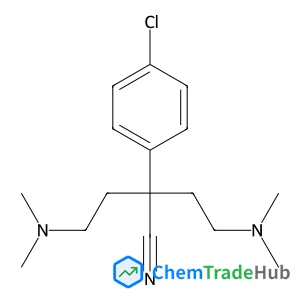
2-(4-Chlorophenyl)-4-(dimethylamino)-2-(2-(dimethylamino)ethyl)butanenitrile
CAS Number:
1246816-57-8
Molecular Formula:
C16H24ClN3
Recommended Suppliers




Disclaimer
This page provides academic journal information for reference and research purposes only. We are not affiliated with any journal publishers and do not handle publication submissions. For publication-related inquiries, please contact the respective journal publishers directly.
If you notice any inaccuracies in the information displayed, please contact us at support@chemtradehub.com. We will promptly review and address your concerns.