













Understanding adsorption of CO2, N2, CH4 and their mixtures in functionalized carbon nanopipe arrays
Literature Information
Publication Date
2016-04-13
DOI
10.1039/C5CP07422C
Impact Factor
3.676
Authors
Prosun Halder, Manish Maurya, Surendra K. Jain, Jayant K. Singh
View Original
Abstract
The selective adsorption behaviours of carbon dioxide, methane and nitrogen on bundles of functionalized CMK-5 are investigated at 303 K using grand-canonical Monte Carlo simulations. Functional groups (–OH, –COOH) cause a significant enhancement in CO2 uptake (up to 19.5% at a pressure of 38.13 bar for –COOH). On the other hand, the adsorption amount of methane decreases with respect to bare CMK-5 by ∼13% (at 38.13 bar) upon functionalization. Furthermore, functionalized CMK-5 with different pore sizes (4 nm, 6 nm, 8 nm) and inter-tube distances (d = 0 to 1.5 nm) are used to investigate the adsorption behaviour of flue gases. While the pore diameter is seen to reduce the isosteric heat of adsorption, the inter-tube distance of 0.25 nm shows the highest uptake of CO2 at p ≤ 18 bar, followed by 0.5 nm for the pressure range of 18 < p ≤ 30 bar, whereas for p > 30 bar, d = 1.0 nm shows the maximum uptake. For methane and nitrogen, the maximum adsorption is obtained at d = 0.25 nm in the studied pressure range. The selective adsorption of CO2 in binary mixtures is investigated using ideal adsorption solution theory. CO2–N2 selectivity is found to increase significantly by surface functionalization of CMK-5 compared to pure CMK-5. The maximum selectivity of CO2–CH4 using –COOH functionalized CMK-5 is found to be ∼10 for an equimolar CO2–CH4 mixture at a pressure of 38.13 bar.
Related Literature
Combined experimental and theoretical investigation of the hemi-squaraine/TiO2 interface for dye sensitized solar cells
Giancarlo Cicero, Bruno Camino, Stefano Bianco, Anna Maria Ferrari, Barbara Ballarin, Claudia Barolo
2013-03-18
Paper
DOI: 10.1039/C3CP50559F
Photoinduced energy and charge transfer in a p-phenylene-linked dyad of boron dipyrromethene and monostyryl boron dipyrromethene
Roel Menting, Jian-Yong Liu, Ying-Si Huang, Dennis K. P. Ng, Beate Röder
2013-03-15
Paper
DOI: 10.1039/C3CP50576F
Laser directed lithography of asymmetric graphene ribbons on a polydimethylsiloxane trench structure
Yi Yang, Dan Xie, Tian-Ling Ren, Yi Shu, Hui Sun, Chang-Jian Zhou, Xuan Liu, Lu-Qi Tao, Jie Ge, Cang-Hai Zhang, Yuegang Zhang
2013-02-28
Paper
DOI: 10.1039/C3CP50538C
Specific many-electron effects in X-ray spectra of simple metals and graphene
R. E. Ovcharenko, I. I. Tupitsyn, E. P. Savinov, E. N. Voloshina, B. Paulus, Yu. S. Dedkov, A. S. Shulakov
2013-03-14
Paper
DOI: 10.1039/C3CP44304C
Chelating ionic liquids for reversible zinc electrochemistry
Mega Kar, Bjorn Winther-Jensen, Maria Forsyth, Douglas R. MacFarlane
2013-03-22
Paper
DOI: 10.1039/C3CP51102B
Interaction of CO2 with oxygen adatoms on rutile TiO2(110)
Xiao Lin, Zhi-Tao Wang, Igor Lyubinetsky, Bruce D. Kay, Zdenek Dohnálek
2013-01-10
Paper
DOI: 10.1039/C3CP44040K
Adsorption of diferrocenylacetylene on Au(111) studied by scanning tunneling microscopy
Rebecca C. Quardokus, Natalie A. Wasio, Ryan P. Forrest, Craig S. Lent, Steven A. Corcelli, John A. Christie, Kenneth W. Henderson, S. Alex Kandel
2013-03-19
Paper
DOI: 10.1039/C3CP50225B
In situ fluorescence and electrochemical monitoring of a photosynthetic microbial fuel cell
Alister E. Inglesby, Kamran Yunus, Adrian C. Fisher
2013-04-02
Paper
DOI: 10.1039/C3CP51076J
Analysis of visible-light-active Sn(ii)–TiO2 photocatalysts
Venkata Bharat Ram Boppana, Feng Jiao, Dave Newby, Jr., Jude Laverock, Kevin E. Smith, Jean Claude Jumas, Greg Hutchings, Raul F. Lobo
2013-03-13
Communication
DOI: 10.1039/C3CP44635B
You might also like
Compound Q&A
What precautions should be taken when handling 4-(2-Furylmethyl)thiomorpholine 1,1-dioxide (CAS: 79206-94-3)?
When handling 4-(2-Furylmethyl)thiomorpholine 1,1-dioxide (CAS: 79206-94-3), it ...
79206-94-34-(2-Furylmethyl)thi...
Compound Q&A
What precautions should be taken when handling 4-Chloro-N-[2-(4-morpholinyl)ethyl]benzamide (CAS: 71320-77-9)?
When handling 4-Chloro-N-[2-(4-morpholinyl)ethyl]benzamide (CAS: 71320-77-9), it...
71320-77-94-Chloro-N-[2-(4-mor...
Compound Q&A
How should waste containing 2-[2-(2-Methoxyethoxy)ethoxy]ethyl 4-methylbenzenesulfonate (CAS: 62921-74-8) be handled?
Waste containing this compound (CAS: 62921-74-8) should be handled according to ...
62921-74-82-[2-(2-Methoxyethox...
Compound Q&A
How should waste containing (S)-Methyl 2-amino-3-cyclohexylpropanoate be handled?
Waste containing (S)-Methyl 2-amino-3-cyclohexylpropanoate should be collected i...
40056-18-6(S)-Methyl 2-amino-3...
Compound Q&A
How is 5-({4-[(2S,4R)-4-Hydroxy-2-methyltetrahydro-2H-pyran-4-yl]-2-thienyl}sulfanyl)-1-methyl-1,3-dihydro-2H-indol-2-one (CAS: 166882-70-8) typically synthesized?
This compound can be synthesized using a multi-step process involving the conjug...
166882-70-85-({4-[(2S,4R)-4-Hyd...
Compound Q&A
Are there alternatives to (2E)-3-(3,4-Dichlorophenyl)acrylic acid (CAS: 7312-27-8) in synthesis?
There are several alternatives to (2E)-3-(3,4-Dichlorophenyl)acrylic acid in syn...
7312-27-8(2E)-3-(3,4-Dichloro...
Compound Q&A
How should Ethyl 6-(2-nitrophenyl)imidazo[2,1-b][1,3]thiazole-3-carboxylate (CAS: 925437-84-9) be stored?
Ethyl 6-(2-nitrophenyl)imidazo[2,1-b][1,3]thiazole-3-carboxylate (CAS: 925437-84...
925437-84-9Ethyl 6-(2-nitrophen...
Compound Q&A
How should waste containing 2-(1,3-Thiazol-2-yl)ethanamine (CAS: 18453-07-1) be handled?
Waste containing 2-(1,3-Thiazol-2-yl)ethanamine (CAS: 18453-07-1) should be coll...
18453-07-12-(1,3-Thiazol-2-yl)...
Compound Q&A
How is Methyl 5-iodo-2-methylbenzoate (CAS: 103440-54-6) typically synthesized?
Methyl 5-iodo-2-methylbenzoate can be synthesized through the iodination of meth...
103440-54-6Methyl 5-iodo-2-meth...
Compound Q&A
How is 5-Chloro[1,2,4]triazolo[1,5-a]pyridine (CAS: 1427399-34-5) typically synthesized?
5-Chloro[1,2,4]triazolo[1,5-a]pyridine is commonly synthesized via the condensat...
1427399-34-55-Chloro[1,2,4]triaz...
Source Journal
Physical Chemistry Chemical Physics

CiteScore:
5.5
Self-citation Rate:
10.3%
Articles per Year:
3036
Physical Chemistry Chemical Physics (PCCP) is an international journal co-owned by 19 physical chemistry and physics societies from around the world. This journal publishes original, cutting-edge research in physical chemistry, chemical physics and biophysical chemistry. To be suitable for publication in PCCP, articles must include significant innovation and/or insight into physical chemistry; this is the most important criterion that reviewers and Editors will judge against when evaluating submissions. The journal has a broad scope and welcomes contributions spanning experiment, theory, computation and data science. Topical coverage includes spectroscopy, dynamics, kinetics, statistical mechanics, thermodynamics, electrochemistry, catalysis, surface science, quantum mechanics, quantum computing and machine learning. Interdisciplinary research areas such as polymers and soft matter, materials, nanoscience, energy, surfaces/interfaces, and biophysical chemistry are welcomed if they demonstrate significant innovation and/or insight into physical chemistry. Joined experimental/theoretical studies are particularly appreciated when complementary and based on up-to-date approaches.
Recommended Compounds
![5-Acetyl-2,3-dihydrobenzo[b]furan structure](https://static.chemtradehub.com/structs/908/90843-31-5-eea4.webp "5-Acetyl-2,3-dihydrobenzo[b]furan structure")
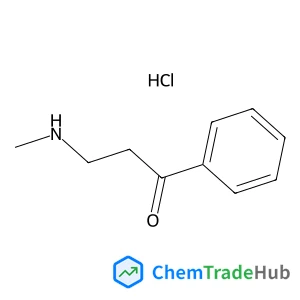
3-(Methylamino)-1-phenyl-1-propanone hydrochloride (1:1)
CAS Number:
2538-50-3
Molecular Formula:
C10H14ClNO
![N-[(Benzyloxy)carbonyl]serine structure](https://static.chemtradehub.com/structs/276/2768-56-1-77f7.webp "N-[(Benzyloxy)carbonyl]serine structure")
Recommended Suppliers





Disclaimer
This page provides academic journal information for reference and research purposes only. We are not affiliated with any journal publishers and do not handle publication submissions. For publication-related inquiries, please contact the respective journal publishers directly.
If you notice any inaccuracies in the information displayed, please contact us at support@chemtradehub.com. We will promptly review and address your concerns.