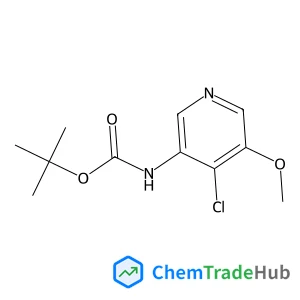
tert-Butyl 4-chloro-5-methoxypyridin-3-ylcarbamate
CAS Number:
1045858-17-0
Molecular Formula:
C11H15ClN2O3
Nico Holmberg, Kari Laasonen, Pekka Peljo
Upon metal–metal contact, a transfer of electrons will occur between the metals until the Fermi levels in both phases are equal, resulting in a net charge difference across the metal–metal interface. Here, we have examined this contact electrification in bimetallic model systems composed of mixed Au–Ag nanoparticles containing ca. 600 atoms using density functional theory calculations. We present a new model to explain this charge transfer by considering the bimetallic system as a nanocapacitor with a potential difference equal to the work function difference, and with most of the transferred charge located directly at the contact interface. Identical results were obtained by considering surface contacts as well as by employing a continuum model, confirming that this model is general and can be applied to any multimetallic structure regardless of geometry or size (going from nano- to macroscale). Furthermore, the equilibrium Fermi level was found to be strongly dependent on the surface coverage of different metals, enabling the construction of scaling relations. We believe that the charge transfer due to Fermi level equilibration has a profound effect on the catalytic, electrocatalytic and other properties of bimetallic particles. Additionally, bimetallic nanoparticles are expected to have very interesting self-assembly for large superstructures due to the surface charge anisotropy between the two metals.
Daniel M. Gill, Sabrina A. Shamir, Fiona L. Wilkinson, M. Yvonne Alexander, Marinonio L. Cornelio, Alan M. Jones
DOI: 10.1039/D0MD00366B
Rachael Zigweid, Bart L. Staker
DOI: 10.1039/D0MD00303D
Charu Upadhyay, Poonam, Sumit Kumar, Brijesh Rathi
DOI: 10.1039/D1MD00244A
Sahil Mishra, Shreya
DOI: 10.1039/D0MD00318B
Yiwei Liu, Luyi Zhou, Ying Dong, Rui Wang, Ying Pan, Shuze Zhuang, Dong Liu, Jianqiang Liu
DOI: 10.1039/D0MD00416B
Saan Voss, Christoph Nitsche
DOI: 10.1039/D1MD00080B
Huihui Yang
DOI: 10.1039/D1MD00066G
Waste containing 6-Chloro-5-(2'-hydroxy-3'-methoxy-4-biphenylyl)-3-(3-methoxyphe...
(3alpha,5alpha)-3-Hydroxypregnane-11,20-dione is primarily used in the pharmaceu...
The market for 4-Amino-6-chloro-2-pyridinecarboxylic acid (CAS: 546141-56-4) is ...
Alternatives to (2-Benzoylethyl)trimethylammonium chloride (CAS: 24472-88-6) in ...
N-[4-Nitro-3-(trifluoromethyl)phenyl]acetamide (CAS: 393-12-4) is generally safe...
Alternative reagents such as other phosphates or similar functional groups can b...
There are alternatives to N,N'-Bis(3-aminopropyl)-1,3-propanediamine (CAS: 4605-...
When handling Aluminium trihexadecanoate, it is important to use appropriate per...
(1,1-Dioxido-3-oxo-1,2-benzothiazol-2(3H)-yl)acetic acid is a chemical compound ...
Several alternatives to 5,5-dimethyloxolan-2-one (CAS: 3123-97-5) can be used in...

Physical Chemistry Chemical Physics (PCCP) is an international journal co-owned by 19 physical chemistry and physics societies from around the world. This journal publishes original, cutting-edge research in physical chemistry, chemical physics and biophysical chemistry. To be suitable for publication in PCCP, articles must include significant innovation and/or insight into physical chemistry; this is the most important criterion that reviewers and Editors will judge against when evaluating submissions. The journal has a broad scope and welcomes contributions spanning experiment, theory, computation and data science. Topical coverage includes spectroscopy, dynamics, kinetics, statistical mechanics, thermodynamics, electrochemistry, catalysis, surface science, quantum mechanics, quantum computing and machine learning. Interdisciplinary research areas such as polymers and soft matter, materials, nanoscience, energy, surfaces/interfaces, and biophysical chemistry are welcomed if they demonstrate significant innovation and/or insight into physical chemistry. Joined experimental/theoretical studies are particularly appreciated when complementary and based on up-to-date approaches.