![2-Methyl-2-propanyl 1,6-diazaspiro[3.4]octane-6-carboxylate structure](https://static.chemtradehub.com/structs/115/1158749-79-1-81ee.webp "2-Methyl-2-propanyl 1,6-diazaspiro[3.4]octane-6-carboxylate structure")
2-Methyl-2-propanyl 1,6-diazaspiro[3.4]octane-6-carboxylate
CAS Number:
1158749-79-1
Molecular Formula:
C11H20N2O2
Takao Sakuma, Hayato Sakai, Yasuyuki Araki, Takehiko Wada, Taku Hasobe
Nano- and micro-sized molecular assemblies of zinc porphyrins [5,10,15,20-tetrakis(4-carboxyphenyl)porphyrinato-zinc(II) (ZnTCPP)] utilizing bridging nitrogen ligands such as diazabicycro[2.2.2]octane (DABCO) were prepared to demonstrate the regioselective coordination by two different synthetic strategies such as (i) the solvothermal method and (ii) the colloidal metal organic framework (MOF) method. The initial organization process is a planar checkerboard patterned formation (2D platform) of zinc porphyrins organized by paddlewheel secondary building units (PSBUs) between carboxylate and zinc ions. Then, DABCO moieties are decorated on zinc atoms in the metal centres of the porphyrin rings (m-cPDC) in the solvothermal method, whereas the metal centres in the porphyrin rings (n-uPDC) remain uncoordinated in the colloidal MOF method. These internal structural changes between m-cPDC and n-uPDC are in sharp contrast with the corresponding reference systems using ZnTCPP and a 4,4′-bipyridine (BPY) ligand (i.e., m-cPBC and n-cPBC). Concretely, the metal centres of zinc porphyrins in n-uPDC were unsaturated and uncoordinated with the DABCO ligands, which was confirmed by XRD and steady-state spectroscopic measurements. These different coordination features have great effect on the spectroscopic and photophysical properties. For example, the average fluorescence lifetime of m-cPDC is much smaller than that of n-uPDC because of the acceleration of nonradiative processes, which are highly related with the coordination of DABCO to the Zn(II) centre of the ZnTCPP unit. Finally, fluorescence quenching experiments via photoinduced electron transfer (PET) utilizing an electron acceptor: benzoquinone (BQ) were performed. The apparent association constant (Kapp) of n-uPDC is larger than that of m-cPDC. This suggested that the unsaturated ZnTCPP units embedded in n-uPDC easily accommodate guest molecules as compared to the other systems.
Yongfeng Liu, Chu Liang, Zhijun Wei, Ying Jiang, Mingxia Gao, Hongge Pan, Qidong Wang
DOI: 10.1039/C000271B
Harald Schöbel, Christian Leidlmair, Peter Bartl, Abid Aleem, Michaela Hager, Olof Echt, Tilmann D. Märk, Paul Scheier
DOI: 10.1039/C0CP01268H
Marion Bauer, Daniel M. Többens, Erwin Mayer, Thomas Loerting
DOI: 10.1039/C0CP01351J
Dinesh Chandra Khara, Anunay Samanta
DOI: 10.1039/B925099A
Elena Rykova, Alexander Bagaturyants
DOI: 10.1039/C0CP00821D
M. Eugenia Sanz, Juan C. López, José L. Alonso
DOI: 10.1039/B926520A
Shiguo Sun, Wenyan Gao, Fengyu Liu, Fusheng Li, Jiangli Fan, Xiaojun Peng
DOI: 10.1039/C0CP00712A
1-(2,4,6-Trifluorophenyl)ethanol is an organic compound with the CAS number 1250...
1-(2,4-Dimethoxybenzyl)-4-(hydroxymethyl)-2-pyrrolidinone (CAS: 919111-34-5) is ...
(7S,15R)-6β,15-Diacetoxy-7α,20-epoxy-7-hydroxykaura-2,16-dien-1-one is a crystal...
The compound rac-ethyl (1r,4r)-4-hydroxycyclohexane-1-carboxylate, trans (CAS: 3...
The market for 2-(2,4-Difluorophenoxy)-3-nitropyridine (CAS: 175135-62-3) is cur...
The main uses of 6-Diazo-5-oxo-L-norleucine (CAS: 157-03-9) include research in ...
When handling 2-Aminoethyl-mono-amide-DOTA-tris(tBu ester) (CAS: 173308-19-5), i...
5-Methylimidazo[1,2-a]pyridine-3-carbaldehyde (CAS: 178488-37-4) can be synthesi...
There are alternative reagents that can be used in the synthesis of 2,4,6-Trihyd...
(2Z)-3-(5-Fluoro-1H-indol-3-yl)-2-sulfanylacrylic acid is a chemical compound wi...

Physical Chemistry Chemical Physics (PCCP) is an international journal co-owned by 19 physical chemistry and physics societies from around the world. This journal publishes original, cutting-edge research in physical chemistry, chemical physics and biophysical chemistry. To be suitable for publication in PCCP, articles must include significant innovation and/or insight into physical chemistry; this is the most important criterion that reviewers and Editors will judge against when evaluating submissions. The journal has a broad scope and welcomes contributions spanning experiment, theory, computation and data science. Topical coverage includes spectroscopy, dynamics, kinetics, statistical mechanics, thermodynamics, electrochemistry, catalysis, surface science, quantum mechanics, quantum computing and machine learning. Interdisciplinary research areas such as polymers and soft matter, materials, nanoscience, energy, surfaces/interfaces, and biophysical chemistry are welcomed if they demonstrate significant innovation and/or insight into physical chemistry. Joined experimental/theoretical studies are particularly appreciated when complementary and based on up-to-date approaches.
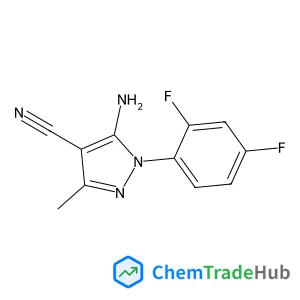
![4-[(1-Methyl-1H-pyrrol-2-yl)methylene]-1,3(2H,4H)-isoquinolinedione structure](https://static.chemtradehub.com/structs/110/1104546-89-5-a600.webp "4-[(1-Methyl-1H-pyrrol-2-yl)methylene]-1,3(2H,4H)-isoquinolinedione structure")