












Contents list
Literature Information
Publication Date
DOI
10.1039/C3CP90071A
Impact Factor
3.676
Authors
View Original
Abstract
The first page of this article is displayed as the abstract.
Related Literature
Dissociative photoionization mechanism of methanol isotopologues (CH3OH, CD3OH, CH3OD and CD3OD) by iPEPICO: energetics, statistical and non-statistical kinetics and isotope effects
Sampada Borkar, Bálint Sztáray, Andras Bodi
2011-06-20
Paper
DOI: 10.1039/C1CP21015G
Nature of anion-templated π+–π+ interactions
Inacrist Geronimo, N. Jiten Singh, Kwang S. Kim
2011-05-31
Communication
DOI: 10.1039/C1CP20348G
Supramolecular assembly of hoechst-33258 with cucurbit[7]uril macrocycle
Nilotpal Barooah, Jyotirmayee Mohanty, Haridas Pal, Achikanath C. Bhasikuttan
2011-06-20
Paper
DOI: 10.1039/C1CP20493A
An infrared study of solid glycine in environments of astrophysical relevance
Belén Maté, Yamilet Rodriguez-Lazcano, Óscar Gálvez, Isabel Tanarro, Rafael Escribano
2011-06-01
Paper
DOI: 10.1039/C1CP20899C
Hydrogen bond formation of formamide and N-methylformamide in aqueous solution studied by quantum mechanical charge field-molecular dynamics (QMCF-MD)
Alexander K. H. Weiss, Thomas S. Hofer, Bernhard R. Randolf, Anirban Bhattacharjee, Bernd M. Rode
2011-06-06
Paper
DOI: 10.1039/C1CP20669A
Nature of adhesion of condensed organic films on platinum by first-principles simulations
Slimane Laref, Yan Li, Marie-Laure Bocquet, Françoise Delbecq, Philippe Sautet, David Loffreda
2011-02-22
Perspective
DOI: 10.1039/C0CP02285C
Hydrogen bonding and chemical shift assignments in carbazole functionalized isocyanides from solid-state NMR and first-principles calculations
Chandrakala M. Gowda, Filipe Vasconcelos, Erik Schwartz, Ernst R. H. van Eck, Martijn Marsman, Jeroen J. L. M. Cornelissen, Alan E. Rowan, Gilles A. de Wijs, Arno P. M. Kentgens
2011-06-15
Paper
DOI: 10.1039/C1CP20304E
High performance supercapacitors based on highly conductive nitrogen-doped graphene sheets
Yongcai Qiu, Xinfeng Zhang, Shihe Yang
2011-06-13
Paper
DOI: 10.1039/C1CP21148J
You might also like
Compound Q&A
What are the main uses of 1H-Indazole-6-carbonitrile (CAS: 141290-59-7)?
1H-Indazole-6-carbonitrile finds applications in pharmaceuticals, where it serve...
141290-59-71H-Indazole-6-carbon...
Compound Q&A
How should waste containing Dioctyl (2E)-2-butenedioate (CAS: 2997-85-5) be handled?
Waste containing Dioctyl (2E)-2-butenedioate (CAS: 2997-85-5) should be collecte...
2997-85-5Dioctyl (2E)-2-buten...
Compound Q&A
What industries use Sodium [(1,2-benzoxazol-3-ylmethyl)sulfonyl]azanide (CAS: 68291-98-5)?
Sodium [(1,2-benzoxazol-3-ylmethyl)sulfonyl]azanide is primarily used in pharmac...
68291-98-5Sodium [(1,2-benzoxa...
Compound Q&A
Are there alternatives to Dimethyl 4-(4,4,5,5-tetramethyl-1,3,2-dioxaborolan-2-yl)-2,6-pyridinedicarboxylate (CAS: 741709-66-0) in synthesis?
Dimethyl 4-(4,4,5,5-tetramethyl-1,3,2-dioxaborolan-2-yl)-2,6-pyridinedicarboxyla...
741709-66-0Dimethyl 4-(4,4,5,5-...
Compound Q&A
How should waste containing 2-Fluoro-6-hydrazinopyridine (CAS: 80714-39-2) be handled?
Waste containing 2-Fluoro-6-hydrazinopyridine (CAS: 80714-39-2) should be manage...
80714-39-22-Fluoro-6-hydrazino...
Compound Q&A
What is 6-Formyl-2-pyridinecarboxylic acid (CAS: 499214-11-8)?
6-Formyl-2-pyridinecarboxylic acid is an organic compound with the molecular for...
499214-11-86-Formyl-2-pyridinec...
Compound Q&A
What is the market or research trend for 3-(3,4-dimethoxyphenyl)-2,5-dimethyl-N-(2-morpholin-4-ylethyl)pyrazolo[1,5-a]pyrimidin-7-amine (CAS: 900874-91-1)?
Research trends for this compound indicate a focus on its potential applications...
900874-91-13-(3,4-dimethoxyphen...
Compound Q&A
How is 9H-Tribenzo[b,d,f]azepine (CAS: 29875-73-8) typically synthesized?
9H-Tribenzo[b,d,f]azepine is typically synthesized via a multi-step process invo...
29875-73-89H-Tribenzo[b,d,f]az...
Compound Q&A
How is 1-Cyclopropyl-7-ethoxy-6-fluoro-8-methoxy-4-oxo-1,4-dihydro-3-quinolinecarboxylic acid (CAS: 1797982-51-4) typically synthesized?
1-Cyclopropyl-7-ethoxy-6-fluoro-8-methoxy-4-oxo-1,4-dihydro-3-quinolinecarboxyli...
1797982-51-41-Cyclopropyl-7-etho...
Compound Q&A
How should waste containing Methyl 3-oxo-1,2,3,4-tetrahydro-6-quinoxalinecarboxylate (CAS: 671820-52-3) be handled?
Waste containing Methyl 3-oxo-1,2,3,4-tetrahydro-6-quinoxalinecarboxylate (CAS: ...
671820-52-3Methyl 3-oxo-1,2,3,4...
Source Journal
Physical Chemistry Chemical Physics

CiteScore:
5.5
Self-citation Rate:
10.3%
Articles per Year:
3036
Physical Chemistry Chemical Physics (PCCP) is an international journal co-owned by 19 physical chemistry and physics societies from around the world. This journal publishes original, cutting-edge research in physical chemistry, chemical physics and biophysical chemistry. To be suitable for publication in PCCP, articles must include significant innovation and/or insight into physical chemistry; this is the most important criterion that reviewers and Editors will judge against when evaluating submissions. The journal has a broad scope and welcomes contributions spanning experiment, theory, computation and data science. Topical coverage includes spectroscopy, dynamics, kinetics, statistical mechanics, thermodynamics, electrochemistry, catalysis, surface science, quantum mechanics, quantum computing and machine learning. Interdisciplinary research areas such as polymers and soft matter, materials, nanoscience, energy, surfaces/interfaces, and biophysical chemistry are welcomed if they demonstrate significant innovation and/or insight into physical chemistry. Joined experimental/theoretical studies are particularly appreciated when complementary and based on up-to-date approaches.
Recommended Compounds
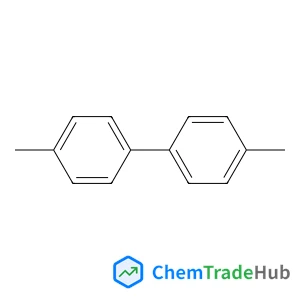
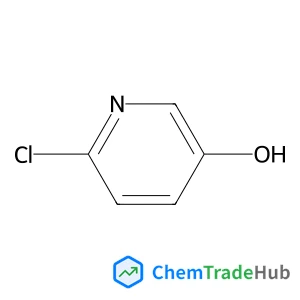
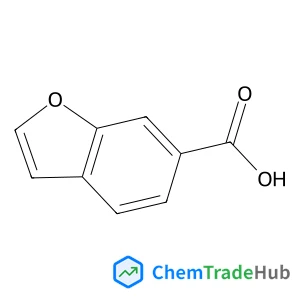
Recommended Suppliers




Disclaimer
This page provides academic journal information for reference and research purposes only. We are not affiliated with any journal publishers and do not handle publication submissions. For publication-related inquiries, please contact the respective journal publishers directly.
If you notice any inaccuracies in the information displayed, please contact us at support@chemtradehub.com. We will promptly review and address your concerns.