












Infra-red spectroscopy of size selected Au25, Au38 and Au144ligand protected gold clusters
Literature Information
Publication Date
2013-06-05
DOI
10.1039/C3CP51406D
Impact Factor
3.676
Authors
Mostafa Farrag, Martin Tschurl, Amala Dass, Ulrich Heiz
View Original
Abstract
Through the discovery of ligand protected metal clusters with cores of a precise number of atoms, the exploration of the third dimension of the periodic table for fundamental research and also for applications has become less remote. So far, the exact number of metal atoms in the core has been determined unambiguously only using mass spectrometry and single crystal X-ray diffraction. Gold clusters protected by 2-phenylethanethiol ligands, for instance, show distinct magic numbers that correspond to either electronic or geometric shell closings. For efficient control of their synthesis simple-to-use in situ spectroscopies are required. In the specific case of Au25(SCH2CH2Ph)18 clusters (1) we found a distinct shift of the aromatic C–H stretching band from 3030–3100 cm−1 to below 3000 cm−1 whose origin is discussed as an electronic interaction of the aromatic rings of the ligands with each other or with the gold core. This IR-feature is specific for Au25; the spectra of Au38(SCH2CH2Ph)24 (2) and Au144(SCH2CH2Ph)60 (3) clusters do not show this distinct shift and their IR-spectra in the C–H stretching regime are similar to that of the bare ligand. This significant change in the IR spectrum of Au25(SCH2CH2Ph)18 is not only of fundamental interest but also allows for in situ determination of the purity and monodispersity of the sample using FTIR spectroscopy during synthesis.
Related Literature
Electrochemically induced oxygen spillover and diffusion on Pt(111): PEEM imaging and kinetic modelling
Eva Mutoro, Christian Hellwig, Bjoern Luerssen, Sebastian Guenther, Jürgen Janek
2011-06-20
Paper
DOI: 10.1039/C1CP20361D
Reply to the ‘Comment on “The electron density vs. NICS scan: a new approach to assess aromaticity in molecules with different ring sizes”’ by A. Stanger, Phys. Chem. Chem. Phys., 2011, 13, DOI: 10.1039/c0cp02407d
Cina Foroutan-Nejad, Shant Shahbazian, Parviz Rashidi-Ranjbar
2011-06-13
Comment
DOI: 10.1039/C1CP21224A
Molecular dynamics simulation studies of absorption in piperazine activated MDEA solution
Amir Hajiahmadi Farmahini, Bjørn Kvamme, Tatiana Kuznetsova
2011-06-20
Paper
DOI: 10.1039/C0CP02238A
Structure prediction, disorder and dynamics in a DMSO solvate of carbamazepine
Aurora J. Cruz-Cabeza, Graeme M. Day, William Jones
2011-06-14
Paper
DOI: 10.1039/C1CP20927B
Durable electrocatalytic-activity of Pt–Au/C cathode in PEMFCs
S. Vinod Selvaganesh, G. Selvarani, P. Sridhar, S. Pitchumani, A. K. Shukla
2011-06-14
Paper
DOI: 10.1039/C1CP20243J
Hofmeister effects: interplay of hydration, nonelectrostatic potentials, and ion size
Drew F. Parsons, Mathias Boström, Pierandrea Lo Nostro, Barry W. Ninham
2011-06-14
Perspective
DOI: 10.1039/C1CP20538B
Towards experimental determination of conical intersection properties: a twin state based comparison with bound excited states
Shmuel Zilberg, Yehuda Haas
2011-05-27
Paper
DOI: 10.1039/C1CP20268E
Physicochemical properties and plastic crystal structures of phosphonium fluorohydrogenate salts
Takeshi Enomoto, Shunsuke Kanematsu, Katsuhiko Tsunashima, Kazuhiko Matsumoto, Rika Hagiwara
2011-06-10
Paper
DOI: 10.1039/C1CP20285E
You might also like
Compound Q&A
What are the main uses of 1H-Indazole-6-carbonitrile (CAS: 141290-59-7)?
1H-Indazole-6-carbonitrile finds applications in pharmaceuticals, where it serve...
141290-59-71H-Indazole-6-carbon...
Compound Q&A
How should waste containing Dioctyl (2E)-2-butenedioate (CAS: 2997-85-5) be handled?
Waste containing Dioctyl (2E)-2-butenedioate (CAS: 2997-85-5) should be collecte...
2997-85-5Dioctyl (2E)-2-buten...
Compound Q&A
What industries use Sodium [(1,2-benzoxazol-3-ylmethyl)sulfonyl]azanide (CAS: 68291-98-5)?
Sodium [(1,2-benzoxazol-3-ylmethyl)sulfonyl]azanide is primarily used in pharmac...
68291-98-5Sodium [(1,2-benzoxa...
Compound Q&A
Are there alternatives to Dimethyl 4-(4,4,5,5-tetramethyl-1,3,2-dioxaborolan-2-yl)-2,6-pyridinedicarboxylate (CAS: 741709-66-0) in synthesis?
Dimethyl 4-(4,4,5,5-tetramethyl-1,3,2-dioxaborolan-2-yl)-2,6-pyridinedicarboxyla...
741709-66-0Dimethyl 4-(4,4,5,5-...
Compound Q&A
How should waste containing 2-Fluoro-6-hydrazinopyridine (CAS: 80714-39-2) be handled?
Waste containing 2-Fluoro-6-hydrazinopyridine (CAS: 80714-39-2) should be manage...
80714-39-22-Fluoro-6-hydrazino...
Compound Q&A
What is 6-Formyl-2-pyridinecarboxylic acid (CAS: 499214-11-8)?
6-Formyl-2-pyridinecarboxylic acid is an organic compound with the molecular for...
499214-11-86-Formyl-2-pyridinec...
Compound Q&A
What is the market or research trend for 3-(3,4-dimethoxyphenyl)-2,5-dimethyl-N-(2-morpholin-4-ylethyl)pyrazolo[1,5-a]pyrimidin-7-amine (CAS: 900874-91-1)?
Research trends for this compound indicate a focus on its potential applications...
900874-91-13-(3,4-dimethoxyphen...
Compound Q&A
How is 9H-Tribenzo[b,d,f]azepine (CAS: 29875-73-8) typically synthesized?
9H-Tribenzo[b,d,f]azepine is typically synthesized via a multi-step process invo...
29875-73-89H-Tribenzo[b,d,f]az...
Compound Q&A
How is 1-Cyclopropyl-7-ethoxy-6-fluoro-8-methoxy-4-oxo-1,4-dihydro-3-quinolinecarboxylic acid (CAS: 1797982-51-4) typically synthesized?
1-Cyclopropyl-7-ethoxy-6-fluoro-8-methoxy-4-oxo-1,4-dihydro-3-quinolinecarboxyli...
1797982-51-41-Cyclopropyl-7-etho...
Compound Q&A
How should waste containing Methyl 3-oxo-1,2,3,4-tetrahydro-6-quinoxalinecarboxylate (CAS: 671820-52-3) be handled?
Waste containing Methyl 3-oxo-1,2,3,4-tetrahydro-6-quinoxalinecarboxylate (CAS: ...
671820-52-3Methyl 3-oxo-1,2,3,4...
Source Journal
Physical Chemistry Chemical Physics

CiteScore:
5.5
Self-citation Rate:
10.3%
Articles per Year:
3036
Physical Chemistry Chemical Physics (PCCP) is an international journal co-owned by 19 physical chemistry and physics societies from around the world. This journal publishes original, cutting-edge research in physical chemistry, chemical physics and biophysical chemistry. To be suitable for publication in PCCP, articles must include significant innovation and/or insight into physical chemistry; this is the most important criterion that reviewers and Editors will judge against when evaluating submissions. The journal has a broad scope and welcomes contributions spanning experiment, theory, computation and data science. Topical coverage includes spectroscopy, dynamics, kinetics, statistical mechanics, thermodynamics, electrochemistry, catalysis, surface science, quantum mechanics, quantum computing and machine learning. Interdisciplinary research areas such as polymers and soft matter, materials, nanoscience, energy, surfaces/interfaces, and biophysical chemistry are welcomed if they demonstrate significant innovation and/or insight into physical chemistry. Joined experimental/theoretical studies are particularly appreciated when complementary and based on up-to-date approaches.
Recommended Compounds


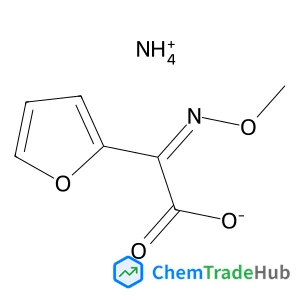
Ammonium (Z)-2-(furan-2-yl)-2-(methoxyimino)acetate
CAS Number:
97148-39-5
Molecular Formula:
C7H10N2O4
Recommended Suppliers






Disclaimer
This page provides academic journal information for reference and research purposes only. We are not affiliated with any journal publishers and do not handle publication submissions. For publication-related inquiries, please contact the respective journal publishers directly.
If you notice any inaccuracies in the information displayed, please contact us at support@chemtradehub.com. We will promptly review and address your concerns.