












First spectroscopic identification of pyrocarbonate for high CO2 flux membranes containing highly interconnected three dimensional ionic channels
Literature Information
Publication Date
2013-06-11
DOI
10.1039/C3CP52362D
Impact Factor
3.676
Authors
Lingling Zhang, Xinyu Huang, Changyong Qin, Kyle Brinkman, Yunhui Gong, Siwei Wang, Kevin Huang
View Original
Abstract
Identification of the existence of pyrocarbonate ion C2O52− in molten carbonates exposed to a CO2 atmosphere provides key support for a newly established bi-ionic transport model that explains the mechanisms of high CO2 permeation flux observed in mixed oxide-ion and carbonate-ion conducting (MOCC) membranes containing highly interconnected three dimensional ionic channels. Here we report the first Raman spectroscopic evidence of C2O52− as an active species involved in the CO2-transport process of MOCC membranes exposed to a CO2 atmosphere. The two new broad peaks centered at 1317 cm−1 and 1582 cm−1 are identified as the characteristic frequencies of the C2O52− species. The measured characteristic Raman frequencies of C2O52− are in excellent agreement with the DFT-model consisting of six overlapping individual theoretical bands calculated from Li2C2O5 and Na2C2O5.
Recommended Journals
Related Literature
Photoelectrochemical-assisted determination of caffeic acid exploiting a composite based on carbon nanotubes, cadmium telluride quantum dots, and titanium dioxide
Chirlene Nascimento Botelho, Neuma das Mercês Pereira, Glaura Goulart Silva, Alan Silva de Menezes, Cícero Wellington Brito Bezerra, Flavio Santos Damos, Rita de Cássia Silva Luz
2019-08-26
Paper
DOI: 10.1039/C9AY01422E
Graphene oxide-circular aptamer based colorimetric protein detection on bioactive paper
Xue Li, Xin He, Qiang Zhang, Yangyang Chang, Meng Liu
2019-07-12
Paper
DOI: 10.1039/C9AY01060B
Surfactant-templated zeolites for the production of active pharmaceutical intermediates
Noemi Linares, Francisco G. Cirujano, Dirk E. De Vos, J. García-Martínez
2019-10-10
Communication
DOI: 10.1039/C9CC06696A
Core–shell CdSeTe/ZnS quantum dots for the detection of microRNA-155 based on the fluorescence resonance energy transfer technique via the formation of a network structure
Feng Cui, Qianying Qiu, Gang Peng, Xiaoyan Li, Xi Liu, Xiaojun Chen
2019-07-11
Paper
DOI: 10.1039/C9AY00783K
A label-free turn ON–OFF chemiluminescence strategy for lysozyme detection by target-triggered Cu2−xSe aggregation
Hong Yan Zou, Fang Fang Zhang, Qing Juan Guo, Tong Yang
2019-07-24
Paper
DOI: 10.1039/C9AY01288E
An electrostatic self-assembly route to prepare C-dots/gold nanoclusters for dual-emission ratiometric optical thermometry in living cells
Xiaojie Zhang, Chunxia Yin, Xun Zhang, Jiaping Zhang, Xinwai Wang, Jingwei Xin
2019-07-26
Paper
DOI: 10.1039/C9AY01115C
Facile synthesis of yellow fluorescent carbon dots for highly sensitive sensing of cobalt ions and biological imaging
Min Tian, Yaoming Liu, Yingte Wang, Yong Zhang
2019-07-25
Communication
DOI: 10.1039/C9AY01244C
You might also like
Compound Q&A
What are the main uses of 1H-Indazole-6-carbonitrile (CAS: 141290-59-7)?
1H-Indazole-6-carbonitrile finds applications in pharmaceuticals, where it serve...
141290-59-71H-Indazole-6-carbon...
Compound Q&A
How should waste containing Dioctyl (2E)-2-butenedioate (CAS: 2997-85-5) be handled?
Waste containing Dioctyl (2E)-2-butenedioate (CAS: 2997-85-5) should be collecte...
2997-85-5Dioctyl (2E)-2-buten...
Compound Q&A
What industries use Sodium [(1,2-benzoxazol-3-ylmethyl)sulfonyl]azanide (CAS: 68291-98-5)?
Sodium [(1,2-benzoxazol-3-ylmethyl)sulfonyl]azanide is primarily used in pharmac...
68291-98-5Sodium [(1,2-benzoxa...
Compound Q&A
Are there alternatives to Dimethyl 4-(4,4,5,5-tetramethyl-1,3,2-dioxaborolan-2-yl)-2,6-pyridinedicarboxylate (CAS: 741709-66-0) in synthesis?
Dimethyl 4-(4,4,5,5-tetramethyl-1,3,2-dioxaborolan-2-yl)-2,6-pyridinedicarboxyla...
741709-66-0Dimethyl 4-(4,4,5,5-...
Compound Q&A
How should waste containing 2-Fluoro-6-hydrazinopyridine (CAS: 80714-39-2) be handled?
Waste containing 2-Fluoro-6-hydrazinopyridine (CAS: 80714-39-2) should be manage...
80714-39-22-Fluoro-6-hydrazino...
Compound Q&A
What is 6-Formyl-2-pyridinecarboxylic acid (CAS: 499214-11-8)?
6-Formyl-2-pyridinecarboxylic acid is an organic compound with the molecular for...
499214-11-86-Formyl-2-pyridinec...
Compound Q&A
What is the market or research trend for 3-(3,4-dimethoxyphenyl)-2,5-dimethyl-N-(2-morpholin-4-ylethyl)pyrazolo[1,5-a]pyrimidin-7-amine (CAS: 900874-91-1)?
Research trends for this compound indicate a focus on its potential applications...
900874-91-13-(3,4-dimethoxyphen...
Compound Q&A
How is 9H-Tribenzo[b,d,f]azepine (CAS: 29875-73-8) typically synthesized?
9H-Tribenzo[b,d,f]azepine is typically synthesized via a multi-step process invo...
29875-73-89H-Tribenzo[b,d,f]az...
Compound Q&A
How is 1-Cyclopropyl-7-ethoxy-6-fluoro-8-methoxy-4-oxo-1,4-dihydro-3-quinolinecarboxylic acid (CAS: 1797982-51-4) typically synthesized?
1-Cyclopropyl-7-ethoxy-6-fluoro-8-methoxy-4-oxo-1,4-dihydro-3-quinolinecarboxyli...
1797982-51-41-Cyclopropyl-7-etho...
Compound Q&A
How should waste containing Methyl 3-oxo-1,2,3,4-tetrahydro-6-quinoxalinecarboxylate (CAS: 671820-52-3) be handled?
Waste containing Methyl 3-oxo-1,2,3,4-tetrahydro-6-quinoxalinecarboxylate (CAS: ...
671820-52-3Methyl 3-oxo-1,2,3,4...
Source Journal
Physical Chemistry Chemical Physics

CiteScore:
5.5
Self-citation Rate:
10.3%
Articles per Year:
3036
Physical Chemistry Chemical Physics (PCCP) is an international journal co-owned by 19 physical chemistry and physics societies from around the world. This journal publishes original, cutting-edge research in physical chemistry, chemical physics and biophysical chemistry. To be suitable for publication in PCCP, articles must include significant innovation and/or insight into physical chemistry; this is the most important criterion that reviewers and Editors will judge against when evaluating submissions. The journal has a broad scope and welcomes contributions spanning experiment, theory, computation and data science. Topical coverage includes spectroscopy, dynamics, kinetics, statistical mechanics, thermodynamics, electrochemistry, catalysis, surface science, quantum mechanics, quantum computing and machine learning. Interdisciplinary research areas such as polymers and soft matter, materials, nanoscience, energy, surfaces/interfaces, and biophysical chemistry are welcomed if they demonstrate significant innovation and/or insight into physical chemistry. Joined experimental/theoretical studies are particularly appreciated when complementary and based on up-to-date approaches.
Recommended Compounds

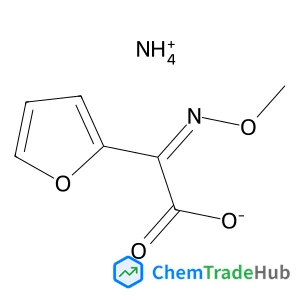
Ammonium (Z)-2-(furan-2-yl)-2-(methoxyimino)acetate
CAS Number:
97148-39-5
Molecular Formula:
C7H10N2O4

Recommended Suppliers







Disclaimer
This page provides academic journal information for reference and research purposes only. We are not affiliated with any journal publishers and do not handle publication submissions. For publication-related inquiries, please contact the respective journal publishers directly.
If you notice any inaccuracies in the information displayed, please contact us at support@chemtradehub.com. We will promptly review and address your concerns.