












First-principles studies on transport properties and contact effects of Cu(111)/ZnO-nanobelt(100)/Cu(111) systems
Literature Information
Publication Date
2013-05-31
DOI
10.1039/C3CP50212K
Impact Factor
3.676
Authors
Xu Sun, Yousong Gu, Xueqiang Wang, Yue Zhang
View Original
Abstract
The transport properties of ZnO nanobelts along the 〈100〉 non-polarized direction coupled with Cu electrodes were studied via non-equivalent Greens functions method and density functional theory formalism. The transport properties were greatly affected by interfacial spacing and nanobelt widths. The conductance decreased exponentially with the widths of the nanobelts. Ohmic behavior was found in narrow nanobelts, while rectifying characteristics were observed in wide nanobelts. In the case of narrow belts, the current–voltage characteristics were changed from ohmic type to rectifying characteristics as the interspace increased, corresponding to the contacts transforming from chemical to physical interactions. However, the conductance in the wider nanobelts declined exponentially as the interfacial distance increased. The change of metal induced gap states (MIGS) depends strongly on the interfacial distance but not significantly on the thickness of ZnO nanobelts. An n-type Schottky barrier between copper and ZnO nanobelts is induced by interfacial polarization effects. The Schottky barrier heights for the narrowest and widest nanobelts with equilibrium interfacial spacing were 0.37 eV and 0.44 eV, respectively, which is in good agreement with the experimental values. Additionally, the Schottky barrier heights increased almost linearly as the width of the nanobelts changed from 0.34 nm to 1.2 nm.
Related Literature
Pt nanoparticles supported on YCoxFe1−xO3 perovskite oxides: highly efficient catalysts for liquid-phase hydrogenation of cinnamaldehyde
Yujie Xue, Huiyue Xin, Wenhui Xie, Peng Wu, Xiaohong Li
2019-02-21
Communication
DOI: 10.1039/C9CC00318E
Artificial repressors for controlling gene expression in bacteria‡
2012-11-19
Communication
DOI: 10.1039/C2CC37107C
Cu(i)–SNS complexes for outer-sphere hydroboration and hydrosilylation of carbonyls
Matthew R. Elsby, R. Tom Baker
2019-10-28
Communication
DOI: 10.1039/C9CC07266G
Quantitative analysis of toxic elements in polypropylene (PP) via laser-induced breakdown spectroscopy (LIBS) coupled with random forest regression based on variable importance (VI-RFR)
Ke Liu, Di Tian, Heyi Xu, Hongxia Wang, Guang Yang
2019-08-28
Paper
DOI: 10.1039/C9AY01796H
Gold nanoparticle etching induced by an enzymatic-like reaction for the colorimetric detection of hydrogen peroxide and glucose
2019-08-21
Paper
DOI: 10.1039/C9AY01599J
Fabrication of dual-template molecularly imprinted mesoporous silica for simultaneous rapid and efficient detection of bisphenol A and diethylstilbestrol in environmental water samples
Mengjie Tian, Kai Yu, Leyan Li, Yafei Wang, Liping Guo, Zulei Zhang, Yixia Lu, Lei Li
2019-08-19
Paper
DOI: 10.1039/C9AY01368G
An electrostatic self-assembly route to prepare C-dots/gold nanoclusters for dual-emission ratiometric optical thermometry in living cells
Xiaojie Zhang, Chunxia Yin, Xun Zhang, Jiaping Zhang, Xinwai Wang, Jingwei Xin
2019-07-26
Paper
DOI: 10.1039/C9AY01115C
A highly efficient fluorescent probe based on tetrahydroxanthylium–coumarin for the detection of bisulfite in mitochondria
Meng-Xiang Wu, Xue-Rui Wei, Yu-Fang Wei, Ru Sun, Yu-Jie Xu
2019-07-29
Paper
DOI: 10.1039/C9AY01355E
You might also like
Compound Q&A
What are the main uses of 1H-Indazole-6-carbonitrile (CAS: 141290-59-7)?
1H-Indazole-6-carbonitrile finds applications in pharmaceuticals, where it serve...
141290-59-71H-Indazole-6-carbon...
Compound Q&A
How should waste containing Dioctyl (2E)-2-butenedioate (CAS: 2997-85-5) be handled?
Waste containing Dioctyl (2E)-2-butenedioate (CAS: 2997-85-5) should be collecte...
2997-85-5Dioctyl (2E)-2-buten...
Compound Q&A
What industries use Sodium [(1,2-benzoxazol-3-ylmethyl)sulfonyl]azanide (CAS: 68291-98-5)?
Sodium [(1,2-benzoxazol-3-ylmethyl)sulfonyl]azanide is primarily used in pharmac...
68291-98-5Sodium [(1,2-benzoxa...
Compound Q&A
Are there alternatives to Dimethyl 4-(4,4,5,5-tetramethyl-1,3,2-dioxaborolan-2-yl)-2,6-pyridinedicarboxylate (CAS: 741709-66-0) in synthesis?
Dimethyl 4-(4,4,5,5-tetramethyl-1,3,2-dioxaborolan-2-yl)-2,6-pyridinedicarboxyla...
741709-66-0Dimethyl 4-(4,4,5,5-...
Compound Q&A
How should waste containing 2-Fluoro-6-hydrazinopyridine (CAS: 80714-39-2) be handled?
Waste containing 2-Fluoro-6-hydrazinopyridine (CAS: 80714-39-2) should be manage...
80714-39-22-Fluoro-6-hydrazino...
Compound Q&A
What is 6-Formyl-2-pyridinecarboxylic acid (CAS: 499214-11-8)?
6-Formyl-2-pyridinecarboxylic acid is an organic compound with the molecular for...
499214-11-86-Formyl-2-pyridinec...
Compound Q&A
What is the market or research trend for 3-(3,4-dimethoxyphenyl)-2,5-dimethyl-N-(2-morpholin-4-ylethyl)pyrazolo[1,5-a]pyrimidin-7-amine (CAS: 900874-91-1)?
Research trends for this compound indicate a focus on its potential applications...
900874-91-13-(3,4-dimethoxyphen...
Compound Q&A
How is 9H-Tribenzo[b,d,f]azepine (CAS: 29875-73-8) typically synthesized?
9H-Tribenzo[b,d,f]azepine is typically synthesized via a multi-step process invo...
29875-73-89H-Tribenzo[b,d,f]az...
Compound Q&A
How is 1-Cyclopropyl-7-ethoxy-6-fluoro-8-methoxy-4-oxo-1,4-dihydro-3-quinolinecarboxylic acid (CAS: 1797982-51-4) typically synthesized?
1-Cyclopropyl-7-ethoxy-6-fluoro-8-methoxy-4-oxo-1,4-dihydro-3-quinolinecarboxyli...
1797982-51-41-Cyclopropyl-7-etho...
Compound Q&A
How should waste containing Methyl 3-oxo-1,2,3,4-tetrahydro-6-quinoxalinecarboxylate (CAS: 671820-52-3) be handled?
Waste containing Methyl 3-oxo-1,2,3,4-tetrahydro-6-quinoxalinecarboxylate (CAS: ...
671820-52-3Methyl 3-oxo-1,2,3,4...
Source Journal
Physical Chemistry Chemical Physics

CiteScore:
5.5
Self-citation Rate:
10.3%
Articles per Year:
3036
Physical Chemistry Chemical Physics (PCCP) is an international journal co-owned by 19 physical chemistry and physics societies from around the world. This journal publishes original, cutting-edge research in physical chemistry, chemical physics and biophysical chemistry. To be suitable for publication in PCCP, articles must include significant innovation and/or insight into physical chemistry; this is the most important criterion that reviewers and Editors will judge against when evaluating submissions. The journal has a broad scope and welcomes contributions spanning experiment, theory, computation and data science. Topical coverage includes spectroscopy, dynamics, kinetics, statistical mechanics, thermodynamics, electrochemistry, catalysis, surface science, quantum mechanics, quantum computing and machine learning. Interdisciplinary research areas such as polymers and soft matter, materials, nanoscience, energy, surfaces/interfaces, and biophysical chemistry are welcomed if they demonstrate significant innovation and/or insight into physical chemistry. Joined experimental/theoretical studies are particularly appreciated when complementary and based on up-to-date approaches.
Recommended Compounds

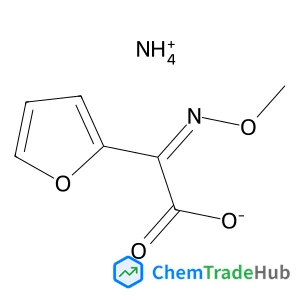
Ammonium (Z)-2-(furan-2-yl)-2-(methoxyimino)acetate
CAS Number:
97148-39-5
Molecular Formula:
C7H10N2O4
Recommended Suppliers



Disclaimer
This page provides academic journal information for reference and research purposes only. We are not affiliated with any journal publishers and do not handle publication submissions. For publication-related inquiries, please contact the respective journal publishers directly.
If you notice any inaccuracies in the information displayed, please contact us at support@chemtradehub.com. We will promptly review and address your concerns.