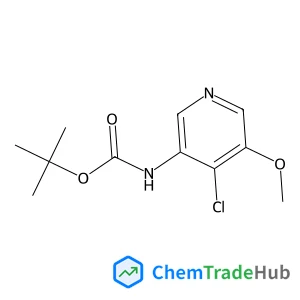
tert-Butyl 4-chloro-5-methoxypyridin-3-ylcarbamate
CAS Number:
1045858-17-0
Molecular Formula:
C11H15ClN2O3
ShuangYing Ma, L. Z. Sun, K. W. Zhang
Two novel two-dimensional (2D) carbon allotropes named Cy and Cz with large meshes are predicted based on first-principles calculations. Their formation energies are lower than that of graphdiyne, which was recently synthesized in an experiment. Molecular dynamics simulations indicate that Cy and Cz are stable even when the temperature is over 1000 K. The calculated Poisson's ratios of Cy and Cz show their anisotropic mechanical properties. The electronic structure calculations indicate that Cy is a metal, while Cz behaves as a semiconductor. Moreover, Cz shows conductive anisotropy suggesting its potential in nanoelectronic devices. Meanwhile, their well-defined mesh structures are suitable for molecular sieves.
Charu Upadhyay, Poonam, Sumit Kumar, Brijesh Rathi
DOI: 10.1039/D1MD00244A
Katrien Van Bocxlaer, Simon L. Croft
DOI: 10.1039/D0MD00343C
Krishna K. Sharma, Robert J. Cassell, Hongyu Su, Benjamin R. Cummins, Kendall L. Mores, David K. Johnson
DOI: 10.1039/D1MD00025J
Manuel E. Otero-Ramirez, Kyoko Matoba, Emiko Mihara, Junichi Takagi, Hiroaki Suga
DOI: 10.1039/D0CB00016G
Kaitlind C. Howard, Octavio A. Gonzalez, Sylvie Garneau-Tsodikova
DOI: 10.1039/D0MD00424C
Utsav Garg, Yasser Azim
DOI: 10.1039/D0MD00400F
Lisa Barbaro, Gayathri Nagalingam, James A. Triccas, Jonathan B. Baell, Daniel L. Priebbenow
DOI: 10.1039/D1MD00063B
Zhichang Zhao, Yeming Wang, Hong Yan, Juan Wang
DOI: 10.1039/D1MD00128K
Bhagyashri Rathod, Shivam Chak, Sagarkumar Patel, Amit Shard
DOI: 10.1039/D1MD00045D
Quynh Ngoc Vu, Reginald Young, Haritha Krishna Sudhakar, Tianyi Gao, Tiancheng Huang, Yaw Sing Tan, Yu Heng Lau
DOI: 10.1039/D1MD00098E
Waste containing 6-Chloro-5-(2'-hydroxy-3'-methoxy-4-biphenylyl)-3-(3-methoxyphe...
(3alpha,5alpha)-3-Hydroxypregnane-11,20-dione is primarily used in the pharmaceu...
The market for 4-Amino-6-chloro-2-pyridinecarboxylic acid (CAS: 546141-56-4) is ...
Alternatives to (2-Benzoylethyl)trimethylammonium chloride (CAS: 24472-88-6) in ...
N-[4-Nitro-3-(trifluoromethyl)phenyl]acetamide (CAS: 393-12-4) is generally safe...
Alternative reagents such as other phosphates or similar functional groups can b...
There are alternatives to N,N'-Bis(3-aminopropyl)-1,3-propanediamine (CAS: 4605-...
When handling Aluminium trihexadecanoate, it is important to use appropriate per...
(1,1-Dioxido-3-oxo-1,2-benzothiazol-2(3H)-yl)acetic acid is a chemical compound ...
Several alternatives to 5,5-dimethyloxolan-2-one (CAS: 3123-97-5) can be used in...

Physical Chemistry Chemical Physics (PCCP) is an international journal co-owned by 19 physical chemistry and physics societies from around the world. This journal publishes original, cutting-edge research in physical chemistry, chemical physics and biophysical chemistry. To be suitable for publication in PCCP, articles must include significant innovation and/or insight into physical chemistry; this is the most important criterion that reviewers and Editors will judge against when evaluating submissions. The journal has a broad scope and welcomes contributions spanning experiment, theory, computation and data science. Topical coverage includes spectroscopy, dynamics, kinetics, statistical mechanics, thermodynamics, electrochemistry, catalysis, surface science, quantum mechanics, quantum computing and machine learning. Interdisciplinary research areas such as polymers and soft matter, materials, nanoscience, energy, surfaces/interfaces, and biophysical chemistry are welcomed if they demonstrate significant innovation and/or insight into physical chemistry. Joined experimental/theoretical studies are particularly appreciated when complementary and based on up-to-date approaches.