












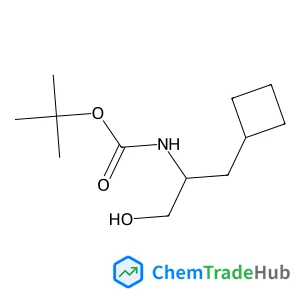
2-Methyl-2-propanyl (1-cyclobutyl-3-hydroxy-2-propanyl)carbamate
CAS Number:
816429-99-9
Molecular Formula:
C12H23NO3
S. Calero, P. Gómez-Álvarez
Volatile organic compound (VOC) emissions can cause serious risk to human health and the environment. In this work, we used Monte Carlo simulations to assess the performance of industrially important zeolites for the adsorption-based removal of a number of common air pollutants, particularly small saturated and unsaturated hydrocarbons: propane, butane, propene, and 1-butene. We focused on the cage-like FAU and channel-like MFI zeolites. The adsorption isotherms of the multicomponent N2/O2/Ar/VOC mixtures at real concentrations and room temperature reveal a considerable influence of the host topology and pore dimensions. While the adsorption of the VOCs from the mixture in FAU is almost negligible, it is remarkable in MFI. The adsorption selectivity of each VOC over the air compounds exhibits a maximum at about 106–107 Pa, and then decreases to virtually zero due to entropic effects. This behaviour for selectivity is maintained regardless of the chain length and the presence of double bonds in the VOC, but the values are indeed affected. Also, we examined the selectivity at 107 Pa for a number of other widely used zeolites, with pore features ensuring the diffusion of the adsorbates. Apart from MFI, we also found the channel-like MEL and MTW zeolite candidates for the targeted air decontamination.
Xia Wu, Davin Tan, Qinglong Qiao, Wenting Yin, Zhaochao Xu, Xiaogang Liu
DOI: 10.1039/D2CP00759B
William Smith, Maxime Pouvreau, Kevin Rosso
DOI: 10.1039/D2CP00534D
Yilin Liu, Jincai Su, Fei Duan, Xin Cui, Weichao Yan, Liwen Jin
DOI: 10.1039/D2CP01411D
Daniël B. Rap, Sandra Brünken, Anouk M. Rijs
DOI: 10.1039/D2CP01631A
Dandan Ma, Jianyi Ma
DOI: 10.1039/D1CP04269F
Maciej Spiegel, Tiziana Marino, Mario Prejanò, Nino Russo
DOI: 10.1039/D2CP01918C
Wenqin Zhu, Pibo Liu, Juntao Ren, Shangtao Chen, Yanming Hu, Guangyuan Zhou
DOI: 10.1039/D1PY01604K
Valentina Zhelyazkova, Fernanda B. V. Martins, Frédéric Merkt
DOI: 10.1039/D1CP05861D
Vladislav Y. Shevtsov, Ting-Yi Hsin, Yeong-Tarng Shieh
DOI: 10.1039/D1PY01697K
When handling 2-Methyl-2-propanyl 5-amino-2-thiophenecarboxylate (CAS: 1498311-5...
5-Bromo-1,2-dichloro-3-fluorobenzene (CAS: 1000572-93-9) is a crystalline solid ...
(2R)-2-Amino-2-(4-bromophenyl)ethanol (CAS: 354153-64-3) should be stored in a c...
Methyl 4-(aminomethyl)tetrahydro-2H-pyran-4-carboxylate hydrochloride (CAS: 3627...
1,4-Dimethyl-1H-pyrazole-5-sulfonyl chloride is primarily used as an intermediat...
Dinaphtho[1,2-b:2',1'-d]furan is generally safe when handled with appropriate pe...
The market for 7-Methyl-7,9-dihydro-1H-purine-2,6,8(3H)-trione (CAS: 612-37-3) i...
2-(4-Chlorophenyl)malonaldehyde (CAS: 205676-17-1) is a colorless or light yello...
2-Methylchrysene (CAS: 3351-32-4) is typically synthesized via the reaction of c...
N-(6-aminopyrimidin-4-yl)acetamide (CAS: 89533-23-3) is generally considered saf...

Physical Chemistry Chemical Physics (PCCP) is an international journal co-owned by 19 physical chemistry and physics societies from around the world. This journal publishes original, cutting-edge research in physical chemistry, chemical physics and biophysical chemistry. To be suitable for publication in PCCP, articles must include significant innovation and/or insight into physical chemistry; this is the most important criterion that reviewers and Editors will judge against when evaluating submissions. The journal has a broad scope and welcomes contributions spanning experiment, theory, computation and data science. Topical coverage includes spectroscopy, dynamics, kinetics, statistical mechanics, thermodynamics, electrochemistry, catalysis, surface science, quantum mechanics, quantum computing and machine learning. Interdisciplinary research areas such as polymers and soft matter, materials, nanoscience, energy, surfaces/interfaces, and biophysical chemistry are welcomed if they demonstrate significant innovation and/or insight into physical chemistry. Joined experimental/theoretical studies are particularly appreciated when complementary and based on up-to-date approaches.
methyl]-N,2-dimethyl-2-propanesulfinamide structure](https://static.chemtradehub.com/structs/256/2565792-50-7-8a26.webp "N-[(R)-[3-(Benzyloxy)-2-(dicyclohexylphosphino)phenyl](phenyl)methyl]-N,2-dimethyl-2-propanesulfinamide structure")
![L-Lysine,N6-[2-[[(1,1-dimethylethoxy)carbonyl]amino]benzoyl]-N2-[(9H-fluoren-9-ylmethoxy)carbonyl]- structure](https://static.chemtradehub.com/structs/159/159322-59-5-c046.webp "L-Lysine,N6-[2-[[(1,1-dimethylethoxy)carbonyl]amino]benzoyl]-N2-[(9H-fluoren-9-ylmethoxy)carbonyl]- structure")




