












![2,5-Dichloro-1H-pyrrolo[3,2-b]pyridine structure](https://static.chemtradehub.com/structs/100/1000342-87-9-f632.webp "2,5-Dichloro-1H-pyrrolo[3,2-b]pyridine structure")
Preparation of amphiphilic copolymers via base-catalyzed hydrolysis of quaternized poly[2-(dimethylamino)ethyl methacrylate]
Literature Information
Publication Date
2022-02-11
DOI
10.1039/D1PY01697K
Impact Factor
5.582
Authors
Vladislav Y. Shevtsov, Ting-Yi Hsin, Yeong-Tarng Shieh
View Original
Abstract
The multi-stimuli-responsiveness of tertiary amine-containing polyacrylates makes them highly attractive for use in a wide range of applications. In the last decade, poly[2-(dimethylamino)ethyl methacrylate] (PDMAEMA) has received exceptionally great attention due to its versatility, accessibility, and biocompatibility. A process of quaternization of this polymer has already been widely established predominantly because quaternized PDMAEMA (qPDMAEMA) surfaces have been shown to possess an effective antibacterial activity. While studies on the hydrolytic stability of PDMAEMA can be found in the relevant literature, information about the hydrolysis of qPDMAEMA has been, to date, severely lacking. Here, we report the preparation of well-defined PDMAEMA via atom transfer radical polymerization (ATRP) and its partial and complete quaternization with iodomethane (CH3I). Our primary focus was on base-promoted hydrolysis; therefore over the course of two weeks, the reaction of PDMAEMA and three qPDMAEMA of different degrees of quaternization with a base in an aqueous medium was monitored by 1H NMR to obtain a comprehensive kinetic picture of hydrolysis. It was found that under mild conditions (25 °C, 0.25 M NaOD concentration), qPDMAEMA side groups slowly degrade to poly[methacrylic acid] (PMAA), meaning that via consecutive quaternization and hydrolysis, a large variety of desired, cationic, anionic, and zwitterionic copolymers can be synthesized with precise control. We showed that highly stable to hydrolysis PDMAEMA after transformation into qPDMAEMA can be easily hydrolyzed in an alkaline solution, and that opens an alternative, simple, and highly controllable way of preparation of PMAA. The rate and the degree of degradation of quaternized repeating units are dependent on their amount in the copolymer chains. A drastic difference between PDMAEMA and qPDMAEMA in terms of sensitivity to hydrolysis and unexpected rates of this reaction were suspected to be caused by the intramolecular interactions within the side groups and by electrostatic interactions, respectively.
Related Literature
Nanocrystals of [Cu3(btc)2] (HKUST-1): a combined time-resolved light scattering and scanning electron microscopy study
Denise Zacher, Jianing Liu, Klaus Huber, Roland A. Fischer
2009-01-27
Communication
DOI: 10.1039/B819580C
(H2NC4H8NCH2CH2NH2)2Zn2Sn2Se7: a hybrid ternary semiconductor stabilized by amine molecules acting simultaneously as ligands and counterions
Aggelos Philippidis, Thomas Bakas, Pantelis N. Trikalitis
2009-02-03
Communication
DOI: 10.1039/B821859E
Stereoselective Reformatskii–Claisen rearrangement: synthesis of 2′,3′-dideoxy-6′,6′-difluoro-2′-thionucleosides
Feng Zheng, Xingang Zhang, Feng-Ling Qing
2009-01-26
Communication
DOI: 10.1039/B819289H
Unsuspected mesomorphism in “tail-free” cyclopalladated 3,5-disubstituted-2-(2′-pyridyl)pyrroles
Daniela Pucci, Iolinda Aiello, Alessia Aprea, Anna Bellusci, Alessandra Crispini, Mauro Ghedini
2009-02-20
Communication
DOI: 10.1039/B818603K
Nitrogen-doped titania nanosheets towards visible light response
Lianzhou Wang, Chenghua Sun, Zhigang Chen, Xiaoxia Yan, Lina Cheng, Hui-Ming Cheng, Gao Qing (Max) Lu
2009-01-22
Communication
DOI: 10.1039/B820483G
Chiral detection at a liquid–liquid interface
Ritu Kataky, Paula Lopes
2009-02-18
Communication
DOI: 10.1039/B822685G
Fluorophore-cored dendrimers for patterns in metalloprotein sensing
Siriporn Jiwpanich, Britto S. Sandanaraj, S. Thayumanavan
2009-01-05
Communication
DOI: 10.1039/B815263B
Single amino acid chelates (SAAC): a strategy for the design of technetium and rhenium radiopharmaceuticals
Mark Bartholomä, John Valliant, Kevin P. Maresca, John Babich, Jon Zubieta
2008-12-01
Feature Article
DOI: 10.1039/B814903H
You might also like
Compound Q&A
What precautions should be taken when handling 2-Methyl-2-propanyl 5-amino-2-thiophenecarboxylate (CAS: 1498311-57-1)?
When handling 2-Methyl-2-propanyl 5-amino-2-thiophenecarboxylate (CAS: 1498311-5...
1498311-57-12-Methyl-2-propanyl ...
Compound Q&A
What are the physical and chemical properties of 5-Bromo-1,2-dichloro-3-fluorobenzene (CAS: 1000572-93-9)?
5-Bromo-1,2-dichloro-3-fluorobenzene (CAS: 1000572-93-9) is a crystalline solid ...
1000572-93-95-Bromo-1,2-dichloro...
Compound Q&A
How should (2R)-2-Amino-2-(4-bromophenyl)ethanol (CAS: 354153-64-3) be stored?
(2R)-2-Amino-2-(4-bromophenyl)ethanol (CAS: 354153-64-3) should be stored in a c...
354153-64-3(2R)-2-Amino-2-(4-br...
Compound Q&A
What regulatory guidelines apply to Methyl 4-(aminomethyl)tetrahydro-2H-pyran-4-carboxylate hydrochloride (CAS: 362707-24-2)?
Methyl 4-(aminomethyl)tetrahydro-2H-pyran-4-carboxylate hydrochloride (CAS: 3627...
362707-24-2Methyl 4-(aminomethy...
Compound Q&A
What are the main uses of 1,4-dimethyl-1H-pyrazole-5-sulfonyl chloride (CAS: 1174834-52-6)?
1,4-Dimethyl-1H-pyrazole-5-sulfonyl chloride is primarily used as an intermediat...
1174834-52-61,4-dimethyl-1H-pyra...
Compound Q&A
Is Dinaphtho[1,2-b:2',1'-d]furan (CAS: 239-69-0) safe?
Dinaphtho[1,2-b:2',1'-d]furan is generally safe when handled with appropriate pe...
239-69-0Dinaphtho[1,2-b:2',1...
Compound Q&A
What is the market or research trend for 7-Methyl-7,9-dihydro-1H-purine-2,6,8(3H)-trione (CAS: 612-37-3)?
The market for 7-Methyl-7,9-dihydro-1H-purine-2,6,8(3H)-trione (CAS: 612-37-3) i...
612-37-37-Methyl-7,9-dihydro...
Compound Q&A
What are the physical and chemical properties of 2-(4-Chlorophenyl)malonaldehyde (CAS: 205676-17-1)?
2-(4-Chlorophenyl)malonaldehyde (CAS: 205676-17-1) is a colorless or light yello...
205676-17-12-(4-Chlorophenyl)ma...
Compound Q&A
How is 2-Methylchrysene (CAS: 3351-32-4) typically synthesized?
2-Methylchrysene (CAS: 3351-32-4) is typically synthesized via the reaction of c...
3351-32-42-Methylchrysene
Compound Q&A
Is N-(6-aminopyrimidin-4-yl)acetamide (CAS: 89533-23-3) safe?
N-(6-aminopyrimidin-4-yl)acetamide (CAS: 89533-23-3) is generally considered saf...
89533-23-3N-(6-aminopyrimidin-...
Source Journal
Polymer Chemistry

CiteScore:
8.6
Self-citation Rate:
7.3%
Articles per Year:
457
Polymer Chemistry welcomes submissions in all areas of polymer science that have a strong focus on macromolecular chemistry. Manuscripts may cover a broad range of fields, yet no direct application focus is required.
Recommended Compounds
![L-Lysine,N6-[2-[[(1,1-dimethylethoxy)carbonyl]amino]benzoyl]-N2-[(9H-fluoren-9-ylmethoxy)carbonyl]- structure](https://static.chemtradehub.com/structs/159/159322-59-5-c046.webp "L-Lysine,N6-[2-[[(1,1-dimethylethoxy)carbonyl]amino]benzoyl]-N2-[(9H-fluoren-9-ylmethoxy)carbonyl]- structure")
L-Lysine,N6-[2-[[(1,1-dimethylethoxy)carbonyl]amino]benzoyl]-N2-[(9H-fluoren-9-ylmethoxy)carbonyl]-
CAS Number:
159322-59-5
Molecular Formula:
C33H37N3O7
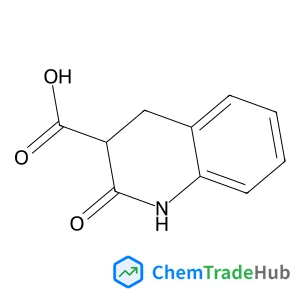
2-Oxo-1,2,3,4-tetrahydro-3-quinolinecarboxylic acid
CAS Number:
246867-17-4
Molecular Formula:
C10H9NO3
![1-Oxa-8-azaspiro[4.5]decan-3-ol structure](https://static.chemtradehub.com/structs/757/757239-76-2-a0ec.webp "1-Oxa-8-azaspiro[4.5]decan-3-ol structure")
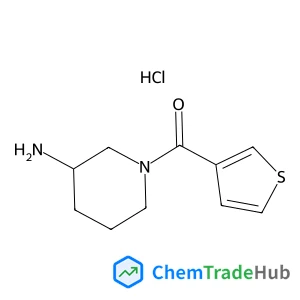
(3-Amino-piperidin-1-yl)-thiophen-3-yl-methanone hydrochloride
CAS Number:
1185316-70-4
Molecular Formula:
C10H15ClN2OS
Recommended Suppliers





Disclaimer
This page provides academic journal information for reference and research purposes only. We are not affiliated with any journal publishers and do not handle publication submissions. For publication-related inquiries, please contact the respective journal publishers directly.
If you notice any inaccuracies in the information displayed, please contact us at support@chemtradehub.com. We will promptly review and address your concerns.