












Molecular simulation of enhanced separation of humid air components using GO–PVA nanocomposite membranes under differential pressures
Literature Information
Publication Date
2022-06-16
DOI
10.1039/D2CP01411D
Impact Factor
3.676
Authors
Yilin Liu, Jincai Su, Fei Duan, Xin Cui, Weichao Yan, Liwen Jin
View Original
Abstract
Hydrophilic nanocomposite membranes have significant advantages in the separation of water vapor which is the core process in air dehumidification. This paper focuses on exploring the micro-mechanism of enhanced separation using graphene oxide–polyvinyl alcohol (GO–PVA) nanocomposite membranes. The sorption and diffusion behaviors of water vapor and nitrogen in GO–PVA membranes were investigated using molecular dynamics (MD) and Monte Carlo (MC) methods. The study showed that embedding GO into a PVA matrix results in a higher glass transition temperature and fractional free volume. The latter is believed to enhance the diffusivity of gas molecules in polymeric membranes. The interaction between the polymer chains and GO nanoparticles notably promotes the adsorption capacity of water vapor and inhibits nitrogen adsorption in the membrane. A water vapor permeance of 8844.07 Barrer and a separation factor of 3.53 could be achieved with the GO–PVA-0.5 membrane. The analysis confirmed that GO has the same effect on single gas and binary gas mixtures, i.e., increasing the water vapor permeability and selectivity. The calculated water vapor permeance of binary gas is 83% lower than that of single gas permeation. It is expected that this research could provide fundamentals for the optimization and synthesis of gas separation membranes.
Related Literature
Exceptionally high H2storage by a metal–organic polyhedral framework
Yong Yan, Xiang Lin, Sihai Yang, Alexander J. Blake, Anne Dailly, Neil R. Champness, Peter Hubberstey, Martin Schröder
2009-01-27
Communication
DOI: 10.1039/B900013E
Photochemical switching of luminescence and singlet oxygen generation by chemical signal communication
Serena Silvi, Edwin C. Constable, Catherine E. Housecroft, Jonathon E. Beves, Emma L. Dunphy, Massimiliano Tomasulo, Françisco M. Raymo, Alberto Credi
2009-02-20
Communication
DOI: 10.1039/B900712A
Electrochemical preparation of Pd nanorods with high-index facets
Na Tian, Zhi-You Zhou, Shi-Gang Sun
2009-01-22
Communication
DOI: 10.1039/B819751B
Synthesis of a pyridine-fused porphyrinoid: oxopyridochlorin
Sumito Tokuji, Yuji Takahashi, Hideyuki Shinmori, Hiroshi Shinokubo, Atsuhiro Osuka
2009-01-06
Communication
DOI: 10.1039/B819284G
Solid-phase based total synthesis of Jasplakinolide by ring-closing metathesis
Tai-Shan Hu
2009-02-20
Communication
DOI: 10.1039/B900342H
Catalytic skeletal reorganization of enynes through electrophilicactivation of alkynes: double cleavage of C–C double and triple bonds
Sang Ick Lee, Naoto Chatani
2008-11-18
Feature Article
DOI: 10.1039/B812466C
Anion receptors that contain metals as structural units
Valeria Amendola, Luigi Fabbrizzi
2008-12-03
Feature Article
DOI: 10.1039/B808264M
A double cubane structure in organoplatinum(iv) chemistry
Muhieddine S. Safa, Michael C. Jennings, Richard J. Puddephatt
2009-02-18
Communication
DOI: 10.1039/B822683K
Biomaterials from sugars: ring-opening polymerization of a carbohydrate lactone
Andrew J. P. White, Molly M. Stevens, Charlotte K. Williams
2008-12-18
Communication
DOI: 10.1039/B817658B
Exploring the limits of encapsulation within hexameric pyrogallol[4]arene nano-capsules‡
Tamas Szabo, Ali Siavosh-Haghighi, Carol A. Deakyne, John E. Adams, Jerry L. Atwood
2009-01-09
Communication
DOI: 10.1039/B819276F
You might also like
Compound Q&A
What precautions should be taken when handling 2-Methyl-2-propanyl 5-amino-2-thiophenecarboxylate (CAS: 1498311-57-1)?
When handling 2-Methyl-2-propanyl 5-amino-2-thiophenecarboxylate (CAS: 1498311-5...
1498311-57-12-Methyl-2-propanyl ...
Compound Q&A
What are the physical and chemical properties of 5-Bromo-1,2-dichloro-3-fluorobenzene (CAS: 1000572-93-9)?
5-Bromo-1,2-dichloro-3-fluorobenzene (CAS: 1000572-93-9) is a crystalline solid ...
1000572-93-95-Bromo-1,2-dichloro...
Compound Q&A
How should (2R)-2-Amino-2-(4-bromophenyl)ethanol (CAS: 354153-64-3) be stored?
(2R)-2-Amino-2-(4-bromophenyl)ethanol (CAS: 354153-64-3) should be stored in a c...
354153-64-3(2R)-2-Amino-2-(4-br...
Compound Q&A
What regulatory guidelines apply to Methyl 4-(aminomethyl)tetrahydro-2H-pyran-4-carboxylate hydrochloride (CAS: 362707-24-2)?
Methyl 4-(aminomethyl)tetrahydro-2H-pyran-4-carboxylate hydrochloride (CAS: 3627...
362707-24-2Methyl 4-(aminomethy...
Compound Q&A
What are the main uses of 1,4-dimethyl-1H-pyrazole-5-sulfonyl chloride (CAS: 1174834-52-6)?
1,4-Dimethyl-1H-pyrazole-5-sulfonyl chloride is primarily used as an intermediat...
1174834-52-61,4-dimethyl-1H-pyra...
Compound Q&A
Is Dinaphtho[1,2-b:2',1'-d]furan (CAS: 239-69-0) safe?
Dinaphtho[1,2-b:2',1'-d]furan is generally safe when handled with appropriate pe...
239-69-0Dinaphtho[1,2-b:2',1...
Compound Q&A
What is the market or research trend for 7-Methyl-7,9-dihydro-1H-purine-2,6,8(3H)-trione (CAS: 612-37-3)?
The market for 7-Methyl-7,9-dihydro-1H-purine-2,6,8(3H)-trione (CAS: 612-37-3) i...
612-37-37-Methyl-7,9-dihydro...
Compound Q&A
What are the physical and chemical properties of 2-(4-Chlorophenyl)malonaldehyde (CAS: 205676-17-1)?
2-(4-Chlorophenyl)malonaldehyde (CAS: 205676-17-1) is a colorless or light yello...
205676-17-12-(4-Chlorophenyl)ma...
Compound Q&A
How is 2-Methylchrysene (CAS: 3351-32-4) typically synthesized?
2-Methylchrysene (CAS: 3351-32-4) is typically synthesized via the reaction of c...
3351-32-42-Methylchrysene
Compound Q&A
Is N-(6-aminopyrimidin-4-yl)acetamide (CAS: 89533-23-3) safe?
N-(6-aminopyrimidin-4-yl)acetamide (CAS: 89533-23-3) is generally considered saf...
89533-23-3N-(6-aminopyrimidin-...
Source Journal
Physical Chemistry Chemical Physics

CiteScore:
5.5
Self-citation Rate:
10.3%
Articles per Year:
3036
Physical Chemistry Chemical Physics (PCCP) is an international journal co-owned by 19 physical chemistry and physics societies from around the world. This journal publishes original, cutting-edge research in physical chemistry, chemical physics and biophysical chemistry. To be suitable for publication in PCCP, articles must include significant innovation and/or insight into physical chemistry; this is the most important criterion that reviewers and Editors will judge against when evaluating submissions. The journal has a broad scope and welcomes contributions spanning experiment, theory, computation and data science. Topical coverage includes spectroscopy, dynamics, kinetics, statistical mechanics, thermodynamics, electrochemistry, catalysis, surface science, quantum mechanics, quantum computing and machine learning. Interdisciplinary research areas such as polymers and soft matter, materials, nanoscience, energy, surfaces/interfaces, and biophysical chemistry are welcomed if they demonstrate significant innovation and/or insight into physical chemistry. Joined experimental/theoretical studies are particularly appreciated when complementary and based on up-to-date approaches.
Recommended Compounds
![2-[2-(2-Methoxyethoxy)ethoxy]-2-methylpropane structure](https://static.chemtradehub.com/structs/527/52788-79-1-71c1.webp "2-[2-(2-Methoxyethoxy)ethoxy]-2-methylpropane structure")
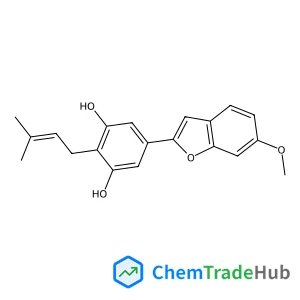
5-(6-Methoxy-1-benzofuran-2-yl)-2-(3-methyl-2-buten-1-yl)-1,3-benzenediol
CAS Number:
1017277-40-5
Molecular Formula:
C20H20O4

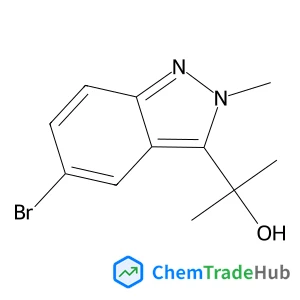
2-(5-Bromo-2-methyl-2H-indazol-3-yl)-2-propanol
CAS Number:
1823787-20-7
Molecular Formula:
C11H13BrN2O
Recommended Suppliers





Disclaimer
This page provides academic journal information for reference and research purposes only. We are not affiliated with any journal publishers and do not handle publication submissions. For publication-related inquiries, please contact the respective journal publishers directly.
If you notice any inaccuracies in the information displayed, please contact us at support@chemtradehub.com. We will promptly review and address your concerns.