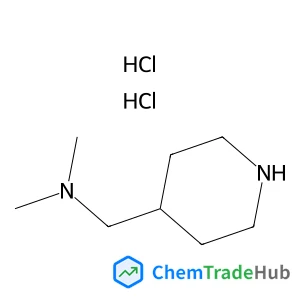
N,N-dimethyl(piperidin-4-yl)methanamine hydrochloride
CAS Number:
172281-72-0
Molecular Formula:
C8H20Cl2N2
Chi-Ta Yang, Brandon C. Wood, Venkat R. Bhethanabotla, Babu Joseph
Using density functional theory calculations, we investigate the influence of size-dependent cluster morphology on the synergistic catalytic properties of anatase TiO2(101) surfaces decorated with subnanometer Pt clusters. Focusing on the formation of the key precursor in the CO2 photoreduction reaction (bent CO2−), we find that flatter (2D-like) Pt clusters that “wet” the TiO2 surface offer significantly less benefit than 3D-like Pt clusters. We attribute the differences to three factors. First, the 3D clusters provide a greater number of accessible Pt–TiO2 interfacial sites with geometries that can aid CO2 bond bending and charge transfer processes. Second, binding competition among each Pt–CO2 bonding interaction mitigates maximum orbital overlaps, leading to insufficient CO2 binding. Third and also most interestingly, the 3D clusters tend to possess higher structural fluxionality than the flatter clusters, which is shown to correlate positively with CO2 binding strength. The preferred morphology adopted by the clusters depends on several factors, including the cluster size and the presence of oxygen vacancies on the TiO2 surface; this suggests a strategy for optimizing the synergistic effect between Pt clusters and TiO2 surfaces for CO2 photocatalysis. Clusters of ∼6–8 atoms should provide the largest benefit, since they retain the desired 3D morphology, yet are small enough to exhibit high structural fluxionality. Electronic structure analysis provides additional insight into the electronic motivations for the enhanced binding of CO2 on TiO2-supported 3D Pt clusters, as well as suppressed binding on flattened, 2D-like clusters.
Changjun Zhang, Angelos Michaelides, Stephen J. Jenkins
DOI: 10.1039/C0CP01123A
Yongfeng Liu, Chu Liang, Zhijun Wei, Ying Jiang, Mingxia Gao, Hongge Pan, Qidong Wang
DOI: 10.1039/C000271B
Yifeng He, Xinghai Shen, Qingde Chen, Hongcheng Gao
DOI: 10.1039/C0CP00899K
Radovan Bast, Anton Koers, André Severo Pereira Gomes, Miroslav Iliaš, Lucas Visscher, Peter Schwerdtfeger, Trond Saue
DOI: 10.1039/C0CP01483D
DOI: 10.1039/C0CP00726A
Priyanka Dhage, Divya Repala, Evert C. Duin, Bruce J. Tatarchuk
DOI: 10.1039/C0CP01355B
Keith M. Krise, Angela A. Hwang, Bratoljub H. Milosavljevic
DOI: 10.1039/B927266F
Demeter Tzeli, Ioannis D. Petsalakis, Giannoula Theodorakopoulos
DOI: 10.1039/C0CP00180E
Nelly Bonnet, David O'Hagan, Georg Hähner
DOI: 10.1039/B923065N
1-(2,4,6-Trifluorophenyl)ethanol is an organic compound with the CAS number 1250...
1-(2,4-Dimethoxybenzyl)-4-(hydroxymethyl)-2-pyrrolidinone (CAS: 919111-34-5) is ...
(7S,15R)-6β,15-Diacetoxy-7α,20-epoxy-7-hydroxykaura-2,16-dien-1-one is a crystal...
The compound rac-ethyl (1r,4r)-4-hydroxycyclohexane-1-carboxylate, trans (CAS: 3...
The market for 2-(2,4-Difluorophenoxy)-3-nitropyridine (CAS: 175135-62-3) is cur...
The main uses of 6-Diazo-5-oxo-L-norleucine (CAS: 157-03-9) include research in ...
When handling 2-Aminoethyl-mono-amide-DOTA-tris(tBu ester) (CAS: 173308-19-5), i...
5-Methylimidazo[1,2-a]pyridine-3-carbaldehyde (CAS: 178488-37-4) can be synthesi...
There are alternative reagents that can be used in the synthesis of 2,4,6-Trihyd...
(2Z)-3-(5-Fluoro-1H-indol-3-yl)-2-sulfanylacrylic acid is a chemical compound wi...

Physical Chemistry Chemical Physics (PCCP) is an international journal co-owned by 19 physical chemistry and physics societies from around the world. This journal publishes original, cutting-edge research in physical chemistry, chemical physics and biophysical chemistry. To be suitable for publication in PCCP, articles must include significant innovation and/or insight into physical chemistry; this is the most important criterion that reviewers and Editors will judge against when evaluating submissions. The journal has a broad scope and welcomes contributions spanning experiment, theory, computation and data science. Topical coverage includes spectroscopy, dynamics, kinetics, statistical mechanics, thermodynamics, electrochemistry, catalysis, surface science, quantum mechanics, quantum computing and machine learning. Interdisciplinary research areas such as polymers and soft matter, materials, nanoscience, energy, surfaces/interfaces, and biophysical chemistry are welcomed if they demonstrate significant innovation and/or insight into physical chemistry. Joined experimental/theoretical studies are particularly appreciated when complementary and based on up-to-date approaches.
![9,9'-Spirobi[fluoren]-2-amine structure](https://static.chemtradehub.com/structs/118/118951-68-1-0d14.webp "9,9'-Spirobi[fluoren]-2-amine structure")