


Stability, equilibrium morphology and hydration of ZrC(111) and (110) surfaces with H2O: a combined periodic DFT and atomistic thermodynamic study
Literature Information
Publication Date
2015-07-16
DOI
10.1039/C5CP03031E
Impact Factor
3.676
Authors
Eric Osei-Agyemang, Jean-Francois Paul, Romain Lucas, Sylvie Foucaud, Sylvain Cristol
View Original
Abstract
ZrC is a non-oxide ultra-high temperature ceramic (UHTC) material with excellent physical and mechanical properties used in nuclear plants and jet propulsion engines. However, the mechanical properties can be lost because of the easy oxidation of its grain surfaces. One way of dealing with such a problem is to coat the surface with inert carbides like SiC which can be grafted onto the ZrC surface by first modifying the exposed surfaces with reactive molecules. The stability of different terminations of the (111) facet was studied and the most stable is the termination on both surface layers by Zr atoms as it has been observed experimentally. A DFT calculation study jointly with atomistic thermodynamic modelling has been used to study the reactivity of the (111) and (110) facets with H2O. H2O dissociates into surface hydroxyl groups with the release of H2 and the OH groups preferentially adsorb at high surface coverage (high adsorption energies at 1 ML coverage). The study of adsorption of H2O onto other low index surfaces allows the determination of the equilibrium morphology of the ZrC nanocrystallites in different environments. In vacuum, ZrC nanocrystallites reveal a cubic structure with much of the (100) surface and a small amount of the (111) facets at the corners. Hydration of the (111) surface was a strong process and hence water can be removed from the surface at temperatures above 1200 K and pressures lower than 10−9 bar while higher pressures of H2 in the gas phase enhance the removal of water. The Wulff construction of the nanocrystallites after hydration indicates only the (111) surface at lower temperatures while revealing the (100) facets at higher temperatures. Thus whatever the experimental conditions be, the (110) facet does not have to be considered.
Recommended Journals

Russian Journal of Applied Chemistry

Current Opinion in Solid State & Materials Science

Russian Journal of Organic Chemistry

New Journal of Chemistry

Saudi Pharmaceutical Journal

Journal of Peptide Science

Drug Discovery Today

Journal of Saudi Chemical Society

Chemistry Education Research and Practice

Acta Materialia
Related Literature
Celamonols A–D, four triterpenoid and catechin conjugates with immunosuppressive activities from the stems of Celastrus monospermus
Yi-Ming Li, Wei-Liang Zhu, Wei-Min Zhao
2019-10-10
Research Article
DOI: 10.1039/C9QO00974D
Visible-light-mediated de-aminative alkylation of N-arylamines with alkyl Katritzky salts
Yuliang Xu, Ze-Jun Xu, Zhao-Peng Liu, Hongxiang Lou
2019-10-22
Research Article
DOI: 10.1039/C9QO01175G
Steric hindrance classified: treatment of isothiocyanatoallene with secondary amines bearing bulky substituents to generate 2-aminothiazoles‡
Klaus Banert, Jennifer Seifert
2019-05-17
Research Article
DOI: 10.1039/C9QO00312F
Rhodium-catalyzed biheteroaryl-2-carbonitrile synthesis via double C–H activation
Hui-Bei Xu, Yan-Ying Zhu, Jia-Hui Yang, Xin-Yue Chai, Lin Dong
2019-10-16
Research Article
DOI: 10.1039/C9QO01114E
Officinalins A and B, a pair of C23 terpenoid epimers with a tetracyclic 6/7/5/5 system from Salvia officinalis
Ling-Nan Li, Xiao-Qin Liu, Dong-Rong Zhu, Chen Chen, Yao-Lan Lin, Wen-Li Wang, Li Zhu, Jian-Guang Luo, Ling-Yi Kong
2019-08-21
Research Article
DOI: 10.1039/C9QO00861F
Asymmetric domino 1,6-addition/annulation reaction of 3-cyano-4-alkenyl-2H-chromen-2-ones with isatin-derived MBH carbonates: enantioselective synthesis of 3,3′-cyclopentenylspirooxindoles bearing 2H-chromen-2-ones
Zhen-Hua Wang, Chuan-Wen Lei, Xia-Yan Zhang, Yong You, Jian-Qiang Zhao
2019-08-14
Research Article
DOI: 10.1039/C9QO00890J
You might also like
Compound Q&A
Is 6-(3-Fluorophenyl)picolinic acid (CAS: 887982-40-3) safe?
6-(3-Fluorophenyl)picolinic acid is generally considered safe for laboratory use...
887982-40-36-(3-Fluorophenyl)pi...
Compound Q&A
What industries use (3R)-3-Pyrrolidinol (CAS: 2799-21-5)?
(3R)-3-Pyrrolidinol is used in the pharmaceutical industry as a precursor for dr...
2799-21-5(3R)-3-Pyrrolidinol
Compound Q&A
What precautions should be taken when handling (4R,5R)-4,5-Diethoxycarbonyl-2,2-dimethyldioxolane (CAS: 59779-75-8)?
When handling (4R,5R)-4,5-Diethoxycarbonyl-2,2-dimethyldioxolane (CAS: 59779-75-...
59779-75-8(4R,5R)-4,5-Diethoxy...
Compound Q&A
How is 1-(6-Chloroimidazo[1,2-b]pyridazin-3-yl)ethanone (CAS: 90734-71-7) typically synthesized?
1-(6-Chloroimidazo[1,2-b]pyridazin-3-yl)ethanone is often synthesized via a mult...
90734-71-71-(6-Chloroimidazo[1...
Compound Q&A
What is the market or research trend for N-Ethyl-3,4-dimethylbenzylamine (CAS: 39180-83-1)?
The market for N-Ethyl-3,4-dimethylbenzylamine (CAS: 39180-83-1) remains steady,...
39180-83-1N-Ethyl-3,4-dimethyl...
Compound Q&A
What is Tert-butyl 3-(pyrrolidin-1-yl)azetidine-1-carboxylate (CAS: 1019008-21-9)?
Tert-butyl 3-(pyrrolidin-1-yl)azetidine-1-carboxylate is a chemical compound wit...
1019008-21-9Tert-butyl 3-(pyrrol...
Compound Q&A
What regulatory guidelines apply to 1-Bromo-3-chloro-2,4-dimethoxybenzene (CAS: 1228956-93-1)?
1-Bromo-3-chloro-2,4-dimethoxybenzene (CAS: 1228956-93-1) falls under the classi...
1228956-93-11-Bromo-3-chloro-2,4...
Compound Q&A
Is 8-Bromo-2-methyl-3,4-dihydroisoquinolin-1(2H)-one (CAS: 1368622-07-4) safe?
The safety of 8-Bromo-2-methyl-3,4-dihydroisoquinolin-1(2H)-one (CAS: 1368622-07...
1368622-07-48-Bromo-2-methyl-3,4...
Compound Q&A
Is Benzyl [(3S)-2,6-dioxo-3-piperidinyl]carbamate (CAS: 22785-43-9) safe?
Benzyl [(3S)-2,6-dioxo-3-piperidinyl]carbamate is generally safe when handled wi...
22785-43-9Benzyl [(3S)-2,6-dio...
Compound Q&A
How should 1-{[4-(4,4,5,5-Tetramethyl-1,3,2-dioxaborolan-2-yl)phenyl]sulfonyl}pyrrolidine (CAS: 928657-21-0) be stored?
1-{[4-(4,4,5,5-Tetramethyl-1,3,2-dioxaborolan-2-yl)phenyl]sulfonyl}pyrrolidine s...
928657-21-01-{[4-(4,4,5,5-Tetra...
Source Journal
Physical Chemistry Chemical Physics

CiteScore:
5.5
Self-citation Rate:
10.3%
Articles per Year:
3036
Physical Chemistry Chemical Physics (PCCP) is an international journal co-owned by 19 physical chemistry and physics societies from around the world. This journal publishes original, cutting-edge research in physical chemistry, chemical physics and biophysical chemistry. To be suitable for publication in PCCP, articles must include significant innovation and/or insight into physical chemistry; this is the most important criterion that reviewers and Editors will judge against when evaluating submissions. The journal has a broad scope and welcomes contributions spanning experiment, theory, computation and data science. Topical coverage includes spectroscopy, dynamics, kinetics, statistical mechanics, thermodynamics, electrochemistry, catalysis, surface science, quantum mechanics, quantum computing and machine learning. Interdisciplinary research areas such as polymers and soft matter, materials, nanoscience, energy, surfaces/interfaces, and biophysical chemistry are welcomed if they demonstrate significant innovation and/or insight into physical chemistry. Joined experimental/theoretical studies are particularly appreciated when complementary and based on up-to-date approaches.
Recommended Compounds
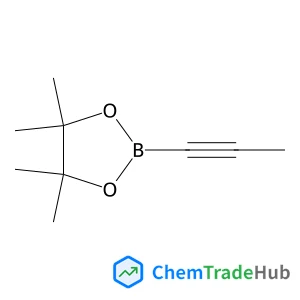
4,4,5,5-Tetramethyl-2-(1-propyn-1-YL)-1,3,2-dioxaborolane
CAS Number:
347389-75-7
Molecular Formula:
C9H15BO2
Recommended Suppliers





Disclaimer
This page provides academic journal information for reference and research purposes only. We are not affiliated with any journal publishers and do not handle publication submissions. For publication-related inquiries, please contact the respective journal publishers directly.
If you notice any inaccuracies in the information displayed, please contact us at support@chemtradehub.com. We will promptly review and address your concerns.