












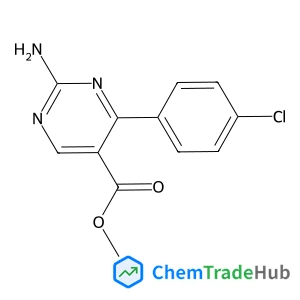
Methyl 2-amino-4-(4-chlorophenyl)-5-pyrimidinecarboxylate
CAS Number:
1133115-56-6
Molecular Formula:
C12H10ClN3O2
Yueh-Lin Lee, Milind J. Gadre, Dane Morgan
In this work, we performed density functional theory (DFT) calculations with inclusion of Hubbard U corrections for the transition metal d-electrons, to investigate stability and electrocatalytic activities of the oxygen evolution reaction (OER) and oxygen reduction reaction (ORR) for the ABO3 (A = La; B = Cr, Mn, Fe, Co, and Ni) (001) surfaces. We showed surface binding energies of relevant ORR/OER species are coupled strongly to surface polarity and local oxidation states, giving large (∼1 eV scale per adsorbate) differences in binding between (001) AO and BO2 surfaces, where the more oxidized BO2 bare surfaces in general exhibit weak coverage dependence, while the more reduced AO bare surfaces of the LaCrO3, LaMnO3, and LaFeO3 perovskites with lower d-electron filling show strong/moderate coverage dependences. We then predicted that surface coverage can play a key role in determining surface stability, and when coverage effects are included the AO and BO2(001) surfaces have either similar stability or the AO surface is more stable, as found for 1 monolayer HO* covered AO surfaces of LaCrO3 and LaFeO3 under ORR conditions and 1 monolayer O* covered LaNiO3 AO surface under OER conditions. For the (001) AO surfaces with strong coverage dependent surface adsorption, we predicted a decrease in ORR overpotential of 1–2 V with proper treatment of coverage effects as compared to those of the bare surface simulations. Our results indicated that the GGA+U method and proper treatment of coverage effects more accurately predict ORR and OER overpotentials relative to experimental values as compared to the GGA method and bare surfaces. The overall ORR activity trends vs. the LaBO3 series were predicted to be Co > Mn ≈ Ni > Fe > Cr.
Nasrin Sarmadian, Erik C. Neyts, Bart Partoens
DOI: 10.1039/C7CP03575F
Yaxiong Wei, Qiaohui Zhou
DOI: 10.1039/C7CP03840B
Nicole L. Ing, Tyler D. Nusca
DOI: 10.1039/C7CP03651E
Abhishek Ghosh, S. B. Majumder
DOI: 10.1039/C7CP04241H
O. Kuzmina, D. Godfrey, T. Albrecht, T. Welton
DOI: 10.1039/C7CP03540C
Paulo Piquini, Alex A. Schmidt, Marcelo A. Kuroda
DOI: 10.1039/C7CP04615D
Daniel L. Z. Caetano, Sidney J. de Carvalho, Ralf Metzler, Andrey G. Cherstvy
DOI: 10.1039/C7CP04040G
Miguel A. Salvadó, R. Franco, Pilar Pertierra, T. Ouahrani, J. M. Recio
DOI: 10.1039/C7CP03732E
I. M. Jauris, A. J. G. Zarbin, C. S. Umpierres, C. Saucier, E. C. Lima, S. B. Fagan, I. Zanella, F. M. Machado
DOI: 10.1039/C7CP04272H
Sahar Izadi Vishkayi, Meysam Bagheri Tagani
DOI: 10.1039/C7CP03873A
6-(3-Fluorophenyl)picolinic acid is generally considered safe for laboratory use...
(3R)-3-Pyrrolidinol is used in the pharmaceutical industry as a precursor for dr...
When handling (4R,5R)-4,5-Diethoxycarbonyl-2,2-dimethyldioxolane (CAS: 59779-75-...
1-(6-Chloroimidazo[1,2-b]pyridazin-3-yl)ethanone is often synthesized via a mult...
The market for N-Ethyl-3,4-dimethylbenzylamine (CAS: 39180-83-1) remains steady,...
Tert-butyl 3-(pyrrolidin-1-yl)azetidine-1-carboxylate is a chemical compound wit...
1-Bromo-3-chloro-2,4-dimethoxybenzene (CAS: 1228956-93-1) falls under the classi...
The safety of 8-Bromo-2-methyl-3,4-dihydroisoquinolin-1(2H)-one (CAS: 1368622-07...
Benzyl [(3S)-2,6-dioxo-3-piperidinyl]carbamate is generally safe when handled wi...
1-{[4-(4,4,5,5-Tetramethyl-1,3,2-dioxaborolan-2-yl)phenyl]sulfonyl}pyrrolidine s...

Physical Chemistry Chemical Physics (PCCP) is an international journal co-owned by 19 physical chemistry and physics societies from around the world. This journal publishes original, cutting-edge research in physical chemistry, chemical physics and biophysical chemistry. To be suitable for publication in PCCP, articles must include significant innovation and/or insight into physical chemistry; this is the most important criterion that reviewers and Editors will judge against when evaluating submissions. The journal has a broad scope and welcomes contributions spanning experiment, theory, computation and data science. Topical coverage includes spectroscopy, dynamics, kinetics, statistical mechanics, thermodynamics, electrochemistry, catalysis, surface science, quantum mechanics, quantum computing and machine learning. Interdisciplinary research areas such as polymers and soft matter, materials, nanoscience, energy, surfaces/interfaces, and biophysical chemistry are welcomed if they demonstrate significant innovation and/or insight into physical chemistry. Joined experimental/theoretical studies are particularly appreciated when complementary and based on up-to-date approaches.
![5-Bromo-3-isopropyl-1H-pyrrolo[2,3-b]pyridine structure](https://static.chemtradehub.com/structs/125/1256819-54-1-8620.webp "5-Bromo-3-isopropyl-1H-pyrrolo[2,3-b]pyridine structure")
![1H-Imidazo[4,5-c]pyridine-7-carboxylic acid structure](https://static.chemtradehub.com/structs/123/1234616-39-7-1344.webp "1H-Imidazo[4,5-c]pyridine-7-carboxylic acid structure")





