













On the Ag+–cytosine interaction: the effect of microhydration probed by IR optical spectroscopy and density functional theory
Literature Information
Publication Date
2015-05-29
DOI
10.1039/C5CP02221E
Impact Factor
3.676
Authors
Matias Berdakin, Vincent Steinmetz, Philippe Maitre, Gustavo A. Pino
View Original
Abstract
The gas-phase structures of cytosine–Ag+ [CAg]+ and cytosine–Ag+–H2O [CAg–H2O]+ complexes have been studied by mass-selected infrared multiphoton dissociation (IRMPD) spectroscopy in the 900–1800 cm−1 spectral region using the Free Electron Laser facility in Orsay (CLIO). The IRMPD experimental spectra have been compared with the calculated IR absorption spectra of the different low-lying isomers (computed at the DFT level using the B3LYP functional and the 6-311G++(d,p) basis set for C, H, N and O atoms and the Stuttgart effective core potential for Ag). For the [CAg]+ complex, only one isomer with cytosine in the keto-amino (KA) tautomeric form and Ag+ interacting simultaneously with the C(2)O(7) group and N(3) of cytosine was observed. However, the mono-hydration of the complex in the gas phase leads to the stabilization of a two quasi-isoenergetic structure of the [CAg–H2O]+ complex, in which Ag+ interacts with the O atom of the water molecule and with the N(3) or C(2)O(7) group of cytosine. The relative populations of the two isomers determined from the IRMPD kinetics plot are in good agreement with the calculated values. Comparison of these results with those of protonated cytosine [CH]+ and its mono-hydrated complex [CH–H2O]+ shows some interesting differences between H+ and Ag+. In particular, while a single water molecule catalyzes the isomerization reaction in the case of [CH–H2O]+, it is found that in the case of [CAg–H2O]+ the addition of water leads to the stabilization of two isomers separated by small energy barrier (0.05 eV).
Related Literature
Synthesis of a pyridine-fused porphyrinoid: oxopyridochlorin
Sumito Tokuji, Yuji Takahashi, Hideyuki Shinmori, Hiroshi Shinokubo, Atsuhiro Osuka
2009-01-06
Communication
DOI: 10.1039/B819284G
Bisbenzimidazole to benzobisimidazole: from binding B-form duplex DNA to recognizing different modes of telomereG-quadruplex
Jing Huang, Guorui Li, Zhiguo Wu, Zhibin Song, Yangyang Zhou, Liang Shuai, Xiaocheng Weng, Xiang Zhou, Guangfu Yang
2009-01-22
Communication
DOI: 10.1039/B819789J
Nitrogen-doped titania nanosheets towards visible light response
Lianzhou Wang, Chenghua Sun, Zhigang Chen, Xiaoxia Yan, Lina Cheng, Hui-Ming Cheng, Gao Qing (Max) Lu
2009-01-22
Communication
DOI: 10.1039/B820483G
The importance of surface chemistry in mesoporous materials: lessons from porous silicon biosensors
Kristopher A. Kilian, Till Böcking, J. Justin Gooding
2008-10-30
Feature Article
DOI: 10.1039/B815449J
Switching the photo-induced energy and electron-transfer processes in BODIPY–phthalocyanine conjugates
Jian-Yong Liu, Eugeny A. Ermilov, Beate Röder, Dennis K. P. Ng
2009-01-28
Communication
DOI: 10.1039/B821630D
A ratiometric fluorescent sensor with a large Stokes shift for imaging zinc ions in living cells
Chun Liu, Hua Jiang
2008-12-24
Communication
DOI: 10.1039/B814501F
Metal–organic replica of γ-Pu: the first uninodal 10-connected coordination network based on pentanuclear cadmium clusters
Xin-Long Wang, Chao Qin, Ya-Qian Lan, Kui-Zhan Shao, Zhong-Min Su, En-Bo Wang
2008-11-14
Communication
DOI: 10.1039/B815629H
3-Mercaptopropionic acid-mediated synthesis of peptide and protein thioesters
Jaskiranjit Kang, Jonathan P. Richardson, Derek Macmillan
2008-11-05
Communication
DOI: 10.1039/B815888F
You might also like
Compound Q&A
What precautions should be taken when handling 2-Methyl-2-propanyl 5-amino-2-thiophenecarboxylate (CAS: 1498311-57-1)?
When handling 2-Methyl-2-propanyl 5-amino-2-thiophenecarboxylate (CAS: 1498311-5...
1498311-57-12-Methyl-2-propanyl ...
Compound Q&A
What are the physical and chemical properties of 5-Bromo-1,2-dichloro-3-fluorobenzene (CAS: 1000572-93-9)?
5-Bromo-1,2-dichloro-3-fluorobenzene (CAS: 1000572-93-9) is a crystalline solid ...
1000572-93-95-Bromo-1,2-dichloro...
Compound Q&A
How should (2R)-2-Amino-2-(4-bromophenyl)ethanol (CAS: 354153-64-3) be stored?
(2R)-2-Amino-2-(4-bromophenyl)ethanol (CAS: 354153-64-3) should be stored in a c...
354153-64-3(2R)-2-Amino-2-(4-br...
Compound Q&A
What regulatory guidelines apply to Methyl 4-(aminomethyl)tetrahydro-2H-pyran-4-carboxylate hydrochloride (CAS: 362707-24-2)?
Methyl 4-(aminomethyl)tetrahydro-2H-pyran-4-carboxylate hydrochloride (CAS: 3627...
362707-24-2Methyl 4-(aminomethy...
Compound Q&A
What are the main uses of 1,4-dimethyl-1H-pyrazole-5-sulfonyl chloride (CAS: 1174834-52-6)?
1,4-Dimethyl-1H-pyrazole-5-sulfonyl chloride is primarily used as an intermediat...
1174834-52-61,4-dimethyl-1H-pyra...
Compound Q&A
Is Dinaphtho[1,2-b:2',1'-d]furan (CAS: 239-69-0) safe?
Dinaphtho[1,2-b:2',1'-d]furan is generally safe when handled with appropriate pe...
239-69-0Dinaphtho[1,2-b:2',1...
Compound Q&A
What is the market or research trend for 7-Methyl-7,9-dihydro-1H-purine-2,6,8(3H)-trione (CAS: 612-37-3)?
The market for 7-Methyl-7,9-dihydro-1H-purine-2,6,8(3H)-trione (CAS: 612-37-3) i...
612-37-37-Methyl-7,9-dihydro...
Compound Q&A
What are the physical and chemical properties of 2-(4-Chlorophenyl)malonaldehyde (CAS: 205676-17-1)?
2-(4-Chlorophenyl)malonaldehyde (CAS: 205676-17-1) is a colorless or light yello...
205676-17-12-(4-Chlorophenyl)ma...
Compound Q&A
How is 2-Methylchrysene (CAS: 3351-32-4) typically synthesized?
2-Methylchrysene (CAS: 3351-32-4) is typically synthesized via the reaction of c...
3351-32-42-Methylchrysene
Compound Q&A
Is N-(6-aminopyrimidin-4-yl)acetamide (CAS: 89533-23-3) safe?
N-(6-aminopyrimidin-4-yl)acetamide (CAS: 89533-23-3) is generally considered saf...
89533-23-3N-(6-aminopyrimidin-...
Source Journal
Physical Chemistry Chemical Physics

CiteScore:
5.5
Self-citation Rate:
10.3%
Articles per Year:
3036
Physical Chemistry Chemical Physics (PCCP) is an international journal co-owned by 19 physical chemistry and physics societies from around the world. This journal publishes original, cutting-edge research in physical chemistry, chemical physics and biophysical chemistry. To be suitable for publication in PCCP, articles must include significant innovation and/or insight into physical chemistry; this is the most important criterion that reviewers and Editors will judge against when evaluating submissions. The journal has a broad scope and welcomes contributions spanning experiment, theory, computation and data science. Topical coverage includes spectroscopy, dynamics, kinetics, statistical mechanics, thermodynamics, electrochemistry, catalysis, surface science, quantum mechanics, quantum computing and machine learning. Interdisciplinary research areas such as polymers and soft matter, materials, nanoscience, energy, surfaces/interfaces, and biophysical chemistry are welcomed if they demonstrate significant innovation and/or insight into physical chemistry. Joined experimental/theoretical studies are particularly appreciated when complementary and based on up-to-date approaches.
Recommended Compounds
![3-[7-Amino-3-(3-pyridinyl)pyrazolo[1,5-a]pyrimidin-6-yl]phenol structure](https://static.chemtradehub.com/structs/861/861249-77-6-025b.webp "3-[7-Amino-3-(3-pyridinyl)pyrazolo[1,5-a]pyrimidin-6-yl]phenol structure")
3-[7-Amino-3-(3-pyridinyl)pyrazolo[1,5-a]pyrimidin-6-yl]phenol
CAS Number:
861249-77-6
Molecular Formula:
C17H13N5O
![2-[2-(2-Methoxyethoxy)ethoxy]-2-methylpropane structure](https://static.chemtradehub.com/structs/527/52788-79-1-71c1.webp "2-[2-(2-Methoxyethoxy)ethoxy]-2-methylpropane structure")
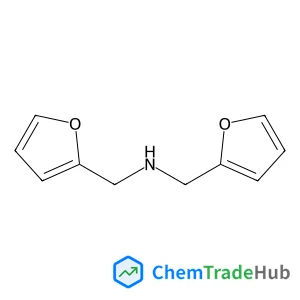
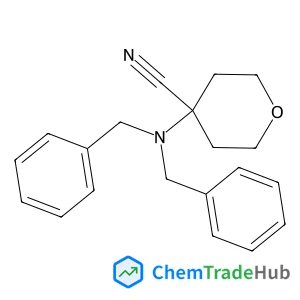
4-(Dibenzylamino)tetrahydro-2H-pyran-4-carbonitrile
CAS Number:
1630906-81-8
Molecular Formula:
C20H22N2O
Recommended Suppliers







Disclaimer
This page provides academic journal information for reference and research purposes only. We are not affiliated with any journal publishers and do not handle publication submissions. For publication-related inquiries, please contact the respective journal publishers directly.
If you notice any inaccuracies in the information displayed, please contact us at support@chemtradehub.com. We will promptly review and address your concerns.