













The nature of NO-bonding in N-oxide group
Literature Information
Publication Date
2015-05-21
DOI
10.1039/C5CP02148K
Impact Factor
3.676
Authors
Marlena Łukomska, Agnieszka J. Rybarczyk-Pirek, Mirosław Jabłoński, Marcin Palusiak
View Original
Abstract
The nature of the NO-bond in the N-oxide group was investigated by means of combined theoretical calculations (including QTAIM and NBO approaches) and statistical analyses of the contents of crystal structure databases. The N–O bond in the N-oxide group should be classified as the NO donating bond with an important contribution of ON back-donation (of the π-electron type, when available). The visualization of the Laplacian of electron density in the region of an oxygen valence sphere suggests the presence of two lone pairs for the imine-N-oxide group (characterized by effective ON back-donation). A detailed bonding analysis performed by means of natural resonance theory indicates that the N→O bond is of an order of magnitude clearly greater than 1. In addition, the stability of the N→O bond in various N-oxides was estimated. The analyses of the hydrogen- and halogen-bonded complexes of the N-oxides reveal strong Lewis basicity of the N-oxide group. The formation of H- and X-bonding leads to N→O bond elongation due to its structural, topological and spectroscopic characteristics. Moreover, in pyridine-N-oxide, the electron-withdrawing –NO2 group additionally stabilizes the N→O bond, whereas the opposite effect can be observed for the electron-donating-NH2 substituent. This is due to a substituent effect on the π-type ON back-donation. As a result, the oxygen atom in pyridine-N-oxide may change its availability during intermolecular interaction formation, as revealed in the interaction energy, which changes by about half of the estimated total interaction energy.
Recommended Journals
Related Literature
Structurally analogous trehalose and sucrose glycopolymers – comparative characterization and evaluation of their effects on insulin fibrillation
Andrzej Milewski, Martina H. Stenzel
2022-03-07
Paper
DOI: 10.1039/D1PY01517F
A simplified approach to thermally activated delayed fluorescence (TADF) bipolar host polymers
Susanna V. Kunz, Cameron M. Cole, Steven C. Gauci, Felicia Zaar, Paul E. Shaw, Chandana Sampath Kumara Ranasinghe, Thomas Baumann, Prashant Sonar, Soniya D. Yambem, Christopher Barner-Kowollik, James P. Blinco
2022-07-06
Paper
DOI: 10.1039/D2PY00511E
Pot- and atom-economic synthesis of oligomeric non-fullerene acceptors via C–H direct arylation
Li-Hong Wang, Xian-Jie Chen, Dong-Nai Ye, Hui Liu, Yan Chen, Ai-Guo Zhong, Chang-Zhi Li, Shi-Yong Liu
2022-03-30
Paper
DOI: 10.1039/D2PY00139J
Synthesis of block copolymers containing 3-chloro-2-hydroxypropyl methacrylate by NMP – a versatile platform for functionalization
Michael Klein
2022-07-08
Paper
DOI: 10.1039/D2PY00611A
Thiolactone chemistry, a versatile platform for macromolecular engineering
Nicolas Illy, Emma Mongkhoun
2022-07-25
Review Article
DOI: 10.1039/D2PY00731B
Customizable nano-sized colloidal tetrahedra by polymerization-induced particle self-assembly (PIPA)
Nan Liu, Min Zeng, Jinzhao Ji, Jinying Yuan
2022-05-19
Paper
DOI: 10.1039/D2PY00407K
Reinforcement of ultrahigh thermoresistant polybenzimidazole films by hard craters
Jiabei Zhou, Xianzhu Zhong, Yang Liu, Kenji Takada, Tatsuo Kaneko
2022-07-05
Communication
DOI: 10.1039/D2PY00548D
Antimicrobial ‘inks’ for 3D printing: block copolymer-silver nanoparticle composites synthesised using supercritical CO2
Ryan R. Larder, Philippa L. Jacob, Kristoffer Kortsen, Robert Cavanagh, Long Jiang, Claudia Vuotto, Iolanda Francolini, Christopher Tuck, Vincenzo Taresco, Steven M. Howdle
2022-06-07
Paper
DOI: 10.1039/D2PY00398H
You might also like
Compound Q&A
What are the main uses of 1-(3-Aminophenyl)-3-[(3R)-1-(3,3-dimethyl-2-oxobutyl)-2-oxo-5-(2-pyridinyl)-2,3-dihydro-1H-1,4-benzodiazepin-3-yl]urea (CAS: 155412-88-7)?
This compound is mainly used as an intermediate in the synthesis of antipsychoti...
155412-88-71-(3-Aminophenyl)-3-...
Compound Q&A
How should waste containing 1-(D-Ribofuranosyl)-1,4-dihydro-3-pyridinecarboxamide (CAS: 19132-12-8) be handled?
Waste containing 1-(D-Ribofuranosyl)-1,4-dihydro-3-pyridinecarboxamide (CAS: 191...
19132-12-81-(D-Ribofuranosyl)-...
Compound Q&A
What regulatory guidelines apply to 2-Methyl-2-propanyl 3-bromo-3-(hydroxymethyl)-1-azetidinecarboxylate (CAS: 2007919-81-3)?
2-Methyl-2-propanyl 3-bromo-3-(hydroxymethyl)-1-azetidinecarboxylate (CAS: 20079...
2007919-81-32-Methyl-2-propanyl ...
Compound Q&A
What is N-(4-Chloro-2-pyridinyl)acetamide (CAS: 245056-66-0)?
N-(4-Chloro-2-pyridinyl)acetamide (CAS: 245056-66-0) is a chemical compound with...
245056-66-0N-(4-Chloro-2-pyridi...
Compound Q&A
What is 5-Chloro-2-hydroxybenzoic acid (CAS: 321-14-2)?
5-Chloro-2-hydroxybenzoic acid, also known as 5-chlorosalicylic acid, is an arom...
321-14-25-Chloro-2-hydroxybe...
Compound Q&A
What precautions should be taken when handling 1,1-Dichloro-1-fluoroethane (CAS: 1717-00-6)?
When handling 1,1-Dichloro-1-fluoroethane (CAS: 1717-00-6), it is important to u...
1717-00-61,1-Dichloro-1-fluor...
Compound Q&A
What are the physical and chemical properties of Fmoc-(2S,3R)-3-phenylpyrrolidine-2-carboxylic acid (CAS: 281655-32-1)?
Fmoc-(2S,3R)-3-phenylpyrrolidine-2-carboxylic acid is a white crystalline solid ...
281655-32-1Fmoc-(2S,3R)-3-pheny...
Compound Q&A
What are the main uses of 4-Amino-5-bromo-2-pyridinecarboxylic acid (CAS: 1363381-01-4)?
4-Amino-5-bromo-2-pyridinecarboxylic acid is primarily used as a precursor in th...
1363381-01-44-Amino-5-bromo-2-py...
Compound Q&A
What precautions should be taken when handling (S)-tert-butyl 2-((2-(4-bromophenyl)-2-oxoethyl)carbamoyl)pyrrolidine-1-carboxylate (CAS: 1007881-98-2)?
Handling this compound should be done with personal protective equipment (PPE) i...
1007881-98-2(S)-tert-butyl 2-((2...
Compound Q&A
What precautions should be taken when handling 8-bromo-2,2-dimethyl-3,4-dihydro-2H-1,4-benzoxazin-3-one (CAS: 688363-73-7)?
When handling 8-bromo-2,2-dimethyl-3,4-dihydro-2H-1,4-benzoxazin-3-one, use prop...
688363-73-78-bromo-2,2-dimethyl...
Source Journal
Physical Chemistry Chemical Physics

CiteScore:
5.5
Self-citation Rate:
10.3%
Articles per Year:
3036
Physical Chemistry Chemical Physics (PCCP) is an international journal co-owned by 19 physical chemistry and physics societies from around the world. This journal publishes original, cutting-edge research in physical chemistry, chemical physics and biophysical chemistry. To be suitable for publication in PCCP, articles must include significant innovation and/or insight into physical chemistry; this is the most important criterion that reviewers and Editors will judge against when evaluating submissions. The journal has a broad scope and welcomes contributions spanning experiment, theory, computation and data science. Topical coverage includes spectroscopy, dynamics, kinetics, statistical mechanics, thermodynamics, electrochemistry, catalysis, surface science, quantum mechanics, quantum computing and machine learning. Interdisciplinary research areas such as polymers and soft matter, materials, nanoscience, energy, surfaces/interfaces, and biophysical chemistry are welcomed if they demonstrate significant innovation and/or insight into physical chemistry. Joined experimental/theoretical studies are particularly appreciated when complementary and based on up-to-date approaches.
Recommended Compounds
![Pyrazolo[1,5-a]pyridine-3-carbothioamide structure](https://static.chemtradehub.com/structs/885/885275-44-5-aae0.webp "Pyrazolo[1,5-a]pyridine-3-carbothioamide structure")
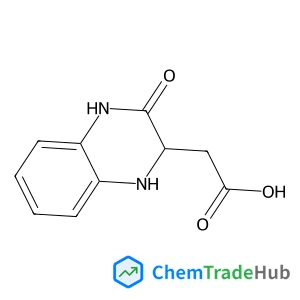
(3-Oxo-1,2,3,4-tetrahydro-2-quinoxalinyl)acetic acid
CAS Number:
136584-14-0
Molecular Formula:
C10H10N2O3
Recommended Suppliers







Disclaimer
This page provides academic journal information for reference and research purposes only. We are not affiliated with any journal publishers and do not handle publication submissions. For publication-related inquiries, please contact the respective journal publishers directly.
If you notice any inaccuracies in the information displayed, please contact us at support@chemtradehub.com. We will promptly review and address your concerns.