













Phase changes of the water hexamer and octamer in the gas phase and adsorbed on polycyclic aromatic hydrocarbons
Literature Information
Publication Date
2015-06-03
DOI
10.1039/C5CP02099A
Impact Factor
3.676
Authors
Luiz Fernando L. Oliveira, Jérôme Cuny, Léo Dontot, Aude Simon, Fernand Spiegelman, Mathias Rapacioli
View Original
Abstract
We investigate thermodynamic properties of small water clusters adsorbed on polycyclic aromatic hydrocarbons (PAHs), which are relevant systems in the context of astrophysical and atmospheric chemistry. We present heat capacity curves computed from parallel-tempering molecular dynamics and Monte Carlo simulations that were performed using the self-consistent-charge density-functional based tight-binding method. These curves are characteristic of the phase changes occurring in the aggregates and provide useful information on the evolution of the interaction between the water molecules and the PAHs as a function of temperature. After benchmarking our approach on the water hexamer and octamer in the gas phase, we present some results for these same clusters adsorbed on coronene and circumcoronene. When compared to the curves obtained for the isolated water clusters, the phase change temperature significantly decreases for the (H2O)8–PAH clusters whereas it depends on the nature of the PAH in the case of the hexamer. We analyse these differences as connected to the relative energies of the optimized characteristic isomers and to their dynamical behavior. We also evidence the population changes of the various cluster isomers as a function of temperature.
Recommended Journals
Related Literature
Antimicrobial ‘inks’ for 3D printing: block copolymer-silver nanoparticle composites synthesised using supercritical CO2
Ryan R. Larder, Philippa L. Jacob, Kristoffer Kortsen, Robert Cavanagh, Long Jiang, Claudia Vuotto, Iolanda Francolini, Christopher Tuck, Vincenzo Taresco, Steven M. Howdle
2022-06-07
Paper
DOI: 10.1039/D2PY00398H
Customizable nano-sized colloidal tetrahedra by polymerization-induced particle self-assembly (PIPA)
Nan Liu, Min Zeng, Jinzhao Ji, Jinying Yuan
2022-05-19
Paper
DOI: 10.1039/D2PY00407K
Orthogonally grown polycarbonate and polyvinyl block copolymers from mechanistically distinct (co)polymerizations
Naganatha Patil, Yves Gnanou, Xiaoshuang Feng
2022-05-11
Paper
DOI: 10.1039/D2PY00442A
One-pot synthesis of high-concentration mixed-shell polymeric micelles as nanochaperones for the renaturation of bulk proteins
Fei Deng, Menglin Yang, Yanli Zhang, Xiaohui Wu, Rujiang Ma, Feihe Ma, Linqi Shi
2021-12-30
Paper
DOI: 10.1039/D1PY01404H
The structure–self-assembly relationship in PDMAEMA/polyester miktoarm stars
Anna Mielańczyk, Maria Kupczak, Olesya Klymenko, Sebastian Arabasz, Krystian Madej, Dorota Neugebauer
2022-07-27
Paper
DOI: 10.1039/D2PY00644H
Fluorescence and stimuli-responsive performance of polymer composites filled with tetraphenylethene derivatives
2022-05-06
Paper
DOI: 10.1039/D2PY00396A
LCST and UCST-type thermoresponsive behavior in dendronized gelatins
Xiacong Zhang, Biyi Xu, Wen Li
2022-04-11
Paper
DOI: 10.1039/D2PY00118G
Synthesis and characterisation of polyamides based on 2,5-furandicarboxylic acid as a sustainable building block for engineering plastics
Sicco de Vos, Vasilios Tsanaktsis, Bahar Yeniad
2022-05-16
Paper
DOI: 10.1039/D2PY00189F
You might also like
Compound Q&A
What are the main uses of 1-(3-Aminophenyl)-3-[(3R)-1-(3,3-dimethyl-2-oxobutyl)-2-oxo-5-(2-pyridinyl)-2,3-dihydro-1H-1,4-benzodiazepin-3-yl]urea (CAS: 155412-88-7)?
This compound is mainly used as an intermediate in the synthesis of antipsychoti...
155412-88-71-(3-Aminophenyl)-3-...
Compound Q&A
How should waste containing 1-(D-Ribofuranosyl)-1,4-dihydro-3-pyridinecarboxamide (CAS: 19132-12-8) be handled?
Waste containing 1-(D-Ribofuranosyl)-1,4-dihydro-3-pyridinecarboxamide (CAS: 191...
19132-12-81-(D-Ribofuranosyl)-...
Compound Q&A
What regulatory guidelines apply to 2-Methyl-2-propanyl 3-bromo-3-(hydroxymethyl)-1-azetidinecarboxylate (CAS: 2007919-81-3)?
2-Methyl-2-propanyl 3-bromo-3-(hydroxymethyl)-1-azetidinecarboxylate (CAS: 20079...
2007919-81-32-Methyl-2-propanyl ...
Compound Q&A
What is N-(4-Chloro-2-pyridinyl)acetamide (CAS: 245056-66-0)?
N-(4-Chloro-2-pyridinyl)acetamide (CAS: 245056-66-0) is a chemical compound with...
245056-66-0N-(4-Chloro-2-pyridi...
Compound Q&A
What is 5-Chloro-2-hydroxybenzoic acid (CAS: 321-14-2)?
5-Chloro-2-hydroxybenzoic acid, also known as 5-chlorosalicylic acid, is an arom...
321-14-25-Chloro-2-hydroxybe...
Compound Q&A
What precautions should be taken when handling 1,1-Dichloro-1-fluoroethane (CAS: 1717-00-6)?
When handling 1,1-Dichloro-1-fluoroethane (CAS: 1717-00-6), it is important to u...
1717-00-61,1-Dichloro-1-fluor...
Compound Q&A
What are the physical and chemical properties of Fmoc-(2S,3R)-3-phenylpyrrolidine-2-carboxylic acid (CAS: 281655-32-1)?
Fmoc-(2S,3R)-3-phenylpyrrolidine-2-carboxylic acid is a white crystalline solid ...
281655-32-1Fmoc-(2S,3R)-3-pheny...
Compound Q&A
What are the main uses of 4-Amino-5-bromo-2-pyridinecarboxylic acid (CAS: 1363381-01-4)?
4-Amino-5-bromo-2-pyridinecarboxylic acid is primarily used as a precursor in th...
1363381-01-44-Amino-5-bromo-2-py...
Compound Q&A
What precautions should be taken when handling (S)-tert-butyl 2-((2-(4-bromophenyl)-2-oxoethyl)carbamoyl)pyrrolidine-1-carboxylate (CAS: 1007881-98-2)?
Handling this compound should be done with personal protective equipment (PPE) i...
1007881-98-2(S)-tert-butyl 2-((2...
Compound Q&A
What precautions should be taken when handling 8-bromo-2,2-dimethyl-3,4-dihydro-2H-1,4-benzoxazin-3-one (CAS: 688363-73-7)?
When handling 8-bromo-2,2-dimethyl-3,4-dihydro-2H-1,4-benzoxazin-3-one, use prop...
688363-73-78-bromo-2,2-dimethyl...
Source Journal
Physical Chemistry Chemical Physics

CiteScore:
5.5
Self-citation Rate:
10.3%
Articles per Year:
3036
Physical Chemistry Chemical Physics (PCCP) is an international journal co-owned by 19 physical chemistry and physics societies from around the world. This journal publishes original, cutting-edge research in physical chemistry, chemical physics and biophysical chemistry. To be suitable for publication in PCCP, articles must include significant innovation and/or insight into physical chemistry; this is the most important criterion that reviewers and Editors will judge against when evaluating submissions. The journal has a broad scope and welcomes contributions spanning experiment, theory, computation and data science. Topical coverage includes spectroscopy, dynamics, kinetics, statistical mechanics, thermodynamics, electrochemistry, catalysis, surface science, quantum mechanics, quantum computing and machine learning. Interdisciplinary research areas such as polymers and soft matter, materials, nanoscience, energy, surfaces/interfaces, and biophysical chemistry are welcomed if they demonstrate significant innovation and/or insight into physical chemistry. Joined experimental/theoretical studies are particularly appreciated when complementary and based on up-to-date approaches.
Recommended Compounds

![2,6-Di(thiophen-2-yl)dithieno[3,2-b:2',3'-d]thiophene structure](https://static.chemtradehub.com/structs/910/910788-24-8-5b70.webp "2,6-Di(thiophen-2-yl)dithieno[3,2-b:2',3'-d]thiophene structure")
2,6-Di(thiophen-2-yl)dithieno[3,2-b:2',3'-d]thiophene
CAS Number:
910788-24-8
Molecular Formula:
C16H8S5
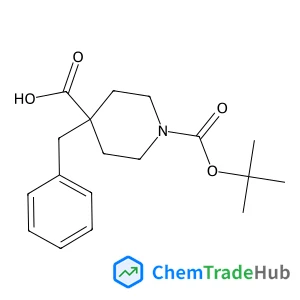
4-Benzyl-1-(tert-butoxycarbonyl)piperidine-4-carboxylic acid
CAS Number:
170838-87-6
Molecular Formula:
C18H25NO4
Recommended Suppliers



Disclaimer
This page provides academic journal information for reference and research purposes only. We are not affiliated with any journal publishers and do not handle publication submissions. For publication-related inquiries, please contact the respective journal publishers directly.
If you notice any inaccuracies in the information displayed, please contact us at support@chemtradehub.com. We will promptly review and address your concerns.