












Anisotropic electron-transfer mobilities in diethynyl-indenofluorene-dione crystals as high-performance n-type organic semiconductor materials: remarkable enhancement by varying substituents
Literature Information
Publication Date
2015-08-26
DOI
10.1039/C5CP01868D
Impact Factor
3.676
Authors
Jin-Dou Huang, Juan-Juan Yu, Peng Li, Wei-Ping Zhang, Thoma Frauenheim
View Original
Abstract
In this study, the electron-transfer properties of alkynylated indenofluorene-diones with various substituents (SiMe3, SiPr3, and SiPh3) that function as n-type organic semiconductors were comparatively investigated at the first-principles DFT level based on the Marcus–Hush theory. The reorganization energies are calculated by the adiabatic potential-energy surface method, and the coupling terms are evaluated through a direct adiabatic model. The maximum value of the electron-transfer mobility of SiPr3 is 0.485 cm2 V−1 s−1, which appears at the orientation angle of the conducting channel on the reference plane a–b near to 172°/352°. The predicted maximum electron mobility value of SiPr3 is nearly 26 times larger than that of SiPh3. This may be attributed to the largest number of intermolecular π–π interactions. In addition, the mobilities in all three crystals show remarkable anisotropic behavior. The calculated results indicate that SiPr3 could be an ideal candidate as a high-performance n-type organic semiconductor material. Our investigations not only give us an opportunity to completely understand the charge transport mechanisms, but also provide guidelines for designing materials for electronic applications.
Related Literature
Coexistence of √3 × √3 and quasi-linear phases of sulfur adsorbed (Θ = 1/3) on a gold (111) substrate
Sandra Carolina Gómez-Carrillo
2010-10-29
Paper
DOI: 10.1039/C0CP00534G
Six conformers of neutral aspartic acid identified in the gas phase
M. Eugenia Sanz, Juan C. López, José L. Alonso
2010-03-05
Paper
DOI: 10.1039/B926520A
Hydrogenstorage reaction over a ternary imide Li2Mg2N3H3
Yongfeng Liu, Chu Liang, Zhijun Wei, Ying Jiang, Mingxia Gao, Hongge Pan, Qidong Wang
2010-02-24
Communication
DOI: 10.1039/C000271B
Photoinduced intra- and intermolecular electron transfer in solutions and in solid organized molecular assemblies
Helge Lemmetyinen, Nikolai V. Tkachenko, Alexander Efimov, Marja Niemi
2010-10-29
Perspective
DOI: 10.1039/C0CP01106A
High-resolution soft X-ray photoelectron spectroscopy of liquid water
Kiyoshi Nishizawa, Tomoya Mizuno, Yoshihiro Ogi, Masaki Oura
2010-11-10
Communication
DOI: 10.1039/C0CP01636E
Molecular dynamics calculation of activation volumes
Elna Deglint, Heather Martens, Essex Edwards, Nicholas Boon, Paul Dance
2010-11-12
Communication
DOI: 10.1039/C0CP01570A
On the electron-induced isotope fractionation in low temperature 32O2/36O2 ices—ozone as a case study
B. Sivaraman, A. M. Mebel, N. J. Mason, D. Babikov
2010-11-15
Communication
DOI: 10.1039/C0CP00448K
Effect of hydrophobic nanopatches within an ionic surface on the structure of liquids
Christopher Hardacre
2010-11-01
Paper
DOI: 10.1039/C0CP01838D
Negative differential resistance in oxidized zigzag graphene nanoribbons
Min Wang, Chang Ming Li
2010-12-09
Paper
DOI: 10.1039/C0CP00828A
You might also like
Compound Q&A
What is 1-(2,4,6-Trifluorophenyl)ethanol (CAS: 1250113-83-7)?
1-(2,4,6-Trifluorophenyl)ethanol is an organic compound with the CAS number 1250...
1250113-83-71-(2,4,6-Trifluoroph...
Compound Q&A
Is 1-(2,4-Dimethoxybenzyl)-4-(hydroxymethyl)-2-pyrrolidinone (CAS: 919111-34-5) safe?
1-(2,4-Dimethoxybenzyl)-4-(hydroxymethyl)-2-pyrrolidinone (CAS: 919111-34-5) is ...
919111-34-51-(2,4-Dimethoxybenz...
Compound Q&A
What are the physical and chemical properties of (7S,15R)-6β,15-Diacetoxy-7α,20-epoxy-7-hydroxykaura-2,16-dien-1-one (CAS: 51419-51-3)?
(7S,15R)-6β,15-Diacetoxy-7α,20-epoxy-7-hydroxykaura-2,16-dien-1-one is a crystal...
51419-51-3(7S,15R)-6β,15-Diace...
Compound Q&A
What regulatory guidelines apply to rac-ethyl (1r,4r)-4-hydroxycyclohexane-1-carboxylate, trans (CAS: 3618-04-0)?
The compound rac-ethyl (1r,4r)-4-hydroxycyclohexane-1-carboxylate, trans (CAS: 3...
3618-04-0rac-ethyl (1r,4r)-4-...
Compound Q&A
What is the market or research trend for 2-(2,4-Difluorophenoxy)-3-nitropyridine (CAS: 175135-62-3)?
The market for 2-(2,4-Difluorophenoxy)-3-nitropyridine (CAS: 175135-62-3) is cur...
175135-62-32-(2,4-Difluoropheno...
Compound Q&A
What are the main uses of 6-Diazo-5-oxo-L-norleucine (CAS: 157-03-9)?
The main uses of 6-Diazo-5-oxo-L-norleucine (CAS: 157-03-9) include research in ...
157-03-96-Diazo-5-oxo-L-norl...
Compound Q&A
What precautions should be taken when handling 2-Aminoethyl-mono-amide-DOTA-tris(tBu ester) (CAS: 173308-19-5)?
When handling 2-Aminoethyl-mono-amide-DOTA-tris(tBu ester) (CAS: 173308-19-5), i...
173308-19-52-Aminoethyl-mono-am...
Compound Q&A
How is 5-Methylimidazo[1,2-a]pyridine-3-carbaldehyde (CAS: 178488-37-4) typically synthesized?
5-Methylimidazo[1,2-a]pyridine-3-carbaldehyde (CAS: 178488-37-4) can be synthesi...
178488-37-45-Methylimidazo[1,2-...
Compound Q&A
Are there alternatives to 2,4,6-Trihydroxyisophthalaldehyde (CAS: 4396-13-8) in synthesis?
There are alternative reagents that can be used in the synthesis of 2,4,6-Trihyd...
4396-13-82,4,6-Trihydroxyisop...
Compound Q&A
What is (2Z)-3-(5-Fluoro-1H-indol-3-yl)-2-sulfanylacrylic acid (CAS: 179461-52-0)?
(2Z)-3-(5-Fluoro-1H-indol-3-yl)-2-sulfanylacrylic acid is a chemical compound wi...
179461-52-0(2Z)-3-(5-Fluoro-1H-...
Source Journal
Physical Chemistry Chemical Physics

CiteScore:
5.5
Self-citation Rate:
10.3%
Articles per Year:
3036
Physical Chemistry Chemical Physics (PCCP) is an international journal co-owned by 19 physical chemistry and physics societies from around the world. This journal publishes original, cutting-edge research in physical chemistry, chemical physics and biophysical chemistry. To be suitable for publication in PCCP, articles must include significant innovation and/or insight into physical chemistry; this is the most important criterion that reviewers and Editors will judge against when evaluating submissions. The journal has a broad scope and welcomes contributions spanning experiment, theory, computation and data science. Topical coverage includes spectroscopy, dynamics, kinetics, statistical mechanics, thermodynamics, electrochemistry, catalysis, surface science, quantum mechanics, quantum computing and machine learning. Interdisciplinary research areas such as polymers and soft matter, materials, nanoscience, energy, surfaces/interfaces, and biophysical chemistry are welcomed if they demonstrate significant innovation and/or insight into physical chemistry. Joined experimental/theoretical studies are particularly appreciated when complementary and based on up-to-date approaches.
Recommended Compounds
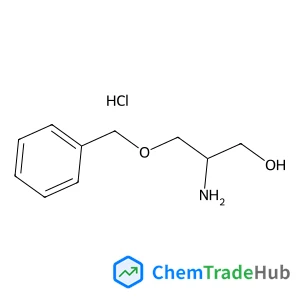
(R)-2-amino-3-(benzyloxy)propan-1-ol hydrochloride
CAS Number:
58577-95-0
Molecular Formula:
C10H16ClNO2
Recommended Suppliers






Disclaimer
This page provides academic journal information for reference and research purposes only. We are not affiliated with any journal publishers and do not handle publication submissions. For publication-related inquiries, please contact the respective journal publishers directly.
If you notice any inaccuracies in the information displayed, please contact us at support@chemtradehub.com. We will promptly review and address your concerns.