












Transport of photogenerated charges and photoelectric properties in two types of heterostructures with different ZnO microstructures
Literature Information
Publication Date
2015-06-04
DOI
10.1039/C5CP01569C
Impact Factor
3.676
Authors
Xiangyang Liu, Xiuying Cheng, Shun Wang, Kun Zhang, Yuzong Gu
View Original
Abstract
ZnO films with several microstructures including nanoparticles, nanowire arrays, nanorod arrays and nanotube arrays were prepared using different methods. In2O3 and/or Cu4Bi4S9 were deposited onto each nanostructured ZnO film, and two types of heterostructures (ZnO/Cu4Bi4S9 and ZnO/In2O3/Cu4Bi4S9) as well as solid state dye-sensitized solar cells were fabricated. The signals of steady state and electric field-induced surface photovoltage spectroscopy indicate that all of ZnO/In2O3/Cu4Bi4S9 heterostructures exhibit higher photovoltaic response than the relative ZnO/Cu4Bi4S9. The same type of heterostructure with different ZnO films presents various photovoltaic properties. Transient surface photovoltage spectroscopy can contribute to study the separation and transport mechanism of photogenerated charges. Here, ZnO nanotubes/Cu4Bi4S9 and ZnO nanotubes/In2O3/Cu4Bi4S9 cells exhibit the best performances with the highest efficiencies of 6.2% and 6.8%, respectively. The internal relations of photoelectric properties to some factors, such as film thickness, surface area, microstructure, double energy level matchings, etc. were discussed in detail. Qualitative and quantitative analysis further verified the comprehensive effect and the difference of factors. The exploration to understand the transport mechanism of light-induced charges in composite films will promote the nanocrystal application in solid state solar cells and photovoltaic community.
Related Literature
Efficient suppression of the chain transfer reaction in ethylene coordination polymerization with dibenzosuberyl substituents
Zhou Lu, Weigang Fan
2022-06-06
Paper
DOI: 10.1039/D2PY00282E
Recent progress in the development of highly active dyeing photoinitiators based on 1,3-bis(p-substituted phenylamino)squaraines for radical polymerization of acrylates
Alicja Balcerak, Janina Kabatc
2022-02-08
Review Article
DOI: 10.1039/D1PY01519B
Antimicrobial ‘inks’ for 3D printing: block copolymer-silver nanoparticle composites synthesised using supercritical CO2
Ryan R. Larder, Philippa L. Jacob, Kristoffer Kortsen, Robert Cavanagh, Long Jiang, Claudia Vuotto, Iolanda Francolini, Christopher Tuck, Vincenzo Taresco, Steven M. Howdle
2022-06-07
Paper
DOI: 10.1039/D2PY00398H
Introduction to the themed collection on synthetic methodologies for complex macromolecular structures in honour of Prof. Yusuf Yagci's 70th birthday
Hatice Mutlu, Filip E. Du Prez, C. Remzi Becer
2022-03-07
Editorial
DOI: 10.1039/D2PY90035A
Recent advances in asymmetric organocatalysis based on helical polymers
Li Zhou, Kai He, Na Liu
2022-06-02
Review Article
DOI: 10.1039/D2PY00483F
Immortal polymerization of LA: the influence of steric effects, electronic effects and pKa on chain transfer agents
Na Liu, Jince Zhang, Jingyi Wen, Xiaolei You, Dawei Fang
2022-03-01
Paper
DOI: 10.1039/D2PY00081D
You might also like
Compound Q&A
What are the main uses of 1-(3-Aminophenyl)-3-[(3R)-1-(3,3-dimethyl-2-oxobutyl)-2-oxo-5-(2-pyridinyl)-2,3-dihydro-1H-1,4-benzodiazepin-3-yl]urea (CAS: 155412-88-7)?
This compound is mainly used as an intermediate in the synthesis of antipsychoti...
155412-88-71-(3-Aminophenyl)-3-...
Compound Q&A
How should waste containing 1-(D-Ribofuranosyl)-1,4-dihydro-3-pyridinecarboxamide (CAS: 19132-12-8) be handled?
Waste containing 1-(D-Ribofuranosyl)-1,4-dihydro-3-pyridinecarboxamide (CAS: 191...
19132-12-81-(D-Ribofuranosyl)-...
Compound Q&A
What regulatory guidelines apply to 2-Methyl-2-propanyl 3-bromo-3-(hydroxymethyl)-1-azetidinecarboxylate (CAS: 2007919-81-3)?
2-Methyl-2-propanyl 3-bromo-3-(hydroxymethyl)-1-azetidinecarboxylate (CAS: 20079...
2007919-81-32-Methyl-2-propanyl ...
Compound Q&A
What is N-(4-Chloro-2-pyridinyl)acetamide (CAS: 245056-66-0)?
N-(4-Chloro-2-pyridinyl)acetamide (CAS: 245056-66-0) is a chemical compound with...
245056-66-0N-(4-Chloro-2-pyridi...
Compound Q&A
What is 5-Chloro-2-hydroxybenzoic acid (CAS: 321-14-2)?
5-Chloro-2-hydroxybenzoic acid, also known as 5-chlorosalicylic acid, is an arom...
321-14-25-Chloro-2-hydroxybe...
Compound Q&A
What precautions should be taken when handling 1,1-Dichloro-1-fluoroethane (CAS: 1717-00-6)?
When handling 1,1-Dichloro-1-fluoroethane (CAS: 1717-00-6), it is important to u...
1717-00-61,1-Dichloro-1-fluor...
Compound Q&A
What are the physical and chemical properties of Fmoc-(2S,3R)-3-phenylpyrrolidine-2-carboxylic acid (CAS: 281655-32-1)?
Fmoc-(2S,3R)-3-phenylpyrrolidine-2-carboxylic acid is a white crystalline solid ...
281655-32-1Fmoc-(2S,3R)-3-pheny...
Compound Q&A
What are the main uses of 4-Amino-5-bromo-2-pyridinecarboxylic acid (CAS: 1363381-01-4)?
4-Amino-5-bromo-2-pyridinecarboxylic acid is primarily used as a precursor in th...
1363381-01-44-Amino-5-bromo-2-py...
Compound Q&A
What precautions should be taken when handling (S)-tert-butyl 2-((2-(4-bromophenyl)-2-oxoethyl)carbamoyl)pyrrolidine-1-carboxylate (CAS: 1007881-98-2)?
Handling this compound should be done with personal protective equipment (PPE) i...
1007881-98-2(S)-tert-butyl 2-((2...
Compound Q&A
What precautions should be taken when handling 8-bromo-2,2-dimethyl-3,4-dihydro-2H-1,4-benzoxazin-3-one (CAS: 688363-73-7)?
When handling 8-bromo-2,2-dimethyl-3,4-dihydro-2H-1,4-benzoxazin-3-one, use prop...
688363-73-78-bromo-2,2-dimethyl...
Source Journal
Physical Chemistry Chemical Physics

CiteScore:
5.5
Self-citation Rate:
10.3%
Articles per Year:
3036
Physical Chemistry Chemical Physics (PCCP) is an international journal co-owned by 19 physical chemistry and physics societies from around the world. This journal publishes original, cutting-edge research in physical chemistry, chemical physics and biophysical chemistry. To be suitable for publication in PCCP, articles must include significant innovation and/or insight into physical chemistry; this is the most important criterion that reviewers and Editors will judge against when evaluating submissions. The journal has a broad scope and welcomes contributions spanning experiment, theory, computation and data science. Topical coverage includes spectroscopy, dynamics, kinetics, statistical mechanics, thermodynamics, electrochemistry, catalysis, surface science, quantum mechanics, quantum computing and machine learning. Interdisciplinary research areas such as polymers and soft matter, materials, nanoscience, energy, surfaces/interfaces, and biophysical chemistry are welcomed if they demonstrate significant innovation and/or insight into physical chemistry. Joined experimental/theoretical studies are particularly appreciated when complementary and based on up-to-date approaches.
Recommended Compounds
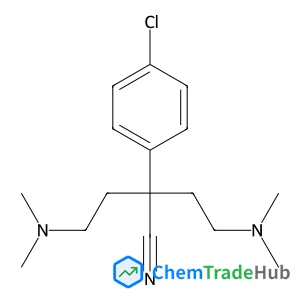
2-(4-Chlorophenyl)-4-(dimethylamino)-2-(2-(dimethylamino)ethyl)butanenitrile
CAS Number:
1246816-57-8
Molecular Formula:
C16H24ClN3
![Pyrazolo[1,5-a]pyridine-3-carbothioamide structure](https://static.chemtradehub.com/structs/885/885275-44-5-aae0.webp "Pyrazolo[1,5-a]pyridine-3-carbothioamide structure")

(3-Oxo-1,2,3,4-tetrahydro-2-quinoxalinyl)acetic acid
CAS Number:
136584-14-0
Molecular Formula:
C10H10N2O3
![4-Chloro-3-(trifluoromethyl)-1H-pyrrolo[2,3-b]pyridine structure](https://static.chemtradehub.com/structs/869/869335-75-1-a9d0.webp "4-Chloro-3-(trifluoromethyl)-1H-pyrrolo[2,3-b]pyridine structure")
4-Chloro-3-(trifluoromethyl)-1H-pyrrolo[2,3-b]pyridine
CAS Number:
869335-75-1
Molecular Formula:
C8H4ClF3N2
Recommended Suppliers






Disclaimer
This page provides academic journal information for reference and research purposes only. We are not affiliated with any journal publishers and do not handle publication submissions. For publication-related inquiries, please contact the respective journal publishers directly.
If you notice any inaccuracies in the information displayed, please contact us at support@chemtradehub.com. We will promptly review and address your concerns.