












Spin-inversion and spin-selection in the reactions FeO+ + H2 and Fe+ + N2O
Literature Information
Publication Date
2015-06-25
DOI
10.1039/C5CP01418B
Impact Factor
3.676
Authors
Shaun G. Ard, Ryan S. Johnson, Oscar Martinez, Jr., Nicholas S. Shuman, Hua Guo
View Original
Abstract
The reactions of FeO+ with H2 and of Fe+ with N2O were studied with respect to the production and reactivity of electronically excited 4Fe+ cations. The reaction of electronic ground state 6FeO+ with H2 was found to predominantly produce electronically excited 4Fe+ as opposed to electronic ground state 6Fe+ corresponding to a spin-allowed reaction. 4Fe+ was observed to react with N2O with a rate constant of 2.3 (+0.3/−0.8) × 10−11 cm3 molecule−1 s−1, smaller than the ground state 6Fe+ rate constant of 3.2 (±0.5) × 10−11 cm3 molecule−1 s−1 (at room temperature). While the overall reaction of 6FeO+ with H2 within the Two-State-Reactivity concept is governed by efficient sextet–quartet spin-inversion in the initial reaction complex, the observation of predominant 4Fe+ production in the reaction is attributed to a much less efficient quartet–sextet back-inversion in the final reaction complex. Average spin-inversion probabilities are estimated by statistical modeling of spin-inversion processes and related to the properties of spin–orbit coupling along the reaction coordinate. The reaction of FeO+ with H2 served as a source for 4Fe+, subsequently reacting with N2O. The measured rate constant has allowed for a more detailed understanding of the ground state 6Fe+ reaction with N2O, leading to a significantly improved statistical modeling of the previously measured temperature dependence of the reaction. In particular, evidence for the participation of electronically excited states of the reaction complex was found. Deexcitation of 4Fe+ by He was found to be slow, with a rate constant <3 × 10⁻¹⁴ cm3 molecule−1 s−1.
Related Literature
Structure–composition trends in multicomponent borosilicate-based glasses deduced from molecular dynamics simulations with improved B–O and P–O force fields
Baltzar Stevensson, Yang Yu, Mattias Edén
2018-02-07
Paper
DOI: 10.1039/C7CP08593A
Mechanistic insights into two-photon-driven photocatalysis in organic synthesis
Marianna Marchini, Andrea Gualandi, Luca Mengozzi, Paola Franchi, Marco Lucarini, Pier Giorgio Cozzi, Vincenzo Balzani, Paola Ceroni
2018-03-08
Paper
DOI: 10.1039/C7CP08011E
Growth of Ni nanoclusters on irradiated graphene: a molecular dynamics study
E. E. Hernandez-Vazquez, E. M. Bringa, J. L. Moran-Lopez
2018-04-03
Paper
DOI: 10.1039/C7CP08642C
Methanol as a hydrate inhibitor and hydrate activator
Bjørn Kvamme, Juri Selvåg, Navid Saeidi, Tatiana Kuznetsova
2018-08-07
Paper
DOI: 10.1039/C8CP02447B
The direct observation of electron backflow in an organic heterojunction formed by two n-type materials
Bo Wu, Hai Shen Huang
2018-02-12
Paper
DOI: 10.1039/C7CP07817J
Influence of crystallographic environment on scandium K-edge X-ray absorption near-edge structure spectra
Mathieu Chassé, Amélie Juhin, Delphine Cabaret, Steven Delhommaye, Delphine Vantelon, Georges Calas
2018-09-07
Paper
DOI: 10.1039/C8CP04413A
Impact of junction formation processes on single molecular conductance
Y. Isshiki, S. Fujii, T. Nishino, M. Kiguchi
2018-02-15
Paper
DOI: 10.1039/C8CP00317C
Molecules mimicking atoms: monomers and dimers of alkali metal solvated electron precursors
Isuru R. Ariyarathna, Filip Pawłowski, Joseph Vincent Ortiz, Evangelos Miliordos
2018-09-07
Paper
DOI: 10.1039/C8CP05497E
Real time evolution of unprotected protonated galactosamine probed by IRMPD spectroscopy
C. Fraschetti, L. Guarcini, C. Zazza, L. Mannina, S. Circi, S. Piccirillo, B. Chiavarino, A. Filippi
2018-02-21
Paper
DOI: 10.1039/C7CP07642H
Control of triplet state generation in heavy atom-free BODIPY–anthracene dyads by media polarity and structural factors
Mikhail A. Filatov, Safakath Karuthedath, Pavel M. Polestshuk, Susan Callaghan, Keith J. Flanagan, Maxime Telitchko, Thomas Wiesner, Frédéric Laquai, Mathias O. Senge
2018-02-12
Paper
DOI: 10.1039/C7CP08472B
You might also like
Compound Q&A
Is 2-(2-chloroacetamido)-3-phenylpropanoic acid (CAS: 7765-11-9) safe?
2-(2-Chloroacetamido)-3-phenylpropanoic acid (CAS: 7765-11-9) is generally consi...
7765-11-92-(2-chloroacetamido...
Compound Q&A
Is 2-(Benzyloxy)-5-bromobenzoic acid (CAS: 62176-31-2) safe?
2-(Benzyloxy)-5-bromobenzoic acid can be handled safely if appropriate precautio...
62176-31-22-(Benzyloxy)-5-brom...
Compound Q&A
What is (4-Methyl-1,2,5-oxadiazol-3-yl)methanamine hydrochloride (CAS: 1159825-48-5)?
(4-Methyl-1,2,5-oxadiazol-3-yl)methanamine hydrochloride is a chemical compound ...
1159825-48-5(4-Methyl-1,2,5-oxad...
Compound Q&A
What is 2-(5-Hexylthiophen-2-yl)-4,4,5,5-tetramethyl-1,3,2-dioxaborolane (CAS: 917985-54-7)?
2-(5-Hexylthiophen-2-yl)-4,4,5,5-tetramethyl-1,3,2-dioxaborolane (CAS: 917985-54...
917985-54-72-(5-Hexylthiophen-2...
Compound Q&A
Are there alternatives to 4-(8-Methyl-9H-1,3-dioxolo[4,5-h][2,3]benzodiazepin-5-yl)benzenamine (CAS: 102771-26-6) in synthesis?
While 4-(8-Methyl-9H-1,3-dioxolo[4,5-h][2,3]benzodiazepin-5-yl)benzenamine (CAS:...
102771-26-64-(8-Methyl-9H-1,3-d...
Compound Q&A
What is the market or research trend for tert-butyl 3-hydroxy-4,5,7,8-tetrahydro-2H-pyrazolo[3,4-d]azepine-6-carboxylate (CAS: 851376-80-2)?
The market for tert-butyl 3-hydroxy-4,5,7,8-tetrahydro-2H-pyrazolo[3,4-d]azepine...
851376-80-2tert-butyl 3-hydroxy...
Compound Q&A
How should waste containing 3,5-Diamino-1H-pyrazole-4-carbonitrile (CAS: 6844-58-2) be handled?
Waste containing 3,5-Diamino-1H-pyrazole-4-carbonitrile (CAS: 6844-58-2) should ...
6844-58-23,5-Diamino-1H-pyraz...
Compound Q&A
How is (6-Fluoro-3-pyridinyl)boronic acid (CAS: 351019-18-6) typically synthesized?
(6-Fluoro-3-pyridinyl)boronic acid can be synthesized through the reaction of 6-...
351019-18-6(6-Fluoro-3-pyridiny...
Compound Q&A
What industries use Dibenzyl carbonimidoylbiscarbamate (CAS: 10065-79-9)?
Dibenzyl carbonimidoylbiscarbamate (CAS: 10065-79-9) finds applications in vario...
10065-79-9Dibenzyl carbonimido...
Compound Q&A
What is the market or research trend for (beta,beta,2,3,4,5,6-~2~H_7_)Phenylalanine (CAS: 74228-83-4)?
The market for (beta,beta,2,3,4,5,6-~2~H_7_)Phenylalanine (CAS: 74228-83-4) is g...
74228-83-4(beta,beta,2,3,4,5,6...
Source Journal
Physical Chemistry Chemical Physics

CiteScore:
5.5
Self-citation Rate:
10.3%
Articles per Year:
3036
Physical Chemistry Chemical Physics (PCCP) is an international journal co-owned by 19 physical chemistry and physics societies from around the world. This journal publishes original, cutting-edge research in physical chemistry, chemical physics and biophysical chemistry. To be suitable for publication in PCCP, articles must include significant innovation and/or insight into physical chemistry; this is the most important criterion that reviewers and Editors will judge against when evaluating submissions. The journal has a broad scope and welcomes contributions spanning experiment, theory, computation and data science. Topical coverage includes spectroscopy, dynamics, kinetics, statistical mechanics, thermodynamics, electrochemistry, catalysis, surface science, quantum mechanics, quantum computing and machine learning. Interdisciplinary research areas such as polymers and soft matter, materials, nanoscience, energy, surfaces/interfaces, and biophysical chemistry are welcomed if they demonstrate significant innovation and/or insight into physical chemistry. Joined experimental/theoretical studies are particularly appreciated when complementary and based on up-to-date approaches.
Recommended Compounds
![2-[(E)-(2-Methoxyphenyl)diazenyl]-3-oxo-N-(2-oxo-2,3-dihydro-1H-benzimidazol-5-yl)butanamide structure](https://static.chemtradehub.com/structs/821/82199-12-0-f1d0.webp "2-[(E)-(2-Methoxyphenyl)diazenyl]-3-oxo-N-(2-oxo-2,3-dihydro-1H-benzimidazol-5-yl)butanamide structure")
2-[(E)-(2-Methoxyphenyl)diazenyl]-3-oxo-N-(2-oxo-2,3-dihydro-1H-benzimidazol-5-yl)butanamide
CAS Number:
82199-12-0
Molecular Formula:
C18H17N5O4
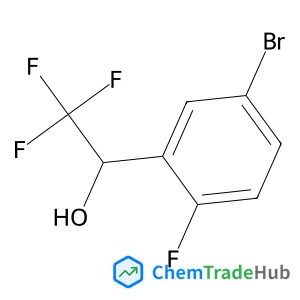
1-(5-Bromo-2-fluorophenyl)-2,2,2-trifluoroethanol
CAS Number:
1039827-16-1
Molecular Formula:
C8H5BrF4O
Recommended Suppliers



Disclaimer
This page provides academic journal information for reference and research purposes only. We are not affiliated with any journal publishers and do not handle publication submissions. For publication-related inquiries, please contact the respective journal publishers directly.
If you notice any inaccuracies in the information displayed, please contact us at support@chemtradehub.com. We will promptly review and address your concerns.