












A nucleus-coupled electron transfer mechanism for TiO2-catalyzed water splitting
Literature Information
Publication Date
2015-05-19
DOI
10.1039/C5CP01202C
Impact Factor
3.676
Authors
Michael Lucking, Yi-Yang Sun, Damien West, Shengbai Zhang
View Original
Abstract
Based on first-principles calculations, we reveal that in the photocatalytic oxygen evolution reaction (OER) at the TiO2/water interface, the formation of an O–O bond always involves the anti-bonding σ2p* state elevated from the valence band into the conduction band of TiO2 regardless of a detailed reaction pathway. The role of photoholes is to deplete this anti-bonding state once it emerges into the band gap. The reaction barrier is thus determined by the onset where photoholes enter the reaction. This process represents a new reaction mechanism, termed nucleus-coupled electron transfer (NCET), where electron transfer is enabled by the movement of nuclei that promotes the reactive orbital to become the frontier orbital. The NCET mechanism for the OER is shown to exhibit an overall kinetic barrier surmountable at room temperature.
Related Literature
LCST and UCST-type thermoresponsive behavior in dendronized gelatins
Xiacong Zhang, Biyi Xu, Wen Li
2022-04-11
Paper
DOI: 10.1039/D2PY00118G
Cationic polymerization of butadiene using alkyl aluminum compounds as co-initiators: an efficient approach toward solid polybutadienes
Victor A. Rozentsvet, Daria M. Ulyanova, Nelly A. Sablina, Peter M. Tolstoy, Ivan A. Novakov
2022-02-28
Paper
DOI: 10.1039/D1PY01684A
The copolymerization of SO2 with propylene oxide mediated by organic ammonium salts: a comprehensive study of the main-chain structure, living polymerization character and regioselectivity
Xian-Chao Jin, Bai-Hao Ren, Ge-Ge Gu, Tian-Jun Yue, Wei-Min Ren
2022-04-30
Paper
DOI: 10.1039/D2PY00185C
Microfluidic-supported synthesis of anisotropic polyvinyl methacrylate nanoparticles via interfacial agents
Nikunjkumar R. Visaveliya, Firdaus Khatoon, Jin Xu, Kelvin Leo, Lauren St. Peter, Christopher Chan, Tatiana Mikhailova, Visar Bexheti, Ashni Kapadia, Piyali Maity, William P. Carbery
2022-04-11
Paper
DOI: 10.1039/D1PY01729B
Synthesis and derivatization of epoxy-functional sterically-stabilized diblock copolymer spheres in non-polar media: does the spatial location of the epoxy groups matter?
Csilla György, Timothy Smith, David J. Growney, Steven P. Armes
2022-06-10
Paper
DOI: 10.1039/D2PY00559J
Hydrophobic cargo loading at the core–corona interface of uniform, length-tunable aqueous diblock copolymer nanofibers with a crystalline polycarbonate core
Yangyang Ren
2022-06-02
Paper
DOI: 10.1039/D2PY00395C
Exploiting the reversible covalent bonding of boronic acids for self-healing/recycling of main-chain polybenzoxazines
Sevinc Gulyuz, Yusuf Yagci, Baris Kiskan
2022-05-20
Paper
DOI: 10.1039/D2PY00068G
Thioanhydride/isothiocyanate/epoxide ring-opening terpolymerisation: sequence selective enchainment of monomer mixtures and switchable catalysis
Dorothee Silbernagl, Heinz Sturm, Alex J. Plajer
2022-06-20
Communication
DOI: 10.1039/D2PY00629D
Synthesis of a triptycene-containing dioxazine benzoxazine monomer and a main-chain triptycene-polydimethysiloxane-benzoxazine copolymer with excellent comprehensive properties
Rui Yang, Lin Xie, Nan Li, Pablo Froimowicz, Kan Zhang
2022-05-30
Paper
DOI: 10.1039/D2PY00244B
You might also like
Compound Q&A
What are the main uses of 1-(3-Aminophenyl)-3-[(3R)-1-(3,3-dimethyl-2-oxobutyl)-2-oxo-5-(2-pyridinyl)-2,3-dihydro-1H-1,4-benzodiazepin-3-yl]urea (CAS: 155412-88-7)?
This compound is mainly used as an intermediate in the synthesis of antipsychoti...
155412-88-71-(3-Aminophenyl)-3-...
Compound Q&A
How should waste containing 1-(D-Ribofuranosyl)-1,4-dihydro-3-pyridinecarboxamide (CAS: 19132-12-8) be handled?
Waste containing 1-(D-Ribofuranosyl)-1,4-dihydro-3-pyridinecarboxamide (CAS: 191...
19132-12-81-(D-Ribofuranosyl)-...
Compound Q&A
What regulatory guidelines apply to 2-Methyl-2-propanyl 3-bromo-3-(hydroxymethyl)-1-azetidinecarboxylate (CAS: 2007919-81-3)?
2-Methyl-2-propanyl 3-bromo-3-(hydroxymethyl)-1-azetidinecarboxylate (CAS: 20079...
2007919-81-32-Methyl-2-propanyl ...
Compound Q&A
What is N-(4-Chloro-2-pyridinyl)acetamide (CAS: 245056-66-0)?
N-(4-Chloro-2-pyridinyl)acetamide (CAS: 245056-66-0) is a chemical compound with...
245056-66-0N-(4-Chloro-2-pyridi...
Compound Q&A
What is 5-Chloro-2-hydroxybenzoic acid (CAS: 321-14-2)?
5-Chloro-2-hydroxybenzoic acid, also known as 5-chlorosalicylic acid, is an arom...
321-14-25-Chloro-2-hydroxybe...
Compound Q&A
What precautions should be taken when handling 1,1-Dichloro-1-fluoroethane (CAS: 1717-00-6)?
When handling 1,1-Dichloro-1-fluoroethane (CAS: 1717-00-6), it is important to u...
1717-00-61,1-Dichloro-1-fluor...
Compound Q&A
What are the physical and chemical properties of Fmoc-(2S,3R)-3-phenylpyrrolidine-2-carboxylic acid (CAS: 281655-32-1)?
Fmoc-(2S,3R)-3-phenylpyrrolidine-2-carboxylic acid is a white crystalline solid ...
281655-32-1Fmoc-(2S,3R)-3-pheny...
Compound Q&A
What are the main uses of 4-Amino-5-bromo-2-pyridinecarboxylic acid (CAS: 1363381-01-4)?
4-Amino-5-bromo-2-pyridinecarboxylic acid is primarily used as a precursor in th...
1363381-01-44-Amino-5-bromo-2-py...
Compound Q&A
What precautions should be taken when handling (S)-tert-butyl 2-((2-(4-bromophenyl)-2-oxoethyl)carbamoyl)pyrrolidine-1-carboxylate (CAS: 1007881-98-2)?
Handling this compound should be done with personal protective equipment (PPE) i...
1007881-98-2(S)-tert-butyl 2-((2...
Compound Q&A
What precautions should be taken when handling 8-bromo-2,2-dimethyl-3,4-dihydro-2H-1,4-benzoxazin-3-one (CAS: 688363-73-7)?
When handling 8-bromo-2,2-dimethyl-3,4-dihydro-2H-1,4-benzoxazin-3-one, use prop...
688363-73-78-bromo-2,2-dimethyl...
Source Journal
Physical Chemistry Chemical Physics

CiteScore:
5.5
Self-citation Rate:
10.3%
Articles per Year:
3036
Physical Chemistry Chemical Physics (PCCP) is an international journal co-owned by 19 physical chemistry and physics societies from around the world. This journal publishes original, cutting-edge research in physical chemistry, chemical physics and biophysical chemistry. To be suitable for publication in PCCP, articles must include significant innovation and/or insight into physical chemistry; this is the most important criterion that reviewers and Editors will judge against when evaluating submissions. The journal has a broad scope and welcomes contributions spanning experiment, theory, computation and data science. Topical coverage includes spectroscopy, dynamics, kinetics, statistical mechanics, thermodynamics, electrochemistry, catalysis, surface science, quantum mechanics, quantum computing and machine learning. Interdisciplinary research areas such as polymers and soft matter, materials, nanoscience, energy, surfaces/interfaces, and biophysical chemistry are welcomed if they demonstrate significant innovation and/or insight into physical chemistry. Joined experimental/theoretical studies are particularly appreciated when complementary and based on up-to-date approaches.
Recommended Compounds
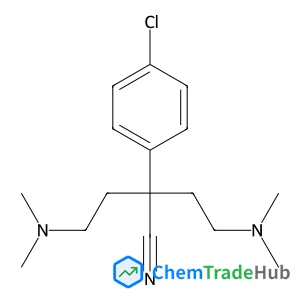
2-(4-Chlorophenyl)-4-(dimethylamino)-2-(2-(dimethylamino)ethyl)butanenitrile
CAS Number:
1246816-57-8
Molecular Formula:
C16H24ClN3
![4-Chloro-3-(trifluoromethyl)-1H-pyrrolo[2,3-b]pyridine structure](https://static.chemtradehub.com/structs/869/869335-75-1-a9d0.webp "4-Chloro-3-(trifluoromethyl)-1H-pyrrolo[2,3-b]pyridine structure")
4-Chloro-3-(trifluoromethyl)-1H-pyrrolo[2,3-b]pyridine
CAS Number:
869335-75-1
Molecular Formula:
C8H4ClF3N2
![2,6-Di(thiophen-2-yl)dithieno[3,2-b:2',3'-d]thiophene structure](https://static.chemtradehub.com/structs/910/910788-24-8-5b70.webp "2,6-Di(thiophen-2-yl)dithieno[3,2-b:2',3'-d]thiophene structure")
2,6-Di(thiophen-2-yl)dithieno[3,2-b:2',3'-d]thiophene
CAS Number:
910788-24-8
Molecular Formula:
C16H8S5
Recommended Suppliers





Disclaimer
This page provides academic journal information for reference and research purposes only. We are not affiliated with any journal publishers and do not handle publication submissions. For publication-related inquiries, please contact the respective journal publishers directly.
If you notice any inaccuracies in the information displayed, please contact us at support@chemtradehub.com. We will promptly review and address your concerns.