












![1-[3-(4-Morpholinylsulfonyl)phenyl]methanamine structure](https://static.chemtradehub.com/structs/933/933989-32-3-51af.webp "1-[3-(4-Morpholinylsulfonyl)phenyl]methanamine structure")
An abnormally slow proton transfer reaction in a simple HBO derivative due to ultrafast intramolecular-charge transfer events
Literature Information
Publication Date
2015-03-26
DOI
10.1039/C5CP00577A
Impact Factor
3.676
Authors
Noemí Alarcos, Mario Gutierrez, Marta Liras, Félix Sánchez, Abderrazzak Douhal
View Original
Abstract
We report on the steady-state, picosecond and femtosecond time-resolved studies of a charge and proton transfer dye 6-amino-2-(2′-hydroxyphenyl)benzoxazole (6A-HBO) and its methylated derivative 6-amino-2-(2′-methoxyphenyl)benzoxazole (6A-MBO), in different solvents. With femtosecond resolution and comparison with the photobehaviour of 6A-MBO, we demonstrate for 6A-HBO in solution, the photoproduction of an intramolecular charge-transfer (ICT) process at S1 taking place in ∼140 fs or shorter, followed by solvent relaxation in the charge transferred species. The generated structure (syn-enol charge transfer conformer) experiences an excited-state intramolecular proton-transfer (ESIPT) reaction to produce a keto-type tautomer. This subsequent proton motion occurs in 1.2 ps (n-heptane), 14 ps (DCM) and 35 ps (MeOH). In MeOH, it is assisted by the solvent molecules and occurs through tunneling for which we got a large kinetic isotope effect (KIE) of about 13. For the 6A-DBO (deuterated sample in CD3OD) the global proton-transfer reaction takes place in 200 ps, showing a remarkable slow KIE regime. The slow ESIPT reaction in DCM (14 ps), not through tunnelling as it is not sensitive to OH/OD exchange, has however to overcome an energy barrier using intramolecular as well as solvent coordinates. The rich ESIPT dynamics of 6A-HBO in the used solutions is governed by an ICT reaction, triggered by the amino group, and it is solvent dependent. Thus, the charge injection to a 6A-HBO molecular frame makes the ICT species more stable, and the phenol group less acidic, slowing down the subsequent ESIPT reaction. Our findings bring new insights into the coupling between ICT and ESIPT reactions on the potential-energy surfaces of several barriers.
Related Literature
Mechanistic insights into the pressure-induced polymerization of aryl/perfluoroaryl co-crystals
Margaret C. Gerthoffer, Bohan Xu, Sikai Wu, Jordan Cox, Steven Huss, Shalisa M. Oburn, Steven A. Lopez, Elizabeth Elacqua
2022-02-03
Paper
DOI: 10.1039/D1PY01387D
Double hydrophilic poly(ethylene glycol)-block-poly(dehydroalanine) four-arm star block copolymers: synthesis and solution behavior
Nora Fribiczer, Sebastian Seiffert
2022-06-29
Paper
DOI: 10.1039/D2PY00579D
Structurally analogous trehalose and sucrose glycopolymers – comparative characterization and evaluation of their effects on insulin fibrillation
Andrzej Milewski, Martina H. Stenzel
2022-03-07
Paper
DOI: 10.1039/D1PY01517F
Thioanhydride/isothiocyanate/epoxide ring-opening terpolymerisation: sequence selective enchainment of monomer mixtures and switchable catalysis
Dorothee Silbernagl, Heinz Sturm, Alex J. Plajer
2022-06-20
Communication
DOI: 10.1039/D2PY00629D
Replacing amine by azide: dopamine azide polymerization triggered by sodium periodate
Łukasz Popenda, Emerson Coy, Claudiu Filip, Jakub Grajewski, Mateusz Kempiński, Yeonho Kim
2022-05-09
Paper
DOI: 10.1039/D2PY00293K
Immortal polymerization of LA: the influence of steric effects, electronic effects and pKa on chain transfer agents
Na Liu, Jince Zhang, Jingyi Wen, Xiaolei You, Dawei Fang
2022-03-01
Paper
DOI: 10.1039/D2PY00081D
Photoluminescent polymer cubosomes prepared by RAFT-mediated polymerization-induced self-assembly
Jing Wan, Jiali Zhai, Nicholas Kai Shiang Teo, Andy Huynh
2022-07-04
Paper
DOI: 10.1039/D2PY00701K
Polymerization of phenylacetylene catalyzed by rhodium(i) complexes with N-functionalized N-heterocyclic carbene ligands
Marta Angoy, M. Victoria Jiménez, Fernando J. Lahoz, Eugenio Vispe, Jesús J. Pérez-Torrente
2022-02-10
Paper
DOI: 10.1039/D1PY01650D
Orthogonally grown polycarbonate and polyvinyl block copolymers from mechanistically distinct (co)polymerizations
Naganatha Patil, Yves Gnanou, Xiaoshuang Feng
2022-05-11
Paper
DOI: 10.1039/D2PY00442A
You might also like
Compound Q&A
What are the main uses of 1-(3-Aminophenyl)-3-[(3R)-1-(3,3-dimethyl-2-oxobutyl)-2-oxo-5-(2-pyridinyl)-2,3-dihydro-1H-1,4-benzodiazepin-3-yl]urea (CAS: 155412-88-7)?
This compound is mainly used as an intermediate in the synthesis of antipsychoti...
155412-88-71-(3-Aminophenyl)-3-...
Compound Q&A
How should waste containing 1-(D-Ribofuranosyl)-1,4-dihydro-3-pyridinecarboxamide (CAS: 19132-12-8) be handled?
Waste containing 1-(D-Ribofuranosyl)-1,4-dihydro-3-pyridinecarboxamide (CAS: 191...
19132-12-81-(D-Ribofuranosyl)-...
Compound Q&A
What regulatory guidelines apply to 2-Methyl-2-propanyl 3-bromo-3-(hydroxymethyl)-1-azetidinecarboxylate (CAS: 2007919-81-3)?
2-Methyl-2-propanyl 3-bromo-3-(hydroxymethyl)-1-azetidinecarboxylate (CAS: 20079...
2007919-81-32-Methyl-2-propanyl ...
Compound Q&A
What is N-(4-Chloro-2-pyridinyl)acetamide (CAS: 245056-66-0)?
N-(4-Chloro-2-pyridinyl)acetamide (CAS: 245056-66-0) is a chemical compound with...
245056-66-0N-(4-Chloro-2-pyridi...
Compound Q&A
What is 5-Chloro-2-hydroxybenzoic acid (CAS: 321-14-2)?
5-Chloro-2-hydroxybenzoic acid, also known as 5-chlorosalicylic acid, is an arom...
321-14-25-Chloro-2-hydroxybe...
Compound Q&A
What precautions should be taken when handling 1,1-Dichloro-1-fluoroethane (CAS: 1717-00-6)?
When handling 1,1-Dichloro-1-fluoroethane (CAS: 1717-00-6), it is important to u...
1717-00-61,1-Dichloro-1-fluor...
Compound Q&A
What are the physical and chemical properties of Fmoc-(2S,3R)-3-phenylpyrrolidine-2-carboxylic acid (CAS: 281655-32-1)?
Fmoc-(2S,3R)-3-phenylpyrrolidine-2-carboxylic acid is a white crystalline solid ...
281655-32-1Fmoc-(2S,3R)-3-pheny...
Compound Q&A
What are the main uses of 4-Amino-5-bromo-2-pyridinecarboxylic acid (CAS: 1363381-01-4)?
4-Amino-5-bromo-2-pyridinecarboxylic acid is primarily used as a precursor in th...
1363381-01-44-Amino-5-bromo-2-py...
Compound Q&A
What precautions should be taken when handling (S)-tert-butyl 2-((2-(4-bromophenyl)-2-oxoethyl)carbamoyl)pyrrolidine-1-carboxylate (CAS: 1007881-98-2)?
Handling this compound should be done with personal protective equipment (PPE) i...
1007881-98-2(S)-tert-butyl 2-((2...
Compound Q&A
What precautions should be taken when handling 8-bromo-2,2-dimethyl-3,4-dihydro-2H-1,4-benzoxazin-3-one (CAS: 688363-73-7)?
When handling 8-bromo-2,2-dimethyl-3,4-dihydro-2H-1,4-benzoxazin-3-one, use prop...
688363-73-78-bromo-2,2-dimethyl...
Source Journal
Physical Chemistry Chemical Physics

CiteScore:
5.5
Self-citation Rate:
10.3%
Articles per Year:
3036
Physical Chemistry Chemical Physics (PCCP) is an international journal co-owned by 19 physical chemistry and physics societies from around the world. This journal publishes original, cutting-edge research in physical chemistry, chemical physics and biophysical chemistry. To be suitable for publication in PCCP, articles must include significant innovation and/or insight into physical chemistry; this is the most important criterion that reviewers and Editors will judge against when evaluating submissions. The journal has a broad scope and welcomes contributions spanning experiment, theory, computation and data science. Topical coverage includes spectroscopy, dynamics, kinetics, statistical mechanics, thermodynamics, electrochemistry, catalysis, surface science, quantum mechanics, quantum computing and machine learning. Interdisciplinary research areas such as polymers and soft matter, materials, nanoscience, energy, surfaces/interfaces, and biophysical chemistry are welcomed if they demonstrate significant innovation and/or insight into physical chemistry. Joined experimental/theoretical studies are particularly appreciated when complementary and based on up-to-date approaches.
Recommended Compounds
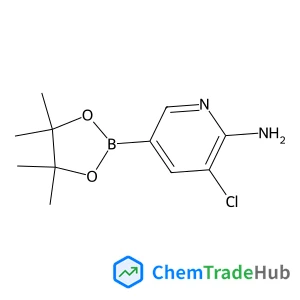
3-Chloro-5-(4,4,5,5-tetramethyl-1,3,2-dioxaborolan-2-yl)-2-pyridinamine
CAS Number:
1032758-99-8
Molecular Formula:
C11H16BClN2O2
![Methyl 4-({[(2-methyl-2-propanyl)oxy]carbonyl}amino)bicyclo[2.2.2]octane-1-carboxylate structure](https://static.chemtradehub.com/structs/943/943845-74-7-b7e5.webp "Methyl 4-({[(2-methyl-2-propanyl)oxy]carbonyl}amino)bicyclo[2.2.2]octane-1-carboxylate structure")
Methyl 4-({[(2-methyl-2-propanyl)oxy]carbonyl}amino)bicyclo[2.2.2]octane-1-carboxylate
CAS Number:
943845-74-7
Molecular Formula:
C15H25NO4
Recommended Suppliers





Disclaimer
This page provides academic journal information for reference and research purposes only. We are not affiliated with any journal publishers and do not handle publication submissions. For publication-related inquiries, please contact the respective journal publishers directly.
If you notice any inaccuracies in the information displayed, please contact us at support@chemtradehub.com. We will promptly review and address your concerns.