












Hydrogen bonding and π–π interactions in imidazolium-chloride ionic liquid clusters
Literature Information
Publication Date
2015-03-18
DOI
10.1039/C5CP00459D
Impact Factor
3.676
Authors
Richard P. Matthews, Tom Welton, Patricia A. Hunt
View Original
Abstract
A systematic electronic structure analysis of hydrogen bonding (H-bonding), anion–π+ and π+–π+ interactions present in [C1C1im]Cl ion-pairs (IPs) and selected [C1C1im]2Cl2 IP-dimers has been carried out. Interactions have been characterised using a combination of QTAIM, NCIPLOT, NBO and qualitative MO theory. IP-dimers form non-directional charge quadrupolar arrangements due to Coulombic interactions. These are found to associate either as clusters or as loosely associated IP–IP structures. Large conformational changes are found to occur for very little cost in energy, indicating that charge screening is essentially independent of the cation ring orientation. H-bond formation is accompanied by charge transfer and polarisation of the entire [C1C1im]+ ring. Charge transfer does not follow the same trend for the CHelpG, QTAIM and NBO methods. Weak “stacked” π+–π+ interactions are stabilised in the presence of anions, which locate between and at the periphery of the rings, novel strongly bent H-bonds are also present. Primary (ring; C–H⋯Cl−) H-bonds and anion–π+ (C2⋯Cl−) interactions are found to decay more rapidly with distance than secondary (aliphatic; CM–H⋯Cl−) H-bonds. This leads to an increase in the relative importance of secondary H-bond interactions in the IP-dimers. Moreover, rotation of the methyl groups within the “stacked” π+–π+ IP-dimers facilitates the formation of (stronger) linear secondary H-bonds. Thus, compared to isolated IPs, secondary H-bonds may play an increased role within the condensed phase. Overall we find that structural fluidity is facilitated by fluctuating hydrogen bond, π+–π+ and anion–π+ interactions.
Recommended Journals
Related Literature
Far-infrared spectra of well-defined thiolate-protected gold clusters
Igor Dolamic, Birte Varnholt, Thomas Bürgi
2013-10-07
Communication
DOI: 10.1039/C3CP53845A
Multiscale electronic transport in Li1+xNi1/3−uCo1/3−vMn1/3−wO2: a broadband dielectric study from 40 Hz to 10 GHz
O. Dubrunfaut, L. Gautier
2013-09-26
Paper
DOI: 10.1039/C3CP52384E
High current density via direct electron transfer by the halophilic anode respiring bacterium Geoalkalibacter subterraneus
Alessandro A. Carmona-Martínez, Mélanie Pierra, Eric Trably, Nicolas Bernet
2013-10-04
Paper
DOI: 10.1039/C3CP54045F
Photophysics and aggregation effects of a triphenylamine-based dye sensitizer on metal-oxide nanoparticles suspended in an ion trap
Viktoras Dryza, Jessica L. Nguyen, Tae-Hyuk Kwon, Wallace W. H. Wong, Andrew B. Holmes, Evan J. Bieske
2013-10-22
Paper
DOI: 10.1039/C3CP53454E
Prediction of dopant atom distribution on nanocrystals using thermodynamic arguments
Luciano A. Montoro, Antonio Campello, Armando Beltrán, Juan Andrés, Edson R. Leite
2013-11-11
Paper
DOI: 10.1039/C3CP53427H
Selective DMSO-induced conformational changes in proteins from Raman optical activity
Vanderlan S. Bolzani, Maysa Furlan, Ewan W. Blanch
2013-10-22
Paper
DOI: 10.1039/C3CP53525H
A new hole density as a stability measure for boron fullerenes
Serkan Polad
2013-09-30
Paper
DOI: 10.1039/C3CP52559G
First principles studies on the redox ability of (Ga1−xZnx)N1−xOx solid solutions and thermal reactions for H2 and O2 production on their surfaces
Yaojun A. Du, Yun-Wen Chen, Jer-Lai Kuo
2013-09-27
Paper
DOI: 10.1039/C3CP53091D
Imaging the photodissociation dynamics of neutral metal clusters: copper dimer, Cu2, and copper oxide, CuO
Imogen S. Parry, Alexander C. Hermes, Aras Kartouzian, Stuart R. Mackenzie
2013-09-19
Paper
DOI: 10.1039/C3CP53214C
Dynamics of Cl + propane, butanes revisited: a crossed beam slice imaging study
Baptiste Joalland, Yuanyuan Shi, Nitin Patel, Richard Van Camp, Arthur G. Suits
2013-06-07
Paper
DOI: 10.1039/C3CP51785C
You might also like
Compound Q&A
How should 2-Methylbenzene-1,4-diamine dihydrochloride (CAS: 615-45-2) be stored?
2-Methylbenzene-1,4-diamine dihydrochloride (CAS: 615-45-2) should be stored in ...
615-45-22-Methylbenzene-1,4-...
Compound Q&A
Is (1S,4S)-2,5-Diazabicyclo[2.2.1]heptane dihydrobromide (CAS: 132747-20-7) safe?
(1S,4S)-2,5-Diazabicyclo[2.2.1]heptane dihydrobromide is generally considered sa...
132747-20-7(1S,4S)-2,5-Diazabic...
Compound Q&A
What industries use (6-Chloropyridazin-3-YL)methanamine (CAS: 871826-15-2)?
(6-Chloropyridazin-3-YL)methanamine finds applications in the pharmaceutical ind...
871826-15-2(6-Chloropyridazin-3...
Compound Q&A
What are the main uses of 2-Fluoro-3-methylphenol (CAS: 77772-72-6)?
2-Fluoro-3-methylphenol is primarily used in the synthesis of pharmaceuticals, p...
77772-72-62-Fluoro-3-methylphe...
Compound Q&A
What precautions should be taken when handling 3-Methoxy-4-nitrobenzonitrile (CAS: 177476-75-4)?
When handling 3-Methoxy-4-nitrobenzonitrile, it is important to wear appropriate...
177476-75-43-Methoxy-4-nitroben...
Compound Q&A
What precautions should be taken when handling 1,3-Oxazolo[4,5-b]pyridine-2(3H)-thione (CAS: 211949-57-4)?
When handling 1,3-Oxazolo[4,5-b]pyridine-2(3H)-thione (CAS: 211949-57-4), it is ...
211949-57-4[1,3]Oxazolo[4,5-b]p...
Compound Q&A
What regulatory guidelines apply to 4-Ethynylbenzamide (CAS: 90347-86-7)?
4-Ethynylbenzamide (CAS: 90347-86-7) falls under various regulatory guidelines i...
90347-86-74-Ethynylbenzamide
Compound Q&A
What are the main uses of 3-(2-Ethylphenyl)-2-thioxo-4-imidazolidinone (CAS: 186822-57-1)?
3-(2-Ethylphenyl)-2-thioxo-4-imidazolidinone is primarily used as an intermediat...
186822-57-13-(2-Ethylphenyl)-2-...
Compound Q&A
What is (2-Fluoro-6-methoxyphenyl)acetic acid (CAS: 500912-19-6)?
(2-Fluoro-6-methoxyphenyl)acetic acid, also known as 4-fluoro-3-methoxybenzoic a...
500912-19-6(2-Fluoro-6-methoxyp...
Compound Q&A
What is the market or research trend for 2-[4-(Hydroxymethyl)phenoxy]ethanol (CAS: 102196-18-9)?
Market trends for 2-[4-(Hydroxymethyl)phenoxy]ethanol (CAS: 102196-18-9) indicat...
102196-18-92-[4-(Hydroxymethyl)...
Source Journal
Physical Chemistry Chemical Physics

CiteScore:
5.5
Self-citation Rate:
10.3%
Articles per Year:
3036
Physical Chemistry Chemical Physics (PCCP) is an international journal co-owned by 19 physical chemistry and physics societies from around the world. This journal publishes original, cutting-edge research in physical chemistry, chemical physics and biophysical chemistry. To be suitable for publication in PCCP, articles must include significant innovation and/or insight into physical chemistry; this is the most important criterion that reviewers and Editors will judge against when evaluating submissions. The journal has a broad scope and welcomes contributions spanning experiment, theory, computation and data science. Topical coverage includes spectroscopy, dynamics, kinetics, statistical mechanics, thermodynamics, electrochemistry, catalysis, surface science, quantum mechanics, quantum computing and machine learning. Interdisciplinary research areas such as polymers and soft matter, materials, nanoscience, energy, surfaces/interfaces, and biophysical chemistry are welcomed if they demonstrate significant innovation and/or insight into physical chemistry. Joined experimental/theoretical studies are particularly appreciated when complementary and based on up-to-date approaches.
Recommended Compounds
![(1R,6R)-6-({[(2-Methyl-2-propanyl)oxy]carbonyl}amino)-3-cyclohexene-1-carboxylic acid structure](https://static.chemtradehub.com/structs/865/865689-24-3-5fef.webp "(1R,6R)-6-({[(2-Methyl-2-propanyl)oxy]carbonyl}amino)-3-cyclohexene-1-carboxylic acid structure")
(1R,6R)-6-({[(2-Methyl-2-propanyl)oxy]carbonyl}amino)-3-cyclohexene-1-carboxylic acid
CAS Number:
865689-24-3
Molecular Formula:
C12H19NO4
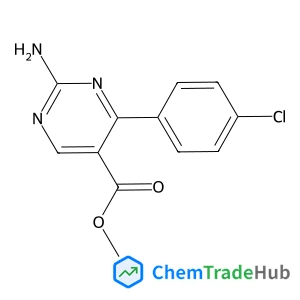
Methyl 2-amino-4-(4-chlorophenyl)-5-pyrimidinecarboxylate
CAS Number:
1133115-56-6
Molecular Formula:
C12H10ClN3O2
Recommended Suppliers





Disclaimer
This page provides academic journal information for reference and research purposes only. We are not affiliated with any journal publishers and do not handle publication submissions. For publication-related inquiries, please contact the respective journal publishers directly.
If you notice any inaccuracies in the information displayed, please contact us at support@chemtradehub.com. We will promptly review and address your concerns.