


![trans-2-{[(Tert-butoxy)carbonyl]amino}cyclobutane-1-carboxylic acid structure](https://static.chemtradehub.com/structs/951/951173-25-4-27cd.webp "trans-2-{[(Tert-butoxy)carbonyl]amino}cyclobutane-1-carboxylic acid structure")
trans-2-{[(Tert-butoxy)carbonyl]amino}cyclobutane-1-carboxylic acid
CAS Number:
951173-25-4
Molecular Formula:
C10H17NO4
Vanderlan S. Bolzani, Maysa Furlan, Ewan W. Blanch
The function of a protein is determined by its structure, which is intrinsically related to its solvent environment. Based on this paradigm, there has been a great deal of interest in the role that non-aqueous solvents play in regulating protein structure, with some debate in the literature regarding dimethyl sulfoxide (DMSO). Thus, in this work we have used Raman and Raman optical activity (ROA) spectroscopies to investigate conclusively the changes induced by DMSO in the secondary structure of an array of proteins including human serum albumin (highly α-helical), bovine α-lactalbumin (mainly α-helical), bovine ribonuclease A (containing both α-helix and β-sheet), bovine β-lactoglobulin (mainly β-sheet), and bovine α-casein (disordered). Our results clearly demonstrate that 100% DMSO solutions destabilize α-helices completely, converting them into the poly(L-proline) II (PPII) helix conformation. However, low concentrations of DMSO (10% v/v) were found to have little effect on the structure of even the most helical protein, human serum albumin. In the case of α-casein, the natively unfolded protein rich in PPII helix was converted into a further disordered structure when dissolved in pure DMSO. By contrast, β-sheets remained mostly unaffected regardless of DMSO concentration. While providing new insights into protein structure in organic solvents, this work reinforces the capability of vibrational optical activity to assess conformations of biomolecules in conditions not accessible to other techniques, such as X-ray crystallography and NMR.

Russian Journal of General Chemistry

Nature Medicine

Drug Discovery Today

Chemical Communications

New Journal of Chemistry

Organic Process Research & Development

Russian Journal of Applied Chemistry

Current Opinion in Solid State & Materials Science

Russian Journal of Organic Chemistry

Crystallography Reports
Xueyin Yang, Xuemei Sun, Shuqiong Xu, Hongjin Fu, Yunfang Li
DOI: 10.1039/D3CP02191B
Jia-He Lin, Tie Zhang, Tian Zhang
DOI: 10.1039/D3CP03345G
Reman Rana, Dilip K. Maity
DOI: 10.1039/D3CP04403C
Astrid Alí, Eduardo Cisternas, Fernando Stavale, Emilia Annese
DOI: 10.1039/D3CP03729K
Markus Becherer, Daniel Bellaire, Paulina Martínez-Rodríguez, Markus Gerhards
DOI: 10.1039/D3CP02448B
Lingyun Ye, Liuming Wei, Yu Hao, Mengyan Ge, Xiaobo Shi, Hanxing Zhang
DOI: 10.1039/D3CP03896C
He Wang, Tianhe Yang, Yuechun Li, Le Yu, Yibo Lei
DOI: 10.1039/D3CP04132H
Thomas A. Hales, Terry D. Humphries, Anita M. D’Angelo, Craig E. Buckley, Mark Paskevicius
DOI: 10.1039/D3CP03725H
Nikolaj Lopatik, Ankita De, Silvia Paasch, Andreas Schneemann, Eike Brunner
DOI: 10.1039/D3CP04144A
Changhong Zhang, Chengyi Hou, Yi Lu, Le Zhao, Haorong Wu, Hongyuan Song, Ju Rong, Lan Yu, Xiaohua Yu
DOI: 10.1039/D3CP04512A
2-Methylbenzene-1,4-diamine dihydrochloride (CAS: 615-45-2) should be stored in ...
(1S,4S)-2,5-Diazabicyclo[2.2.1]heptane dihydrobromide is generally considered sa...
(6-Chloropyridazin-3-YL)methanamine finds applications in the pharmaceutical ind...
2-Fluoro-3-methylphenol is primarily used in the synthesis of pharmaceuticals, p...
When handling 3-Methoxy-4-nitrobenzonitrile, it is important to wear appropriate...
When handling 1,3-Oxazolo[4,5-b]pyridine-2(3H)-thione (CAS: 211949-57-4), it is ...
4-Ethynylbenzamide (CAS: 90347-86-7) falls under various regulatory guidelines i...
3-(2-Ethylphenyl)-2-thioxo-4-imidazolidinone is primarily used as an intermediat...
(2-Fluoro-6-methoxyphenyl)acetic acid, also known as 4-fluoro-3-methoxybenzoic a...
Market trends for 2-[4-(Hydroxymethyl)phenoxy]ethanol (CAS: 102196-18-9) indicat...

Physical Chemistry Chemical Physics (PCCP) is an international journal co-owned by 19 physical chemistry and physics societies from around the world. This journal publishes original, cutting-edge research in physical chemistry, chemical physics and biophysical chemistry. To be suitable for publication in PCCP, articles must include significant innovation and/or insight into physical chemistry; this is the most important criterion that reviewers and Editors will judge against when evaluating submissions. The journal has a broad scope and welcomes contributions spanning experiment, theory, computation and data science. Topical coverage includes spectroscopy, dynamics, kinetics, statistical mechanics, thermodynamics, electrochemistry, catalysis, surface science, quantum mechanics, quantum computing and machine learning. Interdisciplinary research areas such as polymers and soft matter, materials, nanoscience, energy, surfaces/interfaces, and biophysical chemistry are welcomed if they demonstrate significant innovation and/or insight into physical chemistry. Joined experimental/theoretical studies are particularly appreciated when complementary and based on up-to-date approaches.
![(3R,4aR,7aS,9aR,10S,11R,13aR,13bS,15aS,15bR)-3,11-Dihydroxy-10-(hydroxymethyl)-4,4,7a,10,13a,15b-hexamethyl-1,2,3,4,4a,7,7a,8,9,9a,10,11,12,13,13a,13b,14,15,15a,15b-icosahydro-5H-naphtho[2',1':4,5]cyc
lohepta[1,2-a]naphthalen-5-one structure](https://static.chemtradehub.com/structs/538/53800-21-8-9f18.webp "(3R,4aR,7aS,9aR,10S,11R,13aR,13bS,15aS,15bR)-3,11-Dihydroxy-10-(hydroxymethyl)-4,4,7a,10,13a,15b-hexamethyl-1,2,3,4,4a,7,7a,8,9,9a,10,11,12,13,13a,13b,14,15,15a,15b-icosahydro-5H-naphtho[2',1':4,5]cyc
lohepta[1,2-a]naphthalen-5-one structure")

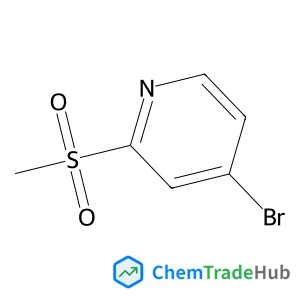
![[1-(5-Methyl-2-pyridinyl)-1H-pyrazol-4-yl]methanol structure](https://static.chemtradehub.com/structs/143/1439822-99-7-6cc9.webp "[1-(5-Methyl-2-pyridinyl)-1H-pyrazol-4-yl]methanol structure")



