











![4,4'-[2,5-Biphenyldiylbis(oxy)]dianiline structure](https://static.chemtradehub.com/structs/941/94148-67-1-24c6.webp "4,4'-[2,5-Biphenyldiylbis(oxy)]dianiline structure")
Electronic state dependence of heterogeneous electron transfer: injection from the S1 and S2 state of phlorin into TiO2
Literature Information
Publication Date
2015-02-17
DOI
10.1039/C5CP00296F
Impact Factor
3.676
Authors
Jesus Nieto-Pescador, Baxter Abraham, Allen J. Pistner, Joel Rosenthal
View Original
Abstract
Ultrafast time-resolved measurements were performed on a novel pentafluorophenyl substituted 5,5-dimethyl phlorin derivative in solution and when attached to TiO2 colloidal films. The complex excited state dynamics of this porphyrinoid after S1 and S2 excitation was compared at different wavelengths and can be assigned to several subsequent relaxation mechanisms. The difference between excited state dynamics in the free molecule and when attached to an electron accepting electrode was measured. For both cases the dynamics was compared after excitation to the S1 and the S2 state. For the free molecule in solution an intermediate relaxation step was identified and assigned to a buckling motion of the tetrapyrrole ring. On the electrode, heterogeneous electron transfer (HET) times from both states were very similar and around 50 fs. Surprisingly, the large difference in the density of acceptor states that are resonant with the respective donor level of the molecule does not significantly influence HET dynamics. This result indicates that HET proceeds into intermediate transition states that are different from steady state surface states obtained from experiments or computations. The density of states (DOS) of these transient acceptor states appears not to be directly related to the corresponding surface or bulk DOS.
Recommended Journals
Related Literature
Fragmentation of valence electronic states of CF3–CH2F+ and CHF2–CHF2+ in the range 12–25 eV
Weidong Zhou, D. P. Seccombe, R. P. Tuckett
2002-08-28
Paper
DOI: 10.1039/B206093K
Chiral aggregates of indan-1-ol with secondary alcohols and water: Laser spectroscopy in supersonic beams
A. Paladini, M. Satta, D. Catone, S. Piccirillo, M. Speranza
2002-08-05
Paper
DOI: 10.1039/B204909K
Aqueous solutions of some amphiphilic poly(ethylene oxide)–poly(propylene oxide)–poly(ethylene oxide) triblock copolymers. A thermodynamic study over a wide concentration range at temperatures between 288.15 and 328.15 K
Stéphanie Senkow, Surinder K. Mehta, Gérard Douhéret, Alain H. Roux, Geneviève Roux-Desgranges
2002-08-21
Paper
DOI: 10.1039/B204404H
Silica–alumina catalysts prepared in sol–gel process of TEOS with organic additives
Miyuki Yabuki, Ryoji Takahashi, Satoshi Sato, Toshiaki Sodesawa, Katsuyuki Ogura
2002-09-02
Paper
DOI: 10.1039/B205645C
Rotational quantum dynamics in a non-activated adsorption system
Arezoo Dianat, Axel Groß
2002-07-25
Paper
DOI: 10.1039/B203310K
OH-initiated oxidation of benzene Part II.Influence of elevated NOx concentrations
Björn Klotz, Rainer Volkamer, Michael D. Hurley, Mads P. Sulbaek Andersen, Ole John Nielsen, Ian Barnes, Takashi Imamura, Klaus Wirtz, Karl-Heinz Becker, Ulrich Platt, Timothy J. Wallington, Nobuaki Washida
2002-08-13
Paper
DOI: 10.1039/B204398J
Eigenvalue spectrum of the master equation for hierarchical dynamics of complex systems
R. Stephen Berry
2002-09-11
Paper
DOI: 10.1039/B203534K
An experimental and theoretical investigation of the gas-phase benzene–OH radical adduct + O2 reaction
David Johnson, Severine Raoult, Marie-Thérèse Rayez, Jean-Claude Rayez, Robert Lesclaux
2002-08-28
Paper
DOI: 10.1039/B204415C
Imaging thin films of organic molecules with the scanning tunnelling microscope
2002-08-08
Invited Article
DOI: 10.1039/B202462D
You might also like
Compound Q&A
How should waste containing 2-Ethyl-4-Methyl-1H-Imidazole-5-Carbaldehyde (CAS: 88634-80-4) be handled?
Waste containing 2-Ethyl-4-Methyl-1H-Imidazole-5-Carbaldehyde (CAS: 88634-80-4) ...
88634-80-42-Ethyl-4-Methyl-1H-...
Compound Q&A
What industries use Triethoxy(octyl)silane (CAS: 1385031-14-0)?
Triethoxy(octyl)silane (CAS: 1385031-14-0) is widely used in the pharmaceuticals...
1385031-14-0Triethoxy(octyl)sila...
Compound Q&A
Are there alternatives to 3-iodo-7-nitro-1H-indazole (CAS: 864724-64-1) in synthesis?
Several alternatives to 3-iodo-7-nitro-1H-indazole (CAS: 864724-64-1) exist in t...
864724-64-13-iodo-7-nitro-1H-in...
Compound Q&A
Are there alternatives to Benzene, bis[(trimethoxysilyl)ethyl] (CAS: 266317-71-9) in synthesis?
Yes, there are alternatives to Benzene, bis[(trimethoxysilyl)ethyl] (CAS: 266317...
266317-71-9Benzene, bis[(trimet...
Compound Q&A
Is Isothiazole-3-carbonitrile (CAS: 1452-17-1) safe?
Isothiazole-3-carbonitrile (CAS: 1452-17-1) is generally considered safe when us...
1452-17-1Isothiazole-3-carbon...
Compound Q&A
Is (3-Chlorophenyl)methanol (CAS: 873-63-2) safe?
(3-Chlorophenyl)methanol (CAS: 873-63-2) is considered low to moderately toxic. ...
873-63-2(3-Chlorophenyl)meth...
Compound Q&A
How is (2S,3S)-2-Hydroxy-3-({[(2-methyl-2-propanyl)oxy]carbonyl}amino)-3-(2-naphthyl)propanoic acid (CAS: 959583-98-3) typically synthesized?
(2S,3S)-2-Hydroxy-3-({[(2-methyl-2-propanyl)oxy]carbonyl}amino)-3-(2-naphthyl)pr...
959583-98-3(2S,3S)-2-Hydroxy-3-...
Compound Q&A
What precautions should be taken when handling Methyl 2-(bromomethyl)-5-methoxybenzoate (CAS: 788081-99-2)?
Proper handling of methyl 2-(bromomethyl)-5-methoxybenzoate requires the use of ...
788081-99-2Methyl 2-(bromomethy...
Compound Q&A
What is 6,8-Dibromoimidazo[1,2-a]pyridine-2-carboxylic acid (CAS: 904805-36-3)?
6,8-Dibromoimidazo[1,2-a]pyridine-2-carboxylic acid (CAS: 904805-36-3) is an aro...
904805-36-36,8-Dibromoimidazo[1...
Compound Q&A
Is 3-Amino-5-bromo-2-pyridinecarbonitrile (CAS: 573675-27-1) safe?
3-Amino-5-bromo-2-pyridinecarbonitrile is considered safe when handled under pro...
573675-27-13-Amino-5-bromo-2-py...
Source Journal
Physical Chemistry Chemical Physics

CiteScore:
5.5
Self-citation Rate:
10.3%
Articles per Year:
3036
Physical Chemistry Chemical Physics (PCCP) is an international journal co-owned by 19 physical chemistry and physics societies from around the world. This journal publishes original, cutting-edge research in physical chemistry, chemical physics and biophysical chemistry. To be suitable for publication in PCCP, articles must include significant innovation and/or insight into physical chemistry; this is the most important criterion that reviewers and Editors will judge against when evaluating submissions. The journal has a broad scope and welcomes contributions spanning experiment, theory, computation and data science. Topical coverage includes spectroscopy, dynamics, kinetics, statistical mechanics, thermodynamics, electrochemistry, catalysis, surface science, quantum mechanics, quantum computing and machine learning. Interdisciplinary research areas such as polymers and soft matter, materials, nanoscience, energy, surfaces/interfaces, and biophysical chemistry are welcomed if they demonstrate significant innovation and/or insight into physical chemistry. Joined experimental/theoretical studies are particularly appreciated when complementary and based on up-to-date approaches.
Recommended Compounds
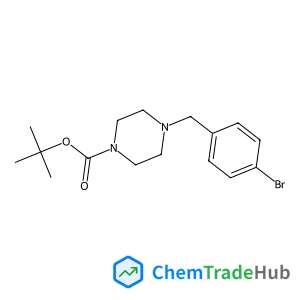
2-Methyl-2-propanyl 4-(4-bromobenzyl)-1-piperazinecarboxylate
CAS Number:
844891-10-7
Molecular Formula:
C16H23BrN2O2
Recommended Suppliers






Disclaimer
This page provides academic journal information for reference and research purposes only. We are not affiliated with any journal publishers and do not handle publication submissions. For publication-related inquiries, please contact the respective journal publishers directly.
If you notice any inaccuracies in the information displayed, please contact us at support@chemtradehub.com. We will promptly review and address your concerns.