


Energetics and structural evolution of Na–Ca exchanged zeolite A during heating
Literature Information
Publication Date
2015-02-26
DOI
10.1039/C5CP00016E
Impact Factor
3.676
Authors
H. Sun, D. Wu, X. Guo, A. Navrotsky
View Original
Abstract
The properties of zeolite A change significantly upon sodium–calcium exchange. The impact of cation composition on the temperature-induced phase transformations and energetics of Na–Ca exchanged zeolite A was studied systematically using powder X-ray diffraction (XRD), thermogravimetric analysis (TGA), differential scanning calorimetry (DSC) and high-temperature oxide melt solution calorimetry. As the temperature increases, the structural evolution of each Na–Ca exchanged zeolite A sample undergoes three distinct stages – dehydration, amorphization, and densification/recrystallization. Initially complete dehydration does not result in framework degradation, but further heating leads to zeolite phase degradation into other aluminosilicate phases. Both amorphization and recrystallization shift to higher temperatures as the calcium content increases. On the other hand, the enthalpies of formation for the high temperature aluminosilicate phases, the amorphous phase (AP) and the dense phase (DP), appear to be a linear function of calcium content (average ionic potential) with diminishing of energetic stability upon increasing the Ca content. 100% Na-A heated at 1200 °C has the most exothermic enthalpy of formation from oxides (−65.87 ± 0.87 kJ mol−1 – TO2), while 97.9% CaNa-A heated at 945 °C has the least exothermic value (−5.26 ± 0.62 kJ mol−1 – TO2). For different aluminosilicates with the same chemical composition, the dense phase (DP) assemblage is more stable than the amorphous phase (AP).
Recommended Journals

Angewandte Chemie International Edition

Journal of Enzyme inhibition and Medicinal Chemistry

Physical Chemistry Chemical Physics

Foundations of Chemistry

Contact Lens & Anterior Eye

Advanced Engineering Materials

European Journal of Organic Chemistry

Mini-Reviews in Medicinal Chemistry

Green Chemistry

Environmental Toxicology and Pharmacology
Related Literature
DFT study of the rate constants of the reactions CHClmF3−m + Cl = CClmF3−m + HCl (m = 3 − 1)
Chao Yang Wang
2002-08-19
Paper
DOI: 10.1039/B206133N
Oxygen incorporation into Fe-doped SrTiO3: Mechanistic interpretation of the surface reaction
2002-08-01
Paper
DOI: 10.1039/B204032H
Mean first passage time and the Kramers turnover theory in activated atom–surface diffusion
2002-09-05
Paper
DOI: 10.1039/B204462E
Kinetics and mechanism of the reaction between atomic chlorine and dimethyl selenide; comparison with the reaction between atomic chlorine and dimethyl sulfide
Katherine C. Thompson, Carlos E. Canosa-Mas, Richard P. Wayne
2002-07-29
Paper
DOI: 10.1039/B204657A
Anharmonicity and guest–host coupling in clathrate hydrates
B. Chazallon, H. Itoh, M. Koza, W. F. Kuhs, H. Schober
2002-08-28
Paper
DOI: 10.1039/B202464K
Analytical derivatives, π bonding and d–s mixing in the ligand field molecular mechanics method
Robert J. Deeth, David L. Foulis
2002-08-12
Paper
DOI: 10.1039/B203815C
Kirkwood–Buff integrals for polymer–solvent mixtures. Preferential solvation and volumetric analysis in aqueous PEG solutions
2002-09-03
Paper
DOI: 10.1039/B204795K
A disjoining pressure study of n-dodecyl-β-D-maltoside foam films
Cosima Stubenrauch, Judith Schlarmann, Reinhard Strey
2002-08-19
Paper
DOI: 10.1039/B205728J
Computational studies of gas–carbon nanotube collision dynamics
Kim Bolton, Arne Rosén
2002-08-07
Paper
DOI: 10.1039/B200581F
MSA-NRTL model for the description of the thermodynamic properties of electrolyte solutions
J.-P. Simonin, O. Bernard, W. Kunz
2002-08-08
Paper
DOI: 10.1039/B204841H
You might also like
Compound Q&A
How should waste containing 2-Ethyl-4-Methyl-1H-Imidazole-5-Carbaldehyde (CAS: 88634-80-4) be handled?
Waste containing 2-Ethyl-4-Methyl-1H-Imidazole-5-Carbaldehyde (CAS: 88634-80-4) ...
88634-80-42-Ethyl-4-Methyl-1H-...
Compound Q&A
What industries use Triethoxy(octyl)silane (CAS: 1385031-14-0)?
Triethoxy(octyl)silane (CAS: 1385031-14-0) is widely used in the pharmaceuticals...
1385031-14-0Triethoxy(octyl)sila...
Compound Q&A
Are there alternatives to 3-iodo-7-nitro-1H-indazole (CAS: 864724-64-1) in synthesis?
Several alternatives to 3-iodo-7-nitro-1H-indazole (CAS: 864724-64-1) exist in t...
864724-64-13-iodo-7-nitro-1H-in...
Compound Q&A
Are there alternatives to Benzene, bis[(trimethoxysilyl)ethyl] (CAS: 266317-71-9) in synthesis?
Yes, there are alternatives to Benzene, bis[(trimethoxysilyl)ethyl] (CAS: 266317...
266317-71-9Benzene, bis[(trimet...
Compound Q&A
Is Isothiazole-3-carbonitrile (CAS: 1452-17-1) safe?
Isothiazole-3-carbonitrile (CAS: 1452-17-1) is generally considered safe when us...
1452-17-1Isothiazole-3-carbon...
Compound Q&A
Is (3-Chlorophenyl)methanol (CAS: 873-63-2) safe?
(3-Chlorophenyl)methanol (CAS: 873-63-2) is considered low to moderately toxic. ...
873-63-2(3-Chlorophenyl)meth...
Compound Q&A
How is (2S,3S)-2-Hydroxy-3-({[(2-methyl-2-propanyl)oxy]carbonyl}amino)-3-(2-naphthyl)propanoic acid (CAS: 959583-98-3) typically synthesized?
(2S,3S)-2-Hydroxy-3-({[(2-methyl-2-propanyl)oxy]carbonyl}amino)-3-(2-naphthyl)pr...
959583-98-3(2S,3S)-2-Hydroxy-3-...
Compound Q&A
What precautions should be taken when handling Methyl 2-(bromomethyl)-5-methoxybenzoate (CAS: 788081-99-2)?
Proper handling of methyl 2-(bromomethyl)-5-methoxybenzoate requires the use of ...
788081-99-2Methyl 2-(bromomethy...
Compound Q&A
What is 6,8-Dibromoimidazo[1,2-a]pyridine-2-carboxylic acid (CAS: 904805-36-3)?
6,8-Dibromoimidazo[1,2-a]pyridine-2-carboxylic acid (CAS: 904805-36-3) is an aro...
904805-36-36,8-Dibromoimidazo[1...
Compound Q&A
Is 3-Amino-5-bromo-2-pyridinecarbonitrile (CAS: 573675-27-1) safe?
3-Amino-5-bromo-2-pyridinecarbonitrile is considered safe when handled under pro...
573675-27-13-Amino-5-bromo-2-py...
Source Journal
Physical Chemistry Chemical Physics
CiteScore:
5.5
Self-citation Rate:
10.3%
Articles per Year:
3036
Physical Chemistry Chemical Physics (PCCP) is an international journal co-owned by 19 physical chemistry and physics societies from around the world. This journal publishes original, cutting-edge research in physical chemistry, chemical physics and biophysical chemistry. To be suitable for publication in PCCP, articles must include significant innovation and/or insight into physical chemistry; this is the most important criterion that reviewers and Editors will judge against when evaluating submissions. The journal has a broad scope and welcomes contributions spanning experiment, theory, computation and data science. Topical coverage includes spectroscopy, dynamics, kinetics, statistical mechanics, thermodynamics, electrochemistry, catalysis, surface science, quantum mechanics, quantum computing and machine learning. Interdisciplinary research areas such as polymers and soft matter, materials, nanoscience, energy, surfaces/interfaces, and biophysical chemistry are welcomed if they demonstrate significant innovation and/or insight into physical chemistry. Joined experimental/theoretical studies are particularly appreciated when complementary and based on up-to-date approaches.
Recommended Compounds

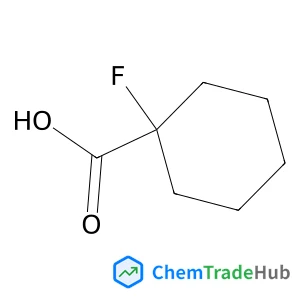
![Methyl 8-azabicyclo[3.2.1]octane-3-carboxylate hydrochloride structure](https://static.chemtradehub.com/structs/179/179022-43-6-77f5.webp "Methyl 8-azabicyclo[3.2.1]octane-3-carboxylate hydrochloride structure")
Methyl 8-azabicyclo[3.2.1]octane-3-carboxylate hydrochloride
CAS Number:
179022-43-6
Molecular Formula:
C9H16ClNO2
Recommended Suppliers



Disclaimer
This page provides academic journal information for reference and research purposes only. We are not affiliated with any journal publishers and do not handle publication submissions. For publication-related inquiries, please contact the respective journal publishers directly.
If you notice any inaccuracies in the information displayed, please contact us at support@chemtradehub.com. We will promptly review and address your concerns.