












![[3-Chloro-5-(diethylcarbamoyl)phenyl]boronic acid structure](https://static.chemtradehub.com/structs/957/957120-59-1-febc.webp "[3-Chloro-5-(diethylcarbamoyl)phenyl]boronic acid structure")
[3-Chloro-5-(diethylcarbamoyl)phenyl]boronic acid
CAS Number:
957120-59-1
Molecular Formula:
C11H15BClNO3
Katherine C. Thompson, Carlos E. Canosa-Mas, Richard P. Wayne
Dimethyl selenide is the most abundant gaseous selenium species in marine environments. In this work, the value of the rate coefficient for the gas-phase reaction between dimethyl selenide and Cl atoms has been determined for the first time. The value of the second-order rate coefficient obtained was (5.0 ± 1.4) × 10−10 cm3 molecule−1 s−1. The very fast nature of the reaction means that, when estimating the lifetime of dimethyl selenide in the atmosphere, loss due to reaction with Cl atoms should be considered along with loss due to reaction with O3 and with OH and NO3 radicals. Analysis of the available kinetic data suggests that at 760 Torr the dominant reaction pathway for the reaction of Cl atoms with dimethyl selenide will be the addition of Cl to the Se atom forming an adduct of the type CH3Se(Cl)CH3. Theoretical calculations, at the B3LYP/6-311++G(2df,p)//B3LYP/6-311++G(d,p) level of theory, show that at 298 K the value of ΔrH for the formation of the adduct is −111.4 kJ mol−1. This value may be compared to −97.0 kJ mol−1, the value calculated for ΔrH for the formation of the analogous sulfur adduct, CH3S(Cl)CH3, following the reaction between Cl atoms and dimethyl sulfide. Variational RRKM theory was used to predict the thermal decomposition rates of the two adducts back to starting materials. The estimated rate constant for the decomposition of the selenium adduct to the reactants is 5 × 10⁻⁵ s−1, compared to 0.02 s−1 in the case of the sulfur adduct. However, our calculations suggest that the CH3Se(Cl)CH3 adduct, which is initially formed highly excited, will not be stabilised under atmospheric conditions, but rather will decompose to yield CH3SeCl and CH3, a process that is calculated to be exothermic with respect to the initial reactants by 5.8 kJ mol−1. The formation of CH3SCl and CH3 from the sulfur adduct, on the other hand, is endothermic by 20.8 kJ mol−1 with respect to the initial reactants, and is thus not expected to occur.
Erwan Le Fur, Eric Demers, Thierry Maris, James D. Wuest
DOI: 10.1039/B308355A
Colin L. Raston
DOI: 10.1039/B309455C
Gary A. Baker, Sheila N. Baker, T. Mark McCleskey
DOI: 10.1039/B310459C
Keitaro Yoshimoto, Chun-Yan Xu, Seiichi Nishizawa, Takanobu Haga, Hiroyuki Satake, Norio Teramae
DOI: 10.1039/B309229A
Mike Casey, Claire M. Keaveney
DOI: 10.1039/B312245J
Bo Yang, Shoko Kamiya, Kaname Yoshida
DOI: 10.1039/B313100A
Yanli Wei, Wing-Hong Chan, Albert W. M. Lee, Carmen W. Huie
DOI: 10.1039/B311667K
Jung Eun Yeo, Xiuling Yang, Hee Jin Kim, Sangho Koo
DOI: 10.1039/B311951C
M. A. Ulla, E. Miro, R. Mallada, J. Coronas, J. Santamaría
DOI: 10.1039/B315386J
Concepción López, Amparo Caubet, Sonia Pérez, Xavier Solans, Mercè Font-Bardía
DOI: 10.1039/B315157C
Waste containing 2-Ethyl-4-Methyl-1H-Imidazole-5-Carbaldehyde (CAS: 88634-80-4) ...
Triethoxy(octyl)silane (CAS: 1385031-14-0) is widely used in the pharmaceuticals...
Several alternatives to 3-iodo-7-nitro-1H-indazole (CAS: 864724-64-1) exist in t...
Yes, there are alternatives to Benzene, bis[(trimethoxysilyl)ethyl] (CAS: 266317...
Isothiazole-3-carbonitrile (CAS: 1452-17-1) is generally considered safe when us...
(3-Chlorophenyl)methanol (CAS: 873-63-2) is considered low to moderately toxic. ...
(2S,3S)-2-Hydroxy-3-({[(2-methyl-2-propanyl)oxy]carbonyl}amino)-3-(2-naphthyl)pr...
Proper handling of methyl 2-(bromomethyl)-5-methoxybenzoate requires the use of ...
6,8-Dibromoimidazo[1,2-a]pyridine-2-carboxylic acid (CAS: 904805-36-3) is an aro...
3-Amino-5-bromo-2-pyridinecarbonitrile is considered safe when handled under pro...

Physical Chemistry Chemical Physics (PCCP) is an international journal co-owned by 19 physical chemistry and physics societies from around the world. This journal publishes original, cutting-edge research in physical chemistry, chemical physics and biophysical chemistry. To be suitable for publication in PCCP, articles must include significant innovation and/or insight into physical chemistry; this is the most important criterion that reviewers and Editors will judge against when evaluating submissions. The journal has a broad scope and welcomes contributions spanning experiment, theory, computation and data science. Topical coverage includes spectroscopy, dynamics, kinetics, statistical mechanics, thermodynamics, electrochemistry, catalysis, surface science, quantum mechanics, quantum computing and machine learning. Interdisciplinary research areas such as polymers and soft matter, materials, nanoscience, energy, surfaces/interfaces, and biophysical chemistry are welcomed if they demonstrate significant innovation and/or insight into physical chemistry. Joined experimental/theoretical studies are particularly appreciated when complementary and based on up-to-date approaches.
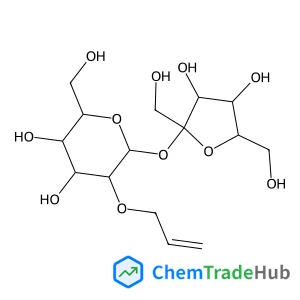
![2,2'-[(Abieta-8,11,13-trien-18-ylimino)bis(2,1-ethanediyloxy)]diethanol structure](https://static.chemtradehub.com/structs/513/51344-62-8-8518.webp "2,2'-[(Abieta-8,11,13-trien-18-ylimino)bis(2,1-ethanediyloxy)]diethanol structure")
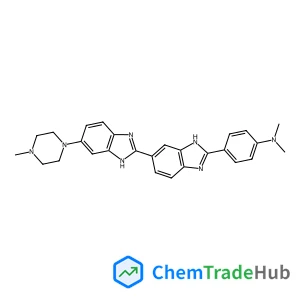
![4-chloro-N-[5-methyl-2-(7H-pyrrolo[2,3-d]pyrimidine-4-carbonyl)-3-pyridyl]-3-(trifluoromethyl)benzenesulfonamide structure](https://static.chemtradehub.com/structs/110/1100318-47-5-127d.webp "4-chloro-N-[5-methyl-2-(7H-pyrrolo[2,3-d]pyrimidine-4-carbonyl)-3-pyridyl]-3-(trifluoromethyl)benzenesulfonamide structure")




