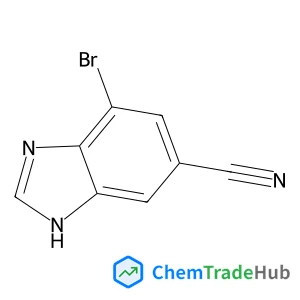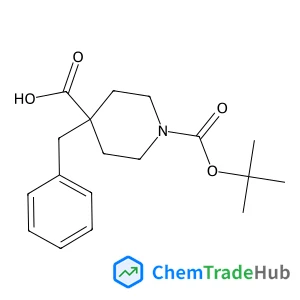
4-Benzyl-1-(tert-butoxycarbonyl)piperidine-4-carboxylic acid
CAS Number:
170838-87-6
Molecular Formula:
C18H25NO4
Kulvinder Singh, S. K. Mehta
Highly luminescent ZnO quantum dots (QDs) synthesized via a simple and facile route are used for the preparation of an optical sensor for the detection of free chlorine. The concentration of free chlorine greatly affects the PL emission of the ZnO QDs at 525 nm. Since hypochlorite gains electrons with high efficiency, it takes electrons from the oxygen vacancies of ZnO QDs, which gives rise to defect emission in ZnO QDs. UV-vis data analysis shows that free chlorine does not affect the optical absorption spectra of ZnO QDs. The optical sensing of free chlorine using ZnO QDs has several advantages, like quick response time, good selectivity and of course high sensitivity. The pH has very little effect on the PL emission of ZnO QDs. It does not interfere in the sensing mechanism for free chlorine. After 60 s, the response of the ZnO QDs remains stable. The present sensor shows high selectivity with respect to various common cations, as well as anions.
Andy S. Anker, Keith T. Butler, Kirsten M. Ø. Jensen
DOI: 10.1039/D3SC05081E
Cameron F. Baker, John A. Seed, Ralph W. Adams, Daniel Lee, Stephen T. Liddle
DOI: 10.1039/D3SC04449A
Shen Xu, Jinghang Wu, Xiang Wang
DOI: 10.1039/D3SC04571D
Chun-Li Hu
DOI: 10.1039/D3SC05770D
Marcin Oszajca, Dariusz Matoga
DOI: 10.1039/D3SC04401G
Chen Zhu, Xiangyu Chen, Huifeng Yue, Tengfei Ji, Yiqiao Ma, Yuanyuan Cao, Rajesh Kancherla, Magnus Rueping
DOI: 10.1039/D3SC04410F
Douglas Turnbull, Marc-André Légaré
DOI: 10.1039/D3SC05071H
DOI: 10.1039/D3SC04519F
Yikun Zhu, Zheng Wei, Marina A. Petrukhina, Harry L. Anderson
DOI: 10.1039/D3SC04251K
Charlie Ruffman, Krista G. Steenbergen, Anna L. Garden, Nicola Gaston
DOI: 10.1039/D3SC04416E
When handling 4-(2-Furylmethyl)thiomorpholine 1,1-dioxide (CAS: 79206-94-3), it ...
When handling 4-Chloro-N-[2-(4-morpholinyl)ethyl]benzamide (CAS: 71320-77-9), it...
Waste containing this compound (CAS: 62921-74-8) should be handled according to ...
Waste containing (S)-Methyl 2-amino-3-cyclohexylpropanoate should be collected i...
This compound can be synthesized using a multi-step process involving the conjug...
There are several alternatives to (2E)-3-(3,4-Dichlorophenyl)acrylic acid in syn...
Ethyl 6-(2-nitrophenyl)imidazo[2,1-b][1,3]thiazole-3-carboxylate (CAS: 925437-84...
Waste containing 2-(1,3-Thiazol-2-yl)ethanamine (CAS: 18453-07-1) should be coll...
Methyl 5-iodo-2-methylbenzoate can be synthesized through the iodination of meth...
5-Chloro[1,2,4]triazolo[1,5-a]pyridine is commonly synthesized via the condensat...

Analyst publishes analytical and bioanalytical research that reports premier fundamental discoveries and inventions, and the applications of those discoveries, unconfined by traditional discipline barriers.
![6-Benzyl-4,5,6,7-tetrahydro-1H-pyrazolo[3,4-c]pyridin-3(2H)-one structure](https://static.chemtradehub.com/structs/909/909187-64-0-f54f.webp "6-Benzyl-4,5,6,7-tetrahydro-1H-pyrazolo[3,4-c]pyridin-3(2H)-one structure")