












Fullerenes in asphaltenes and other carbonaceous materials: natural constituents or laser artifacts
Literature Information
Publication Date
2016-01-07
DOI
10.1039/C5AN02333E
Impact Factor
4.616
Authors
Vanessa G. Santos, Marcos A. Pudenzi, Clécio F. Klitzke, Heliara L. Nascimento, Rosana C. L. Pereira, Wagner L. Bastos, Marcos N. Eberlin
View Original
Abstract
The presence of fullerenes as natural constituents of carbonaceous materials or their formation as laser artifacts during laser desorption ionization (LDI) mass spectrometry (MS) analysis is reinvestigated and reviewed. The results using asphaltene samples with varying composition as well as standard polycyclic aromatic hydrocarbons (PAH) and fullerene samples as models have demonstrated that indeed Cn ring fullerenes are not natural constituents but they are formed as common and often as predominant artifacts upon laser radiation, and a series of incorrect assignments based on LDI-MS data of several carbonaceous materials seems unfortunately to have been made. When the present results are evaluated also in the light of the vast literature on LDI-MS of carbonaceous materials, the formation of fullerene artifacts seems particularly common for LDI-MS analysis of asphaltenes and other carbonaceous samples with considerably high levels of PAH and varies according to the type of laser used, and the intensity of the laser beam.
Related Literature
Lactonizations of carboxylic acid-substituted 3-fluorodihydropyridines with electrophiles: peculiar behaviour of F+
Henri Rudler, Andrée Parlier, Louis Hamon, Patrick Herson, Jean-Claude Daran
2008-07-08
Communication
DOI: 10.1039/B807092J
Controlled generation of acentric and homochiral coordination compounds from a versatile asymmetric ligand 4-(1H-1,2,4-triazol-3-yl)-4H-1,2,4-triazole
Jian Zhang, Zhao-Ji Li, Ye-Yan Qin, Jian-Kai Cheng, Yuan-Gen Yao
2008-07-15
Communication
DOI: 10.1039/B807320A
A self-propagating system for Ge incorporation into nanostructured silica
Aubrey K. Davis, Mark Hildebrand
2008-08-04
Communication
DOI: 10.1039/B804955F
Towards understanding phosphonoacetaldehyde hydrolase: an alternative mechanism involving proton transfer that triggers P–C bond cleavage
2008-07-15
Communication
DOI: 10.1039/B806280C
Trapping Pd(0) in nanoparticle-assembled microcapsules: an efficient and reusable catalyst
Arlin Jose Amali, Rohit Kumar Rana
2008-07-15
Communication
DOI: 10.1039/B807736C
Selective synthesis of double temperature-sensitive polymer–peptide conjugates
Florentina Stoica, Cameron Alexander, Nicola Tirelli, Aline F. Miller, Alberto Saiani
2008-07-16
Communication
DOI: 10.1039/B806782A
Silica-supported catalysts for ring-closing metathesis: effects of linker group and microenvironment on recyclability
Jaehong Lim, Su Seong Lee, Jackie Y. Ying
2008-07-17
Communication
DOI: 10.1039/B803663B
Selective mono reduction of bis-phosphine oxides under mild conditions
Maria J. Petersson, Wendy A. Loughlin, Ian D. Jenkins
2008-07-30
Communication
DOI: 10.1039/B807695B
Proton-coupled electron transfer from a luminescent excited state
Jonathan C. Freys, Gérald Bernardinelli, Oliver S. Wenger
2008-07-15
Communication
DOI: 10.1039/B806175K
You might also like
Compound Q&A
What precautions should be taken when handling 4-(2-Furylmethyl)thiomorpholine 1,1-dioxide (CAS: 79206-94-3)?
When handling 4-(2-Furylmethyl)thiomorpholine 1,1-dioxide (CAS: 79206-94-3), it ...
79206-94-34-(2-Furylmethyl)thi...
Compound Q&A
What precautions should be taken when handling 4-Chloro-N-[2-(4-morpholinyl)ethyl]benzamide (CAS: 71320-77-9)?
When handling 4-Chloro-N-[2-(4-morpholinyl)ethyl]benzamide (CAS: 71320-77-9), it...
71320-77-94-Chloro-N-[2-(4-mor...
Compound Q&A
How should waste containing 2-[2-(2-Methoxyethoxy)ethoxy]ethyl 4-methylbenzenesulfonate (CAS: 62921-74-8) be handled?
Waste containing this compound (CAS: 62921-74-8) should be handled according to ...
62921-74-82-[2-(2-Methoxyethox...
Compound Q&A
How should waste containing (S)-Methyl 2-amino-3-cyclohexylpropanoate be handled?
Waste containing (S)-Methyl 2-amino-3-cyclohexylpropanoate should be collected i...
40056-18-6(S)-Methyl 2-amino-3...
Compound Q&A
How is 5-({4-[(2S,4R)-4-Hydroxy-2-methyltetrahydro-2H-pyran-4-yl]-2-thienyl}sulfanyl)-1-methyl-1,3-dihydro-2H-indol-2-one (CAS: 166882-70-8) typically synthesized?
This compound can be synthesized using a multi-step process involving the conjug...
166882-70-85-({4-[(2S,4R)-4-Hyd...
Compound Q&A
Are there alternatives to (2E)-3-(3,4-Dichlorophenyl)acrylic acid (CAS: 7312-27-8) in synthesis?
There are several alternatives to (2E)-3-(3,4-Dichlorophenyl)acrylic acid in syn...
7312-27-8(2E)-3-(3,4-Dichloro...
Compound Q&A
How should Ethyl 6-(2-nitrophenyl)imidazo[2,1-b][1,3]thiazole-3-carboxylate (CAS: 925437-84-9) be stored?
Ethyl 6-(2-nitrophenyl)imidazo[2,1-b][1,3]thiazole-3-carboxylate (CAS: 925437-84...
925437-84-9Ethyl 6-(2-nitrophen...
Compound Q&A
How should waste containing 2-(1,3-Thiazol-2-yl)ethanamine (CAS: 18453-07-1) be handled?
Waste containing 2-(1,3-Thiazol-2-yl)ethanamine (CAS: 18453-07-1) should be coll...
18453-07-12-(1,3-Thiazol-2-yl)...
Compound Q&A
How is Methyl 5-iodo-2-methylbenzoate (CAS: 103440-54-6) typically synthesized?
Methyl 5-iodo-2-methylbenzoate can be synthesized through the iodination of meth...
103440-54-6Methyl 5-iodo-2-meth...
Compound Q&A
How is 5-Chloro[1,2,4]triazolo[1,5-a]pyridine (CAS: 1427399-34-5) typically synthesized?
5-Chloro[1,2,4]triazolo[1,5-a]pyridine is commonly synthesized via the condensat...
1427399-34-55-Chloro[1,2,4]triaz...
Source Journal
Analyst

CiteScore:
7.8
Self-citation Rate:
5.6%
Articles per Year:
653
Analyst publishes analytical and bioanalytical research that reports premier fundamental discoveries and inventions, and the applications of those discoveries, unconfined by traditional discipline barriers.
Recommended Compounds

(3-Oxo-1,2,3,4-tetrahydro-2-quinoxalinyl)acetic acid
CAS Number:
136584-14-0
Molecular Formula:
C10H10N2O3
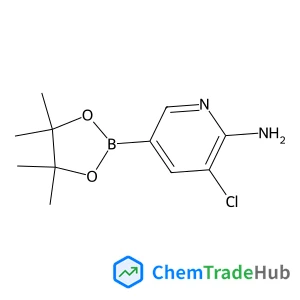
3-Chloro-5-(4,4,5,5-tetramethyl-1,3,2-dioxaborolan-2-yl)-2-pyridinamine
CAS Number:
1032758-99-8
Molecular Formula:
C11H16BClN2O2
![2,6-Di(thiophen-2-yl)dithieno[3,2-b:2',3'-d]thiophene structure](https://static.chemtradehub.com/structs/910/910788-24-8-5b70.webp "2,6-Di(thiophen-2-yl)dithieno[3,2-b:2',3'-d]thiophene structure")
2,6-Di(thiophen-2-yl)dithieno[3,2-b:2',3'-d]thiophene
CAS Number:
910788-24-8
Molecular Formula:
C16H8S5
Recommended Suppliers






Disclaimer
This page provides academic journal information for reference and research purposes only. We are not affiliated with any journal publishers and do not handle publication submissions. For publication-related inquiries, please contact the respective journal publishers directly.
If you notice any inaccuracies in the information displayed, please contact us at support@chemtradehub.com. We will promptly review and address your concerns.