












Synthesis of multifunctional poly(1-pyrenemethyl methacrylate)-b-poly(N-isopropylacrylamide)-b-poly(N-methylolacrylamide)s and their electrospun nanofibers for metal ion sensory applications
Literature Information
Publication Date
2015-01-27
DOI
10.1039/C4PY01773K
Impact Factor
5.582
Authors
Jau-Tzeng Wang, Yu-Cheng Chiu, Han-Sheng Sun, Kohei Yoshida, Yougen Chen, Toshifumi Satoh, Wen-Chang Chen
View Original
Abstract
We report the synthesis and characterization of multifunctional triblock copolymers, poly(1-pyrenemethylmethacrylate)-block-poly(N-isopropylacrylamide)-block-poly(N-methylolacrylamide) (PPy-b-PNIPAAm-b-PNMA), and their electrospun (ES) nanofibers for temperature or metal-ion sensing. The triblock copolymers are composed of fluorescent and metal-ion-sensitive PPy, thermoresponsive PNIPAAm, and chemically crosslinkable PNMA segments. Non-crosslinked ES nanofibers are initially prepared using the aforementioned PPy-b-PNIPAAm-b-PNMA triblock copolymers followed by thermal crosslinking. It is found that ES nanofibers prepared from PPy-b-PNIPAAm-b-PNMA can self-assemble to form nano-scale spherical aggregates with PNMA located at the core, PNIPAAm at the center layer, and PPy at the shell. This self-assembly characteristic therefore induces a strong excimer emission between the pyrenyl moieties. The crosslinking process between PNMA blocks is then implemented to stabilize the ES nanofibers since the non-crosslinked ones are metastable objects. The resulting crosslinked nanofibers exhibit a predominant wettability and dimension stability under aqueous states, and can perform a detectable photoluminescence transition at different temperatures or toward an Fe3+ ion. In contrast to their counterpart drop-cast film, ES nanofibers with a high surface/volume ratio have obviously higher sensing ability toward thermal stimuli and metal ions, and are expected to be applied as multifunctional sensory devices.
Recommended Journals
Related Literature
Addition of carbon-centered radicals to aromatic antioxidants: mechanistic aspects
Janusz M. Gebicki
2020-10-19
Paper
DOI: 10.1039/D0CP04469E
A data-driven approach to determine dipole moments of diatomic molecules
Xiangyue Liu, Gerard Meijer, Jesús Pérez-Ríos
2020-08-24
Paper
DOI: 10.1039/D0CP03810E
Transition metal carbon quadruple bond: viability through single electron transmutation
Amlan J. Kalita, Shahnaz S. Rohman, Chayanika Kashyap, Sabnam S. Ullah, Ankur K. Guha
2020-09-24
Communication
DOI: 10.1039/D0CP03436C
Unexpectedly strong Xe binding by host–guest interaction
Yi Gao
2019-11-15
Paper
DOI: 10.1039/C9CP05562B
An investigation of free-energy-averaged (coarse-grained) potentials for fluid adsorption on heterogeneous solid surfaces
2019-09-03
Paper
DOI: 10.1039/C9CP02601K
Pressure-induced metallicity and piezoreductive transition of metal-centres in conductive 2-dimensional metal–organic frameworks
Khoa N. Le, Christopher H. Hendon
2019-11-05
Paper
DOI: 10.1039/C9CP04797B
Interactions between alloy elements and oxygen at the steel–liquid LBE interface determined from first-principles molecular dynamics simulations
Wenyi Ding, Zhizhong Jiang, Jingping Xin, Min Zhang, Mingjie Zheng
2019-11-04
Paper
DOI: 10.1039/C9CP05626B
An effective partial charge model for bulk and surface properties of cubic ZrO2, Y2O3 and yttrium-stabilised zirconia
Thomas S. Hofer, Franziska M. Kilchert, Bagas A. Tanjung
2019-11-06
Paper
DOI: 10.1039/C9CP04307A
Strong and efficient doping of monolayer MoS2 by a graphene electrode
Zuzana Melnikova-Kominkova, Katerina Jurkova, Vaclav Vales, Karolina Drogowska-Horná, Otakar Frank, Martin Kalbac
2019-11-05
Paper
DOI: 10.1039/C9CP04993B
You might also like
Compound Q&A
What are the main uses of (5-Sulfamoyl-3-pyridinyl)boronic acid (CAS: 951233-61-7)?
(5-Sulfamoyl-3-pyridinyl)boronic acid is primarily used in chemical synthesis, p...
951233-61-7(5-Sulfamoyl-3-pyrid...
Compound Q&A
How is Benzyl 2-methyl-2-(methylsulfonyl)-4-pentenoate (CAS: 1942858-50-5) typically synthesized?
Benzyl 2-methyl-2-(methylsulfonyl)-4-pentenoate is typically synthesized via est...
1942858-50-5Benzyl 2-methyl-2-(m...
Compound Q&A
What precautions should be taken when handling 8-Fluoroquinolin-6-ol (CAS: 209353-22-0)?
When handling 8-Fluoroquinolin-6-ol (CAS: 209353-22-0), it is important to use p...
209353-22-08-Fluoroquinolin-6-o...
Compound Q&A
What are the physical and chemical properties of 1,3-Dibromo-5-(2-methyl-2-propanyl)benzene (CAS: 129316-09-2)?
1,3-Dibromo-5-(2-methyl-2-propanyl)benzene (CAS: 129316-09-2) is a crystalline c...
129316-09-21,3-Dibromo-5-(2-met...
Compound Q&A
What industries use Ethyl 7-chloro-4-oxo-1-(1,3-thiazol-2-yl)-1,4-dihydro-1,8-naphthyridine-3-carboxylate (CAS: 174726-87-5)?
Ethyl 7-chloro-4-oxo-1-(1,3-thiazol-2-yl)-1,4-dihydro-1,8-naphthyridine-3-carbox...
174726-87-5Ethyl 7-chloro-4-oxo...
Compound Q&A
What precautions should be taken when handling Delta-7-Avenasterol (CAS: 23290-26-8)?
When handling Delta-7-Avenasterol (CAS: 23290-26-8), it is important to wear app...
23290-26-8Delta-7-Avenasterol
Compound Q&A
What precautions should be taken when handling N-({(5R)-3-[3-Fluoro-4-(4-morpholinyl)phenyl]-2-oxo-1,3-oxazolidin-5-yl}methyl)acetamide (CAS: 872992-20-6)?
Proper handling involves the use of personal protective equipment such as gloves...
872992-20-6N-({(5R)-3-[3-Fluoro...
Compound Q&A
What precautions should be taken when handling 2-Methyl-2-proanyl 4-[(2-aminophenyl)amino]-1-piperidinecarboxylate (CAS: 79099-00-6)?
When handling 2-Methyl-2-proanyl 4-[(2-aminophenyl)amino]-1-piperidinecarboxylat...
79099-00-62-Methyl-2-propanyl ...
Compound Q&A
What is N-Methyl-4-chlorobenzylamine hydrochloride (CAS: 65542-24-7)?
N-Methyl-4-chlorobenzylamine hydrochloride (CAS: 65542-24-7) is a organic compou...
65542-24-7N-Methyl-4-chloroben...
Compound Q&A
Is [2-(Dodecyloxy)ethoxy]acetic acid (CAS: 27306-90-7) safe?
[2-(Dodecyloxy)ethoxy]acetic acid (CAS: 27306-90-7) is generally considered safe...
27306-90-7[2-(Dodecyloxy)ethox...
Source Journal
Polymer Chemistry

CiteScore:
8.6
Self-citation Rate:
7.3%
Articles per Year:
457
Polymer Chemistry welcomes submissions in all areas of polymer science that have a strong focus on macromolecular chemistry. Manuscripts may cover a broad range of fields, yet no direct application focus is required.
Recommended Compounds
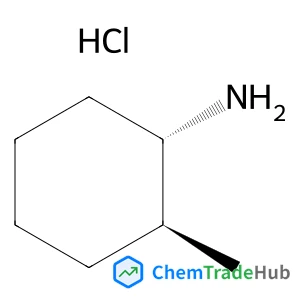
(1R,2R)-2-Methylcyclohexanamine hydrochloride (1:1)
CAS Number:
39558-31-1
Molecular Formula:
C7H16ClN
Recommended Suppliers





Disclaimer
This page provides academic journal information for reference and research purposes only. We are not affiliated with any journal publishers and do not handle publication submissions. For publication-related inquiries, please contact the respective journal publishers directly.
If you notice any inaccuracies in the information displayed, please contact us at support@chemtradehub.com. We will promptly review and address your concerns.