












Theoretical research on the oxidation mechanism of doped carbon based catalysts for oxygen reduction reaction
Literature Information
Publication Date
2019-11-05
DOI
10.1039/C9CP04691G
Impact Factor
3.676
Authors
Na Yang, Lanlan Peng, Li Li, Jing Li, Zidong Wei
View Original
Abstract
To understand the essential reasons of poor durability and rapid initial performance loss of heteroatom doped graphene catalysts during the electrochemical oxygen reduction reaction (ORR) process, it is necessary to explore the detailed mechanism of carbon active site oxidation reaction (COR) at different electrode potentials, as it may greatly influence the ORR activity. Herein, density functional theory (DFT) calculation is used to investigate all possible COR mechanisms, including Direct-COR and Indirect-COR, on four typical doped-graphene, and understand the competing relation between COR and ORR from a thermodynamic point of view. Our systematic calculations found that the Direct-COR is affected directly by the structural stability of doped-graphene relative to pure graphite, and the Indirect-COR can be accelerated largely by the ORR process due to the ORR intermediate, such as O and OOH. The competition relation between COR and ORR is mainly influenced by the interaction between the doped-graphene and reaction species, stability of doped-structure, ORR mechanism, and electrode potential. For COR, the partial oxidation of doped-graphene is the dominant oxidation reaction compared to complete oxidation in the ORR potential range. More importantly, both partial and complete oxidation of doped-graphene can remarkably depress the ORR activity. Hence, COR should be one of the major contributors to the rapid initial performance loss of carbon based catalysts in stability testing. Our results provide a comprehensive and deep understanding of the oxidation of carbon active sites on doped-graphene surfaces and can guide the design of more robust doped-carbon based catalysts.
Related Literature
Large-pore monodispersed mesoporous silica spheres: synthesis and application in HPLC
Yingyu Li, Sanyan Cheng, Peichun Dai, Yanxiong Ke
2009-01-06
Communication
DOI: 10.1039/B818553K
In situ antimony doping of solution-grown ZnOnanorods
Joe Briscoe, Diego E. Gallardo, Steve Dunn
2009-01-19
Communication
DOI: 10.1039/B820797F
Self-assembling optically pure Fe(A–B)3 chelates
Suzanne E. Howson, Laura E. N. Allan, Nikola P. Chmel, Guy J. Clarkson, Remy van Gorkum, Peter Scott
2009-02-04
Communication
DOI: 10.1039/B821573A
Novel defluorinative alkylation of trifluoroacetaldehyde N,O-acetal derivatives and its application to multi-component reaction
Hikaru Yanai, Takeo Taguchi
2008-12-01
Communication
DOI: 10.1039/B817599C
Scrambling reaction between polymers prepared by step-growth and chain-growth polymerizations: macromolecular cross-metathesis between 1,4-polybutadiene and olefin-containing polyester
Hideyuki Otsuka, Takatoshi Muta, Masahide Sakada, Takeshi Maeda, Atsushi Takahara
2009-01-05
Communication
DOI: 10.1039/B818014H
The generation and trapping of enantiopure bromonium ions
D. Christopher Braddock, Stephen A. Hermitage, Lilian Kwok, Rebecca Pouwer, Joanna M. Redmond, Andrew J. P. White
2009-01-06
Communication
DOI: 10.1039/B816914D
Polyester-graft-phosphorylcholine prepared by ring-opening polymerization and click chemistry
Beth M. Cooper, Delphine Chan-Seng, Debasis Samanta, Xiongfei Zhang, Sangram Parelkar, Todd Emrick
2008-12-17
Communication
DOI: 10.1039/B817600K
You might also like
Compound Q&A
What are the main uses of (5-Sulfamoyl-3-pyridinyl)boronic acid (CAS: 951233-61-7)?
(5-Sulfamoyl-3-pyridinyl)boronic acid is primarily used in chemical synthesis, p...
951233-61-7(5-Sulfamoyl-3-pyrid...
Compound Q&A
How is Benzyl 2-methyl-2-(methylsulfonyl)-4-pentenoate (CAS: 1942858-50-5) typically synthesized?
Benzyl 2-methyl-2-(methylsulfonyl)-4-pentenoate is typically synthesized via est...
1942858-50-5Benzyl 2-methyl-2-(m...
Compound Q&A
What precautions should be taken when handling 8-Fluoroquinolin-6-ol (CAS: 209353-22-0)?
When handling 8-Fluoroquinolin-6-ol (CAS: 209353-22-0), it is important to use p...
209353-22-08-Fluoroquinolin-6-o...
Compound Q&A
What are the physical and chemical properties of 1,3-Dibromo-5-(2-methyl-2-propanyl)benzene (CAS: 129316-09-2)?
1,3-Dibromo-5-(2-methyl-2-propanyl)benzene (CAS: 129316-09-2) is a crystalline c...
129316-09-21,3-Dibromo-5-(2-met...
Compound Q&A
What industries use Ethyl 7-chloro-4-oxo-1-(1,3-thiazol-2-yl)-1,4-dihydro-1,8-naphthyridine-3-carboxylate (CAS: 174726-87-5)?
Ethyl 7-chloro-4-oxo-1-(1,3-thiazol-2-yl)-1,4-dihydro-1,8-naphthyridine-3-carbox...
174726-87-5Ethyl 7-chloro-4-oxo...
Compound Q&A
What precautions should be taken when handling Delta-7-Avenasterol (CAS: 23290-26-8)?
When handling Delta-7-Avenasterol (CAS: 23290-26-8), it is important to wear app...
23290-26-8Delta-7-Avenasterol
Compound Q&A
What precautions should be taken when handling N-({(5R)-3-[3-Fluoro-4-(4-morpholinyl)phenyl]-2-oxo-1,3-oxazolidin-5-yl}methyl)acetamide (CAS: 872992-20-6)?
Proper handling involves the use of personal protective equipment such as gloves...
872992-20-6N-({(5R)-3-[3-Fluoro...
Compound Q&A
What precautions should be taken when handling 2-Methyl-2-proanyl 4-[(2-aminophenyl)amino]-1-piperidinecarboxylate (CAS: 79099-00-6)?
When handling 2-Methyl-2-proanyl 4-[(2-aminophenyl)amino]-1-piperidinecarboxylat...
79099-00-62-Methyl-2-propanyl ...
Compound Q&A
What is N-Methyl-4-chlorobenzylamine hydrochloride (CAS: 65542-24-7)?
N-Methyl-4-chlorobenzylamine hydrochloride (CAS: 65542-24-7) is a organic compou...
65542-24-7N-Methyl-4-chloroben...
Compound Q&A
Is [2-(Dodecyloxy)ethoxy]acetic acid (CAS: 27306-90-7) safe?
[2-(Dodecyloxy)ethoxy]acetic acid (CAS: 27306-90-7) is generally considered safe...
27306-90-7[2-(Dodecyloxy)ethox...
Source Journal
Physical Chemistry Chemical Physics

CiteScore:
5.5
Self-citation Rate:
10.3%
Articles per Year:
3036
Physical Chemistry Chemical Physics (PCCP) is an international journal co-owned by 19 physical chemistry and physics societies from around the world. This journal publishes original, cutting-edge research in physical chemistry, chemical physics and biophysical chemistry. To be suitable for publication in PCCP, articles must include significant innovation and/or insight into physical chemistry; this is the most important criterion that reviewers and Editors will judge against when evaluating submissions. The journal has a broad scope and welcomes contributions spanning experiment, theory, computation and data science. Topical coverage includes spectroscopy, dynamics, kinetics, statistical mechanics, thermodynamics, electrochemistry, catalysis, surface science, quantum mechanics, quantum computing and machine learning. Interdisciplinary research areas such as polymers and soft matter, materials, nanoscience, energy, surfaces/interfaces, and biophysical chemistry are welcomed if they demonstrate significant innovation and/or insight into physical chemistry. Joined experimental/theoretical studies are particularly appreciated when complementary and based on up-to-date approaches.
Recommended Compounds
![[3-Fluoro-4-(1-pyrrolidinylcarbonyl)phenyl]boronic acid structure](https://static.chemtradehub.com/structs/874/874289-09-5-e3d4.webp "[3-Fluoro-4-(1-pyrrolidinylcarbonyl)phenyl]boronic acid structure")
[3-Fluoro-4-(1-pyrrolidinylcarbonyl)phenyl]boronic acid
CAS Number:
874289-09-5
Molecular Formula:
C11H13BFNO3
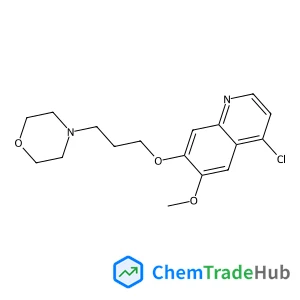
4-(3-((4-Chloro-6-methoxyquinolin-7-yl)oxy)propyl)morpholine
CAS Number:
205448-32-4
Molecular Formula:
C17H21ClN2O3
Recommended Suppliers




Disclaimer
This page provides academic journal information for reference and research purposes only. We are not affiliated with any journal publishers and do not handle publication submissions. For publication-related inquiries, please contact the respective journal publishers directly.
If you notice any inaccuracies in the information displayed, please contact us at support@chemtradehub.com. We will promptly review and address your concerns.