












Ultrafast pump–probe spectroscopy of neutral FenOm clusters (n, m < 16)
Literature Information
Publication Date
2020-10-16
DOI
10.1039/D0CP03889J
Impact Factor
3.676
Authors
View Original
Abstract
Neutral iron oxide clusters (FenOm, n, m ≤ 16) are produced in a laser vaporization source using O2 gas seeded in He. The neutral clusters are ionized with a sequence of femtosecond laser pulses and detected using time-of-flight mass spectrometry. Small clusters are confirmed to be most prominent in the stoichiometric (n = m) distribution, with m = n + 1 clusters observed above n = 4. Pump–probe spectroscopy is employed to study the dynamics of an electron transfer from an oxygen orbital to an iron nonbonding orbital of iron oxide clusters that is driven by absorption of a 400 nm photon. A bifurcation of the initial wavepacket occurs, where a femtosecond component is attributed to electron relaxation assisted through internuclear vibrational relaxation and high density of states, and a slow relaxation shows the formation of a bound excited state. The lifetime and relative ratio of the two pathways depend on both the cluster size and iron oxidation state. The femtosecond lifetime decreases with increased cluster size until a saturation timescale is achieved at n > 5. The relative population of the long-lived excited state decreases with cluster size and suggests that the excited electron remains on the Fe atom for >20 ps.
Related Literature
Order–disorder and displacive components in the ferroelectric–paraelectric phase transition of potassium titanyl phosphate KTiOPO4
Masatomo Yashima, Takafumi Komatsu
2009-01-05
Communication
DOI: 10.1039/B817280C
Heteropolyacid-assisted fabrication of carbon nanostructures under ambient conditions
Enbo Wang
2008-12-15
Communication
DOI: 10.1039/B812573B
Biomaterials from sugars: ring-opening polymerization of a carbohydrate lactone
Andrew J. P. White, Molly M. Stevens, Charlotte K. Williams
2008-12-18
Communication
DOI: 10.1039/B817658B
Nitrogen-doped titania nanosheets towards visible light response
Lianzhou Wang, Chenghua Sun, Zhigang Chen, Xiaoxia Yan, Lina Cheng, Hui-Ming Cheng, Gao Qing (Max) Lu
2009-01-22
Communication
DOI: 10.1039/B820483G
A robust procedure for the functionalization of gold nanorods and noble metal nanoparticles
Benjamin Thierry, Jane Ng, Tina Krieg, Hans J. Griesser
2009-02-11
Communication
DOI: 10.1039/B820137D
Synthesis of a pyridine-fused porphyrinoid: oxopyridochlorin
Sumito Tokuji, Yuji Takahashi, Hideyuki Shinmori, Hiroshi Shinokubo, Atsuhiro Osuka
2009-01-06
Communication
DOI: 10.1039/B819284G
Fluorescent gold nanoparticles-based fluorescence sensor for Cu2+ ions
Wenbin Chen, Xijuan Tu, Xiangqun Guo
2009-02-11
Communication
DOI: 10.1039/B820145E
You might also like
Compound Q&A
What are the main uses of (5-Sulfamoyl-3-pyridinyl)boronic acid (CAS: 951233-61-7)?
(5-Sulfamoyl-3-pyridinyl)boronic acid is primarily used in chemical synthesis, p...
951233-61-7(5-Sulfamoyl-3-pyrid...
Compound Q&A
How is Benzyl 2-methyl-2-(methylsulfonyl)-4-pentenoate (CAS: 1942858-50-5) typically synthesized?
Benzyl 2-methyl-2-(methylsulfonyl)-4-pentenoate is typically synthesized via est...
1942858-50-5Benzyl 2-methyl-2-(m...
Compound Q&A
What precautions should be taken when handling 8-Fluoroquinolin-6-ol (CAS: 209353-22-0)?
When handling 8-Fluoroquinolin-6-ol (CAS: 209353-22-0), it is important to use p...
209353-22-08-Fluoroquinolin-6-o...
Compound Q&A
What are the physical and chemical properties of 1,3-Dibromo-5-(2-methyl-2-propanyl)benzene (CAS: 129316-09-2)?
1,3-Dibromo-5-(2-methyl-2-propanyl)benzene (CAS: 129316-09-2) is a crystalline c...
129316-09-21,3-Dibromo-5-(2-met...
Compound Q&A
What industries use Ethyl 7-chloro-4-oxo-1-(1,3-thiazol-2-yl)-1,4-dihydro-1,8-naphthyridine-3-carboxylate (CAS: 174726-87-5)?
Ethyl 7-chloro-4-oxo-1-(1,3-thiazol-2-yl)-1,4-dihydro-1,8-naphthyridine-3-carbox...
174726-87-5Ethyl 7-chloro-4-oxo...
Compound Q&A
What precautions should be taken when handling Delta-7-Avenasterol (CAS: 23290-26-8)?
When handling Delta-7-Avenasterol (CAS: 23290-26-8), it is important to wear app...
23290-26-8Delta-7-Avenasterol
Compound Q&A
What precautions should be taken when handling N-({(5R)-3-[3-Fluoro-4-(4-morpholinyl)phenyl]-2-oxo-1,3-oxazolidin-5-yl}methyl)acetamide (CAS: 872992-20-6)?
Proper handling involves the use of personal protective equipment such as gloves...
872992-20-6N-({(5R)-3-[3-Fluoro...
Compound Q&A
What precautions should be taken when handling 2-Methyl-2-proanyl 4-[(2-aminophenyl)amino]-1-piperidinecarboxylate (CAS: 79099-00-6)?
When handling 2-Methyl-2-proanyl 4-[(2-aminophenyl)amino]-1-piperidinecarboxylat...
79099-00-62-Methyl-2-propanyl ...
Compound Q&A
What is N-Methyl-4-chlorobenzylamine hydrochloride (CAS: 65542-24-7)?
N-Methyl-4-chlorobenzylamine hydrochloride (CAS: 65542-24-7) is a organic compou...
65542-24-7N-Methyl-4-chloroben...
Compound Q&A
Is [2-(Dodecyloxy)ethoxy]acetic acid (CAS: 27306-90-7) safe?
[2-(Dodecyloxy)ethoxy]acetic acid (CAS: 27306-90-7) is generally considered safe...
27306-90-7[2-(Dodecyloxy)ethox...
Source Journal
Physical Chemistry Chemical Physics

CiteScore:
5.5
Self-citation Rate:
10.3%
Articles per Year:
3036
Physical Chemistry Chemical Physics (PCCP) is an international journal co-owned by 19 physical chemistry and physics societies from around the world. This journal publishes original, cutting-edge research in physical chemistry, chemical physics and biophysical chemistry. To be suitable for publication in PCCP, articles must include significant innovation and/or insight into physical chemistry; this is the most important criterion that reviewers and Editors will judge against when evaluating submissions. The journal has a broad scope and welcomes contributions spanning experiment, theory, computation and data science. Topical coverage includes spectroscopy, dynamics, kinetics, statistical mechanics, thermodynamics, electrochemistry, catalysis, surface science, quantum mechanics, quantum computing and machine learning. Interdisciplinary research areas such as polymers and soft matter, materials, nanoscience, energy, surfaces/interfaces, and biophysical chemistry are welcomed if they demonstrate significant innovation and/or insight into physical chemistry. Joined experimental/theoretical studies are particularly appreciated when complementary and based on up-to-date approaches.
Recommended Compounds
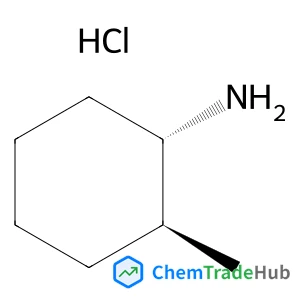
(1R,2R)-2-Methylcyclohexanamine hydrochloride (1:1)
CAS Number:
39558-31-1
Molecular Formula:
C7H16ClN
![4-Fluoro-2-(4-{[(3S,4R)-4-(2-hydroxy-2-propanyl)-3-pyrrolidinyl]amino}-6,7-dimethoxy-2-quinazolinyl)phenol hydrochloride (1:1) structure](https://static.chemtradehub.com/structs/143/1431697-96-9-619c.webp "4-Fluoro-2-(4-{[(3S,4R)-4-(2-hydroxy-2-propanyl)-3-pyrrolidinyl]amino}-6,7-dimethoxy-2-quinazolinyl)phenol hydrochloride (1:1) structure")
4-Fluoro-2-(4-{[(3S,4R)-4-(2-hydroxy-2-propanyl)-3-pyrrolidinyl]amino}-6,7-dimethoxy-2-quinazolinyl)phenol hydrochloride (1:1)
CAS Number:
1431697-96-9
Molecular Formula:
C23H28ClFN4O4
Recommended Suppliers





Disclaimer
This page provides academic journal information for reference and research purposes only. We are not affiliated with any journal publishers and do not handle publication submissions. For publication-related inquiries, please contact the respective journal publishers directly.
If you notice any inaccuracies in the information displayed, please contact us at support@chemtradehub.com. We will promptly review and address your concerns.