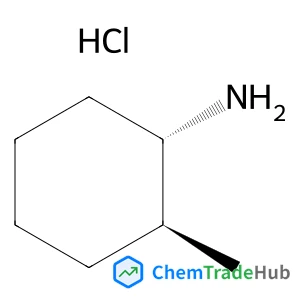
(1R,2R)-2-Methylcyclohexanamine hydrochloride (1:1)
CAS Number:
39558-31-1
Molecular Formula:
C7H16ClN
Masao Yamamoto, Shin Nakamura, Takumi Noguchi
Photosynthetic water oxidation takes place through the light-driven cycle of five intermediates (S0–S4) of the water oxidizing complex (WOC), which consists of the Mn4CaO5 cluster and surrounding amino acid residues in photosystem II. Clarifying the protonation structures of the Mn4CaO5 cluster and its water ligands (W1–W4) is essential for understanding the molecular mechanism of water oxidation. Here, we performed normal mode analysis of WOC in the S0 and S1 states using quantum mechanics/molecular mechanics calculations and simulated an S1-minus-S0 infrared difference spectrum focusing on the symmetric COO− stretching (νsCOO−) region. The calculated spectrum by an S0 model, in which O4 of the Mn4CaO5 cluster is protonated and W2 is H2O, and a corresponding S1 state with deprotonated O4 best reproduced the νsCOO− features of the experimental spectrum, whereas models with protonated O5 showed poor agreement. In addition, comparison of the calculated coordination distances of the water ligands with the experimental data by X-ray diffraction analysis indicates that W2 is most probably not OH− but H2O both in the S0 and S1 states. The present calculations thus strongly suggest that the S0 state has a protonation structure of O4–H and W2 = H2O. The O4–H structure in the S0 state supports the view that this proton is released through the O4–water chain immediately after electron transfer during the S0 → S1 transition.
Sang Ick Lee, Naoto Chatani
DOI: 10.1039/B812466C
Mark Bartholomä, John Valliant, Kevin P. Maresca, John Babich, Jon Zubieta
DOI: 10.1039/B814903H
Masatomo Yashima, Takafumi Komatsu
DOI: 10.1039/B817280C
Juan Peng, Alejandra Garcia Marcos, Seong-Jun Jeong, Holger Frey, Dong Ha Kim
DOI: 10.1039/B816398G
Ömer Reis, Serkan Eymur, Barbaros Reis, Ayhan S. Demir
DOI: 10.1039/B817474A
Joe Briscoe, Diego E. Gallardo, Steve Dunn
DOI: 10.1039/B820797F
Valeria Amendola, Luigi Fabbrizzi
DOI: 10.1039/B808264M
Magdalena A. Skopek, Mohamoud A. Mohamoud, Karl S. Ryder, A. Robert Hillman
DOI: 10.1039/B819084D
(5-Sulfamoyl-3-pyridinyl)boronic acid is primarily used in chemical synthesis, p...
Benzyl 2-methyl-2-(methylsulfonyl)-4-pentenoate is typically synthesized via est...
When handling 8-Fluoroquinolin-6-ol (CAS: 209353-22-0), it is important to use p...
1,3-Dibromo-5-(2-methyl-2-propanyl)benzene (CAS: 129316-09-2) is a crystalline c...
Ethyl 7-chloro-4-oxo-1-(1,3-thiazol-2-yl)-1,4-dihydro-1,8-naphthyridine-3-carbox...
When handling Delta-7-Avenasterol (CAS: 23290-26-8), it is important to wear app...
Proper handling involves the use of personal protective equipment such as gloves...
When handling 2-Methyl-2-proanyl 4-[(2-aminophenyl)amino]-1-piperidinecarboxylat...
N-Methyl-4-chlorobenzylamine hydrochloride (CAS: 65542-24-7) is a organic compou...
[2-(Dodecyloxy)ethoxy]acetic acid (CAS: 27306-90-7) is generally considered safe...

Physical Chemistry Chemical Physics (PCCP) is an international journal co-owned by 19 physical chemistry and physics societies from around the world. This journal publishes original, cutting-edge research in physical chemistry, chemical physics and biophysical chemistry. To be suitable for publication in PCCP, articles must include significant innovation and/or insight into physical chemistry; this is the most important criterion that reviewers and Editors will judge against when evaluating submissions. The journal has a broad scope and welcomes contributions spanning experiment, theory, computation and data science. Topical coverage includes spectroscopy, dynamics, kinetics, statistical mechanics, thermodynamics, electrochemistry, catalysis, surface science, quantum mechanics, quantum computing and machine learning. Interdisciplinary research areas such as polymers and soft matter, materials, nanoscience, energy, surfaces/interfaces, and biophysical chemistry are welcomed if they demonstrate significant innovation and/or insight into physical chemistry. Joined experimental/theoretical studies are particularly appreciated when complementary and based on up-to-date approaches.