












Chemical encoding of amphiphilic copolymers for a dual controlled release from their assemblies
Literature Information
Publication Date
2014-10-16
DOI
10.1039/C4PY01159G
Impact Factor
5.582
Authors
Li-Ping Lv, Yi Zhao, Katharina Landfester, Daniel Crespy
View Original
Abstract
Amphiphilic random copolymers are designed to bear a corrosion inhibitor as cleavable side group, which can be released upon activation by chemical reduction. Polymer nanoparticles are obtained by self-assembly of the copolymers in water. A model dye is encapsulated in the nanoparticles and its release is triggered by reductive cleavage of the copolymer, leading hence to the co-release of the corrosion inhibitor. The present system has the advantage that the cleaved units are functional payloads.
Recommended Journals
Related Literature
Influence of the solvent on the crystal structure of PCBM and the efficiency of MDMO-PPV:PCBM ‘plastic’ solar cells
Minze T. Rispens, Auke Meetsma, Roman Rittberger, Christoph J. Brabec, N. Serdar Sariciftci, Jan C. Hummelen
2003-07-22
Communication
DOI: 10.1039/B305988J
The structure of a self-assembled calixarene aqua-channel system
Anthony W. Coleman, Eric Da Silva, Farid Nouar, Martine Nierlich, Alda Navaza
2003-03-03
Communication
DOI: 10.1039/B301460F
High tetraalkylaluminate fluxionality in half-sandwich complexes of the trivalent rare-earth metals
Reiner Anwander, Michael G. Klimpel, H. Martin Dietrich, Dmitry J. Shorokhov, Wolfgang Scherer
2003-03-24
Communication
DOI: 10.1039/B212754G
Transformation of a 4-membered ring zinc phosphate SBU to a sodalite-related 3-dimensional structure through a linear chain structure
D. Udayakumar
2003-07-24
Communication
DOI: 10.1039/B305679C
ITQ-12: a new microporous silica polymorph potentially useful for light hydrocarbon separations
Philip A. Barrett, Teresa Boix, Marta Puche, David H. Olson, Edgar Jordan, Hubert Koller, Miguel A. Camblor
2003-07-18
Communication
DOI: 10.1039/B306440A
Decomposition of Pt-intercalated hydrotalcite-like nanocomposites to produce micro/mesoporous catalysts
Masato Machida, Shin Hamada
2003-06-20
Communication
DOI: 10.1039/B304352E
Using biofunctional magnetic nanoparticles to capture Gram-negative bacteria at an ultra-low concentration
Hongwei Gu, Pak-Leung Ho, Kenneth WT Tsang, Chun-Wing Yu, Bing Xu
2003-07-09
Communication
DOI: 10.1039/B305421G
Total synthesis of (±)-dihydrospiniferin-1 via a polyfluoro alkanosulfonyl fluoride induced tandem carbonium ion rearrangement reaction
Ling Chen, Kai Ding, Wei-Sheng Tian
2003-02-28
Communication
DOI: 10.1039/B300016H
Combination of ionic self-assembly and hydrogen bonding as a tool for the synthesis of liquid-crystalline materials and organogelators from a simple building block
Franck Camerel, Charl F. J. Faul
2003-06-19
Communication
DOI: 10.1039/B303552B
Synthesis of the aminocyclopentitol moieties of the hopanoids of Zymomonas mobilis and ‘Anacystis montana’
Jose Luis Chiara, Isabel Storch de Gracia, Ágatha Bastida
2003-06-20
Communication
DOI: 10.1039/B304576E
You might also like
Compound Q&A
What precautions should be taken when handling 2-Methyl-2-propanyl 5-amino-2-thiophenecarboxylate (CAS: 1498311-57-1)?
When handling 2-Methyl-2-propanyl 5-amino-2-thiophenecarboxylate (CAS: 1498311-5...
1498311-57-12-Methyl-2-propanyl ...
Compound Q&A
What are the physical and chemical properties of 5-Bromo-1,2-dichloro-3-fluorobenzene (CAS: 1000572-93-9)?
5-Bromo-1,2-dichloro-3-fluorobenzene (CAS: 1000572-93-9) is a crystalline solid ...
1000572-93-95-Bromo-1,2-dichloro...
Compound Q&A
How should (2R)-2-Amino-2-(4-bromophenyl)ethanol (CAS: 354153-64-3) be stored?
(2R)-2-Amino-2-(4-bromophenyl)ethanol (CAS: 354153-64-3) should be stored in a c...
354153-64-3(2R)-2-Amino-2-(4-br...
Compound Q&A
What regulatory guidelines apply to Methyl 4-(aminomethyl)tetrahydro-2H-pyran-4-carboxylate hydrochloride (CAS: 362707-24-2)?
Methyl 4-(aminomethyl)tetrahydro-2H-pyran-4-carboxylate hydrochloride (CAS: 3627...
362707-24-2Methyl 4-(aminomethy...
Compound Q&A
What are the main uses of 1,4-dimethyl-1H-pyrazole-5-sulfonyl chloride (CAS: 1174834-52-6)?
1,4-Dimethyl-1H-pyrazole-5-sulfonyl chloride is primarily used as an intermediat...
1174834-52-61,4-dimethyl-1H-pyra...
Compound Q&A
Is Dinaphtho[1,2-b:2',1'-d]furan (CAS: 239-69-0) safe?
Dinaphtho[1,2-b:2',1'-d]furan is generally safe when handled with appropriate pe...
239-69-0Dinaphtho[1,2-b:2',1...
Compound Q&A
What is the market or research trend for 7-Methyl-7,9-dihydro-1H-purine-2,6,8(3H)-trione (CAS: 612-37-3)?
The market for 7-Methyl-7,9-dihydro-1H-purine-2,6,8(3H)-trione (CAS: 612-37-3) i...
612-37-37-Methyl-7,9-dihydro...
Compound Q&A
What are the physical and chemical properties of 2-(4-Chlorophenyl)malonaldehyde (CAS: 205676-17-1)?
2-(4-Chlorophenyl)malonaldehyde (CAS: 205676-17-1) is a colorless or light yello...
205676-17-12-(4-Chlorophenyl)ma...
Compound Q&A
How is 2-Methylchrysene (CAS: 3351-32-4) typically synthesized?
2-Methylchrysene (CAS: 3351-32-4) is typically synthesized via the reaction of c...
3351-32-42-Methylchrysene
Compound Q&A
Is N-(6-aminopyrimidin-4-yl)acetamide (CAS: 89533-23-3) safe?
N-(6-aminopyrimidin-4-yl)acetamide (CAS: 89533-23-3) is generally considered saf...
89533-23-3N-(6-aminopyrimidin-...
Source Journal
Polymer Chemistry

CiteScore:
8.6
Self-citation Rate:
7.3%
Articles per Year:
457
Polymer Chemistry welcomes submissions in all areas of polymer science that have a strong focus on macromolecular chemistry. Manuscripts may cover a broad range of fields, yet no direct application focus is required.
Recommended Compounds
![N-[(1-Ethyl-2-pyrrolidinyl)methyl]-2-hydroxy-5-sulfamoylbenzamide structure](https://static.chemtradehub.com/structs/673/67381-52-6-877f.webp "N-[(1-Ethyl-2-pyrrolidinyl)methyl]-2-hydroxy-5-sulfamoylbenzamide structure")
N-[(1-Ethyl-2-pyrrolidinyl)methyl]-2-hydroxy-5-sulfamoylbenzamide
CAS Number:
67381-52-6
Molecular Formula:
C14H21N3O4S
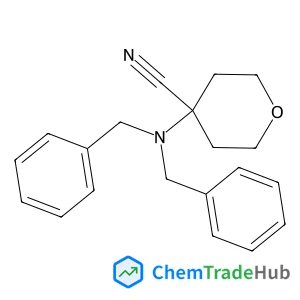
4-(Dibenzylamino)tetrahydro-2H-pyran-4-carbonitrile
CAS Number:
1630906-81-8
Molecular Formula:
C20H22N2O
Recommended Suppliers





Disclaimer
This page provides academic journal information for reference and research purposes only. We are not affiliated with any journal publishers and do not handle publication submissions. For publication-related inquiries, please contact the respective journal publishers directly.
If you notice any inaccuracies in the information displayed, please contact us at support@chemtradehub.com. We will promptly review and address your concerns.