












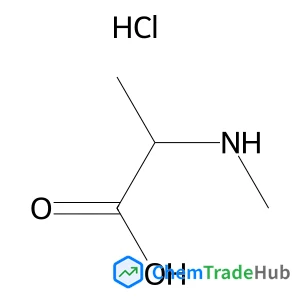
(R)-2-(Methylamino)propanoic acid hydrochloride
CAS Number:
1155878-14-0
Molecular Formula:
C4H10ClNO2
Xiao Wang, Yuan Gao, Hui Zhao, Xiao-Qing Liu, Zhengke Wang, Qiaoling Hu, Jing Zhi Sun
Monosaccharide-functionalized poly(phenylacetylenes) (PPAs) are synthesized with high yield and molecular weight, but it shows no solvating power to multiwalled carbon nanotubes (MWCNTs) by simply blending them together. Polymerization of monosaccharide-functionalized monomers in the presence of MWCNTs (in situ polymerization) leads to the hybrids of monosaccharide-functionalized PPAs/MWCNTs, and the content of MWCNTs is over 2% by weight. The characterization data indicates that the π–π interaction between the styrene-like moieties in the polymer backbone and the MWCNTs plays crucial role in the dispersing capacity. Based on the in situ precipitation method, CS rods containing monosaccharide-functionalized PPAs/MWCNTs hybrids were fabricated. The bending strength and modulus of the hybrid-reinforced CS rods showed substantial improvement in comparison with the CS rods made from pristine and hydroxyapatite-reinforced CS.
Xi-Ling Xu, Xiao-Jiao Deng, Hong-Guang Xu, Wei-Jun Zheng
DOI: 10.1039/C5CP04482K
T. F. Otero, E. W. H. Jager
DOI: 10.1039/C5CP05841D
Baiqing You, Xiaocha Wang, Wenbo Mi
DOI: 10.1039/C5CP05068E
Daniel Höche, Carsten Blawert, Sviatlana V. Lamaka, Nico Scharnagl, Chamini Mendis
DOI: 10.1039/C5CP05577F
Raffaele Borrelli, Amedeo Capobianco, Alessandro Landi, Andrea Peluso
DOI: 10.1039/C5CP01190F
Sangram K. Rath, Kathi Sudarshan, Rupesh S. Bhavsar, Ulhas K. Kharul, Pradeep K. Pujari, Manoranjan Patri, Devang V. Khakhar
DOI: 10.1039/C5CP05260B
Annalisa Dalzini, Fernando Formaggio, Claudio Toniolo, Marina Gobbo, Anna Lisa Maniero
DOI: 10.1039/C5CP04136H
David Zanuy, Jordi Poater, Miquel Solà, Ian W. Hamley
DOI: 10.1039/C5CP04269K
R. C. Hoffmann, M. Kaloumenos, D. Spiehl, E. Erdem, S. Repp, S. Weber, J. J. Schneider
DOI: 10.1039/C5CP05166E
3-Fluoro-2-methylbenzylamine is an organic compound with the CAS number 771573-3...
Tert-butyl 2-(oxetan-3-ylidene)acetate is considered safe for its intended uses ...
Proper personal protective equipment (PPE) such as gloves, goggles, and a lab co...
2-Ethyl-4-methyl-1,3-thiazole is commonly synthesized via the reaction of thiour...
This compound should be stored in a cool, dry place away from direct sunlight an...
L-Lysine Acetate Salt (CAS: 52315-92-1) is subject to various regulatory guideli...
6-Fluoro-3-hydroxy-2-pyrazinecarboxamide (CAS: 259793-96-9) is generally conside...
1,1'-Sulfonylbis(1H-imidazole) is a crystalline solid with a molecular weight of...
4-Methyl-7-nitro-1H-indole-3-carbonitrile (CAS: 289483-82-5) is primarily used i...
Waste containing 5-Bromo-3-indolyl-beta-galactoside (CAS: 97753-82-7) should be ...

Polymer Chemistry welcomes submissions in all areas of polymer science that have a strong focus on macromolecular chemistry. Manuscripts may cover a broad range of fields, yet no direct application focus is required.
![2-[({[(2-Methyl-2-propanyl)oxy]carbonyl}amino)methyl]isonicotinic acid structure](https://static.chemtradehub.com/structs/473/473924-63-9-973b.webp "2-[({[(2-Methyl-2-propanyl)oxy]carbonyl}amino)methyl]isonicotinic acid structure")




