


Three-dimensional structured sponge with high oil wettability for the clean-up of oil contaminations and separation of oil–water mixtures
Literature Information
Publication Date
2014-06-17
DOI
10.1039/C4PY00552J
Impact Factor
5.582
Authors
Zhixiang Zeng, Xuedong Wu, Tianhui Ren, Jin Han, Qunji Xue
View Original
Abstract
Oil spills not only result in extensive economic losses but also damage marine ecological environments. A series of materials with special wettability are investigated for the separation of oil–water mixtures. However, few studies have investigated the adsorption behaviors of sponges to crude oil (high viscosity). To solve the restrictions of high viscosity oil absorption, low oil absorption rate and oil–water emulsion separation of oil absorption materials, a superhydrophobic and superoleophilic polyurethane (PU) sponge was synthesized via an environmentally friendly surface grafting of a polymer molecular brush. This grafted sponge exhibited high oil absorption rate because of the expansion in oil and collapse in water of the polymer molecular brushes. The grafted PU sponge also possessed high absorption capacity (23 times of the self weight), high oil retention (93%), high mechanical strength and good recyclability (more than 400 times). We anticipate that the grafted sponge will have numerous applications and will show outstanding performance on a larger scale. A quick clean-up of marine spilled oil/organic solvents and the separation/recycling of an oil–water mixture/emulsion can also be achieved.
Recommended Journals

Russian Journal of General Chemistry

Nature Medicine

Current Opinion in Colloid & Interface Science

Russian Journal of Organic Chemistry

Chemistry Education Research and Practice

Russian Journal of Applied Chemistry

Chemical Communications

Journal of Saudi Chemical Society

Journal of Natural Medicines

Current Opinion in Solid State & Materials Science
Related Literature
Multiphoton photoelectron emission microscopy of single Au nanorods: combined experimental and theoretical study of rod morphology and dielectric environment on localized surface plasmon resonances
Andrej Grubisic, Volker Schweikhard, Thomas A. Baker, David J. Nesbitt
2013-01-31
Paper
DOI: 10.1039/C3CP44385J
The molecular clusters in a supercritical fluid–solid system should be considered as a phase—thermodynamic principle and evidence
Minqiang Hou, Jianling Zhang, Buxing Han, Qingqing Mei, Hui Ning, Dezhong Yang
2013-04-09
Paper
DOI: 10.1039/C3CP44670K
Selective catalytic oxidation using supported gold–platinum and palladium–platinum nanoalloys prepared by sol-immobilisation
Virginie Peneau, Qian He, Gregory Shaw, Simon A. Kondrat, Thomas E. Davies, Peter Miedziak, Michael Forde, Nikolaos Dimitratos, Christopher J. Kiely, Graham J. Hutchings
2013-04-02
Paper
DOI: 10.1039/C3CP50361E
Binding energy determination in a π-stacked aromatic cluster: the anisole dimer
2013-05-02
Paper
DOI: 10.1039/C3CP50191D
Functionalized 129Xe as a potential biosensor for membrane fluidity
Matthias Schnurr, Christopher Witte, Leif Schröder
2013-06-07
Communication
DOI: 10.1039/C3CP51227D
Miniaturized biological and electrochemical fuel cells: challenges and applications
Jie Yang, Sasan Ghobadian, Payton J. Goodrich, Reza Montazami, Nastaran Hashemi
2013-02-26
Perspective
DOI: 10.1039/C3CP50804H
V5+ degradation of sulfonated Radel membranes for vanadium redox flow batteries
Dongyang Chen, Michael A. Hickner
2013-05-23
Paper
DOI: 10.1039/C3CP52035H
QM/MM surface-hopping dynamics of a bridged azobenzene derivative
2013-07-08
Paper
DOI: 10.1039/C3CP50606A
You might also like
Compound Q&A
Are there alternatives to 1-(4-Chlorophenyl)-N-hydroxymethanimine (CAS: 3848-36-0) in synthesis?
When considering alternatives to 1-(4-Chlorophenyl)-N-hydroxymethanimine (CAS: 3...
3848-36-01-(4-Chlorophenyl)-N...
Compound Q&A
How should (1R,9S,10S,12S,14E,16S,19R,20R,21S,22R)-3,9,21-Trihydroxy-5,10,12,14,16,20,22-heptamethyl-23,24-dioxatetracyclo[17.3.1.1~6,9~.0~2,7~]tetracosa-2,5,7,14-tetraen-4-one (CAS: 183202-73-5) be stored?
This compound should be stored in a cool, dry place away from direct sunlight. I...
183202-73-5(1R,9S,10S,12S,14E,1...
Compound Q&A
How is 3-(4-Bromophenyl)-5-(2-fluorophenyl)-1,2,4-oxadiazole (CAS: 419553-16-5) typically synthesized?
3-(4-Bromophenyl)-5-(2-fluorophenyl)-1,2,4-oxadiazole is synthesized through a m...
419553-16-53-(4-Bromophenyl)-5-...
Compound Q&A
How is 5-Chloro-2-(4-chlorophenyl)-4-methyl-6-[3-(1-piperidinyl)propoxy]pyrimidine (CAS: 1639220-19-1) typically synthesized?
5-Chloro-2-(4-chlorophenyl)-4-methyl-6-[3-(1-piperidinyl)propoxy]pyrimidine (CAS...
1639220-19-15-Chloro-2-(4-chloro...
Compound Q&A
What industries use 2-Chloro-4-(difluoromethoxy)pyridine (CAS: 1206978-15-5)?
2-Chloro-4-(difluoromethoxy)pyridine is used in the pharmaceutical industry for ...
1206978-15-52-Chloro-4-(difluoro...
Compound Q&A
What regulatory guidelines apply to 3-Chloro-6-methylpyridazine (CAS: 1121-79-5)?
3-Chloro-6-methylpyridazine (CAS: 1121-79-5) is classified under the Globally Ha...
1121-79-53-Chloro-6-methylpyr...
Compound Q&A
Are there alternatives to Methyl 4,5-dimethyl-2-nitrobenzoate in synthesis?
Several alternatives can be used in the synthesis of Methyl 4,5-dimethyl-2-nitro...
90922-74-0Methyl 4,5-dimethyl-...
Compound Q&A
Are there alternatives to (2E,2'E)-3,3'-(1,4-Phenylene)bisacrylaldehyde in synthesis?
Alternatives to (2E,2'E)-3,3'-(1,4-Phenylene)bisacrylaldehyde include other acry...
63405-68-5(2E,2'E)-3,3'-(1,4-P...
Compound Q&A
What is 3-Amino-5-chloropyridin-2-ol hydrochloride (CAS: 1261906-29-9)?
3-Amino-5-chloropyridin-2-ol hydrochloride is an organic compound with the CAS n...
1261906-29-93-Amino-5-chloropyri...
Compound Q&A
What precautions should be taken when handling 6,7-Difluoro-2,3-dihydro-4H-chromen-4-one (CAS: 1092349-93-3)?
When handling 6,7-Difluoro-2,3-dihydro-4H-chromen-4-one, it is essential to wear...
1092349-93-36,7-Difluoro-2,3-dih...
Source Journal
Polymer Chemistry

CiteScore:
8.6
Self-citation Rate:
7.3%
Articles per Year:
457
Polymer Chemistry welcomes submissions in all areas of polymer science that have a strong focus on macromolecular chemistry. Manuscripts may cover a broad range of fields, yet no direct application focus is required.
Recommended Compounds
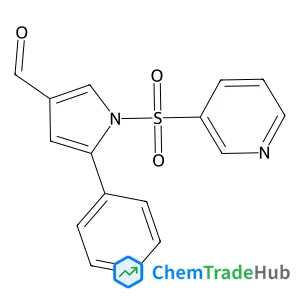
5-Phenyl-1-(pyridin-3-ylsulfonyl)-1H-pyrrole-3-carbaldehyde
CAS Number:
881676-90-0
Molecular Formula:
C16H12N2O3S
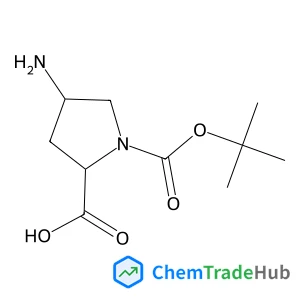
(2R,4R)-1-Boc-4-Aminopyrrolidine-2-carboxylic acid
CAS Number:
132622-98-1
Molecular Formula:
C10H18N2O4
Recommended Suppliers








Disclaimer
This page provides academic journal information for reference and research purposes only. We are not affiliated with any journal publishers and do not handle publication submissions. For publication-related inquiries, please contact the respective journal publishers directly.
If you notice any inaccuracies in the information displayed, please contact us at support@chemtradehub.com. We will promptly review and address your concerns.