












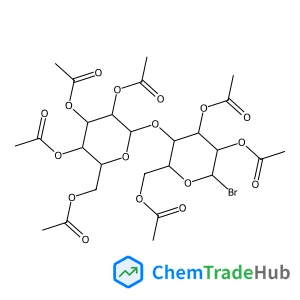
2,3,6-Tri-O-acetyl-4-O-(2,3,4,6-tetra-O-acetyl-beta-D-galactopyranosyl)-alpha-D-glucopyranosyl bromide
CAS Number:
4753-07-5
Molecular Formula:
C26H35BrO17
Yasutaka Kitahama, Yuhei Tanaka, Tamitake Itoh, Yukihiro Ozaki
Blinking statistics in surface-enhanced Raman scattering (SERS) of thiacyanine or thiacarbocyanine adsorbed on single Ag nanoaggregates were analyzed by a power law. A power law reproduces the probability distributions of both the bright and dark SERS occurrences against their duration times. As the localized surface plasmon resonance (LSPR) wavelength of a single Ag nanoaggregate approached the excitation wavelength or the excitation laser intensity increases, the power-law exponents were close to −1.5, a value derived from a one-dimensional random walk model. When the LSPR wavelength left the excitation wavelength or the excitation laser intensity decreases, the power-law exponents deviated from −1.5. The decrease in the power-law exponents in the bright SERS, which indicates a decrease in the probabilities of the long-lived bright SERS, and the increase in the power-law exponents in the dark SERS coincide with the increasing shallowness and narrowing of a optical trapping potential well due to a surface-plasmon-enhanced electromagnetic field around a junction of the Ag nanoaggregates excited at a wavelength apart from the LSPR wavelength or under the low laser intensity, i.e., the low original electromagnetic field, respectively.
Danny Schlüns, Kevin Klahr, Christian Mück-Lichtenfeld, Lucas Visscher, Johannes Neugebauer
DOI: 10.1039/C4CP04936E
Tatsuya Shinagawa, Kazuhiro Takanabe
DOI: 10.1039/C5CP02330K
Richard P. Matthews, Tom Welton, Patricia A. Hunt
DOI: 10.1039/C5CP00459D
Ryan Thorpe, Sylvie Rangan, Ryan Whitcomb, Ali C. Basaran, Thomas Saerbeck, Ivan K. Schuller, Robert A. Bartynski
DOI: 10.1039/C5CP01150G
M. Zachariah, M. Romanini, P. Tripathi, J. Ll. Tamarit, R. Macovez
DOI: 10.1039/C5CP02345A
Tianyu Zhu, Peng Chen, Hongfeng Li, Wenbin Sun, Ting Gao, Pengfei Yan
DOI: 10.1039/C5CP01392E
R. Rahul, R. K. Singh, B. Bera, R. Devivaraprasad, M. Neergat
DOI: 10.1039/C5CP00692A
DOI: 10.1039/C5CP00301F
Manh-Thuong Nguyen, Nicola Seriani, Ralph Gebauer
DOI: 10.1039/C4CP04308A
2-Methylbenzene-1,4-diamine dihydrochloride (CAS: 615-45-2) should be stored in ...
(1S,4S)-2,5-Diazabicyclo[2.2.1]heptane dihydrobromide is generally considered sa...
(6-Chloropyridazin-3-YL)methanamine finds applications in the pharmaceutical ind...
2-Fluoro-3-methylphenol is primarily used in the synthesis of pharmaceuticals, p...
When handling 3-Methoxy-4-nitrobenzonitrile, it is important to wear appropriate...
When handling 1,3-Oxazolo[4,5-b]pyridine-2(3H)-thione (CAS: 211949-57-4), it is ...
4-Ethynylbenzamide (CAS: 90347-86-7) falls under various regulatory guidelines i...
3-(2-Ethylphenyl)-2-thioxo-4-imidazolidinone is primarily used as an intermediat...
(2-Fluoro-6-methoxyphenyl)acetic acid, also known as 4-fluoro-3-methoxybenzoic a...
Market trends for 2-[4-(Hydroxymethyl)phenoxy]ethanol (CAS: 102196-18-9) indicat...

Physical Chemistry Chemical Physics (PCCP) is an international journal co-owned by 19 physical chemistry and physics societies from around the world. This journal publishes original, cutting-edge research in physical chemistry, chemical physics and biophysical chemistry. To be suitable for publication in PCCP, articles must include significant innovation and/or insight into physical chemistry; this is the most important criterion that reviewers and Editors will judge against when evaluating submissions. The journal has a broad scope and welcomes contributions spanning experiment, theory, computation and data science. Topical coverage includes spectroscopy, dynamics, kinetics, statistical mechanics, thermodynamics, electrochemistry, catalysis, surface science, quantum mechanics, quantum computing and machine learning. Interdisciplinary research areas such as polymers and soft matter, materials, nanoscience, energy, surfaces/interfaces, and biophysical chemistry are welcomed if they demonstrate significant innovation and/or insight into physical chemistry. Joined experimental/theoretical studies are particularly appreciated when complementary and based on up-to-date approaches.
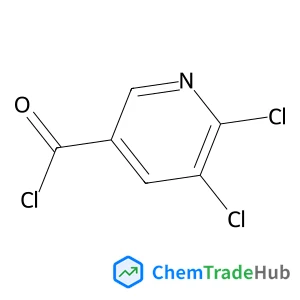
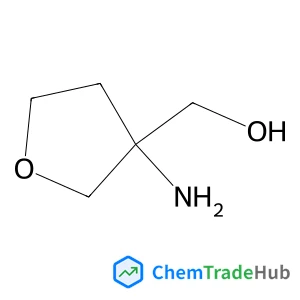
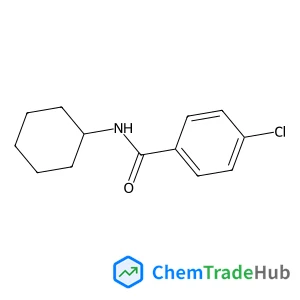
![3-[(3R,4R)-3-[(6-aminopyrimidin-4-yl)-methyl-amino]-4-methyl-1-piperidyl]-3-oxo-propanenitrile structure](https://static.chemtradehub.com/structs/164/1640971-60-3-83a4.webp "3-[(3R,4R)-3-[(6-aminopyrimidin-4-yl)-methyl-amino]-4-methyl-1-piperidyl]-3-oxo-propanenitrile structure")




