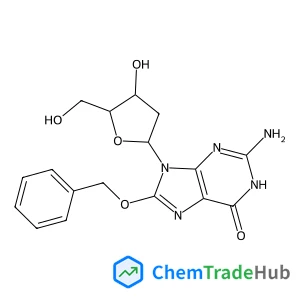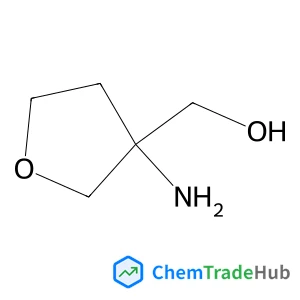
(S)-1-(3-(Benzyloxy)phenyl)-3-(dimethylamino)-2-methylpropan-1-one (2r,3r)-2,3-bis(benzoyloxy)succinate
CAS Number:
1004315-81-4
Molecular Formula:
C37H37NO10
Cristina Puzzarini, Vincenzo Barone
The equilibrium structure of uracil has been investigated using both theoretical and experimental data. With respect to the former, quantum-chemical calculations at the coupled-cluster level in conjunction with a triple-zeta basis set have been carried out. Extrapolation to the basis set limit, performed employing the second-order Møller–Plesset perturbation theory, and inclusion of core-correlation and diffuse-function corrections have also been considered. Based on the available rotational constants for various isotopic species together with corresponding computed vibrational corrections, the semi-experimental equilibrium structure of uracil has been determined for the first time. Theoretical and semi-experimental structures have been found in remarkably good agreement, thus pointing out the limitations of previous experimental determinations. Molecular and spectroscopic properties of uracil have then been studied by means of the composite computational approach introduced for the molecular structure evaluation. Among the results achieved, we mention the revision of the dipole moment. On the whole, it has been proved that the computational procedure presented is able to provide parameters with the proper accuracy to support experimental investigations of large molecules of biological interest.
Leon Freitag, Stefan Knecht, Sebastian F. Keller, Mickaël G. Delcey, Thomas Bondo Pedersen, Roland Lindh, Markus Reiher, Leticia González
DOI: 10.1039/C4CP05278A
Léo Choubrac, Alain Lafond, Michaël Paris, Catherine Guillot-Deudon, Stéphane Jobic
DOI: 10.1039/C5CP01709B
Oksana Plekan, Vitaliy Feyer, Andrew Cassidy, Victor Lyamayev, Nataliya Tsud, Sylwia Ptasińska, Sara Reiff, Rober G. Acres
DOI: 10.1039/C5CP01886B
DOI: 10.1039/C4CP05550K
DOI: 10.1039/C5CP01568E
D. Durgalakshmi, S. Balakumar
DOI: 10.1039/C5CP01738F
Catherine Gauthier, Etienne Munch, Dominique Thiaudière
DOI: 10.1039/C5CP00384A
Xiang Xiao, Guangming Jiang, Yuxin Zhang, Wen Cui, Jinzhu Ma
DOI: 10.1039/C5CP02460A
Hongde Luo, Adrie J. J. Bos, Anna Dobrowolska, Pieter Dorenbos
DOI: 10.1039/C5CP01710F
Wei Zhang, Wei Tao Zheng
DOI: 10.1039/C5CP01705J
2-Methylbenzene-1,4-diamine dihydrochloride (CAS: 615-45-2) should be stored in ...
(1S,4S)-2,5-Diazabicyclo[2.2.1]heptane dihydrobromide is generally considered sa...
(6-Chloropyridazin-3-YL)methanamine finds applications in the pharmaceutical ind...
2-Fluoro-3-methylphenol is primarily used in the synthesis of pharmaceuticals, p...
When handling 3-Methoxy-4-nitrobenzonitrile, it is important to wear appropriate...
When handling 1,3-Oxazolo[4,5-b]pyridine-2(3H)-thione (CAS: 211949-57-4), it is ...
4-Ethynylbenzamide (CAS: 90347-86-7) falls under various regulatory guidelines i...
3-(2-Ethylphenyl)-2-thioxo-4-imidazolidinone is primarily used as an intermediat...
(2-Fluoro-6-methoxyphenyl)acetic acid, also known as 4-fluoro-3-methoxybenzoic a...
Market trends for 2-[4-(Hydroxymethyl)phenoxy]ethanol (CAS: 102196-18-9) indicat...

Physical Chemistry Chemical Physics (PCCP) is an international journal co-owned by 19 physical chemistry and physics societies from around the world. This journal publishes original, cutting-edge research in physical chemistry, chemical physics and biophysical chemistry. To be suitable for publication in PCCP, articles must include significant innovation and/or insight into physical chemistry; this is the most important criterion that reviewers and Editors will judge against when evaluating submissions. The journal has a broad scope and welcomes contributions spanning experiment, theory, computation and data science. Topical coverage includes spectroscopy, dynamics, kinetics, statistical mechanics, thermodynamics, electrochemistry, catalysis, surface science, quantum mechanics, quantum computing and machine learning. Interdisciplinary research areas such as polymers and soft matter, materials, nanoscience, energy, surfaces/interfaces, and biophysical chemistry are welcomed if they demonstrate significant innovation and/or insight into physical chemistry. Joined experimental/theoretical studies are particularly appreciated when complementary and based on up-to-date approaches.