












The role of tryptophans in the UV-B absorption of a UVR8 photoreceptor – a computational study
Literature Information
Publication Date
2015-03-19
DOI
10.1039/C4CP06073C
Impact Factor
3.676
Authors
Qi Wu, Bolong Huang, T. A. Niehaus, Xiaojing Yang, Jun Fan, Rui-Qin Zhang
View Original
Abstract
Arabidopsis thaliana UV RESISTANCE LOCUS8 (UVR8) has been identified as a photoreceptor for ultraviolet-B (UV-B). Tryptophan (Trp) residues have been shown to play a critical role in the response to UV-B irradiation in UVR8. In this work, we explore the spectroscopic behaviors of Trps in different protein environments of the UVR8 structure using the time-dependent density functional tight-binding (TD-DFTB) scheme. We show that W233 exhibits the longest absorption wavelength, highlighting its potential as a terminal Trp chromophore in the UV-B harvesting antenna. Our electronic and optical property analyses using various amino acid models support the important roles of W285 and W233 in sensing UV-B light at longer absorption wavelengths (∼290 nm). We also provide evidence for the specific function of W94 in absorption at the longest wavelengths (305.8 nm in cluster II and 304.5 nm in cluster III). To these findings, we also add information about the influence of the arginine and aspartic acid residues surrounding the Trp pyramid on the particular absorption bands (280–300 nm) that are characteristic of the UV-B photoreceptor.
Related Literature
From bulk to plasmonic nanoparticle surfaces: the behavior of two potent therapeutic peptides, octreotide and pasireotide
Belén Hernández, Eduardo López-Tobar, Santiago Sanchez-Cortes, Yves-Marie Coïc, Bruno Baron, Alexandre Chenal, Fernando Pflüger, Régis Cohen, Mahmoud Ghomi
2016-08-03
Paper
DOI: 10.1039/C6CP04421B
Lithium intercalation and diffusion in TiO2 nanotubes: a first-principles investigation
Ke Liang, Xue Chen, Zhenyu Guo, Tingjun Hou, Xiaohong Zhang, Youyong Li
2016-08-05
Paper
DOI: 10.1039/C6CP03830A
Iron-embedded C2N monolayer: a promising low-cost and high-activity single-atom catalyst for CO oxidation
B. L. He, J. S. Shen, Z. X. Tian
2016-08-03
Paper
DOI: 10.1039/C6CP03398A
Life in the light: nucleic acid photoproperties as a legacy of chemical evolution
Ashley A. Beckstead, Yuyuan Zhang, Mattanjah S. de Vries, Bern Kohler
2016-08-11
Paper
DOI: 10.1039/C6CP04230A
A DFT study on dihydropyrazine annulated linear polyacenes: aromaticity, stability and HOMO–LUMO energy modulation
Ramachandran Rakhi, Cherumuttathu H. Suresh
2016-08-15
Paper
DOI: 10.1039/C6CP03723B
Solvent effects on the properties of hyperbranched polythiophenes
Juan Torras, David Zanuy
2016-08-11
Paper
DOI: 10.1039/C6CP04812A
Peptides@mica: from affinity to adhesion mechanism
T. Gladytz, R. Hassert, M. Pagel, H. J. Risselada, S. Naumov, A. G. Beck-Sickinger
2016-07-22
Paper
DOI: 10.1039/C6CP03325C
Understanding the curvature effect of silica nanoparticles on lysozyme adsorption orientation and conformation: a mesoscopic coarse-grained simulation study
Gaobo Yu, Jian Zhou
2016-07-19
Paper
DOI: 10.1039/C6CP01478J
Characterizing a nonclassical carbene with coupled cluster methods: cyclobutylidene
Xiao Wang, Jay Agarwal, Henry F. Schaefer III
2016-08-09
Paper
DOI: 10.1039/C6CP03513B
Understanding metastable phase transformation during crystallization of RDX, HMX and CL-20: experimental and DFT studies
Mrinal Ghosh, Shaibal Banerjee, Md Abdul Shafeeuulla Khan, Nirmala Sikder, Arun Kanti Sikder
2016-07-27
Paper
DOI: 10.1039/C6CP02185A
You might also like
Compound Q&A
Is 2-(2-chloroacetamido)-3-phenylpropanoic acid (CAS: 7765-11-9) safe?
2-(2-Chloroacetamido)-3-phenylpropanoic acid (CAS: 7765-11-9) is generally consi...
7765-11-92-(2-chloroacetamido...
Compound Q&A
Is 2-(Benzyloxy)-5-bromobenzoic acid (CAS: 62176-31-2) safe?
2-(Benzyloxy)-5-bromobenzoic acid can be handled safely if appropriate precautio...
62176-31-22-(Benzyloxy)-5-brom...
Compound Q&A
What is (4-Methyl-1,2,5-oxadiazol-3-yl)methanamine hydrochloride (CAS: 1159825-48-5)?
(4-Methyl-1,2,5-oxadiazol-3-yl)methanamine hydrochloride is a chemical compound ...
1159825-48-5(4-Methyl-1,2,5-oxad...
Compound Q&A
What is 2-(5-Hexylthiophen-2-yl)-4,4,5,5-tetramethyl-1,3,2-dioxaborolane (CAS: 917985-54-7)?
2-(5-Hexylthiophen-2-yl)-4,4,5,5-tetramethyl-1,3,2-dioxaborolane (CAS: 917985-54...
917985-54-72-(5-Hexylthiophen-2...
Compound Q&A
Are there alternatives to 4-(8-Methyl-9H-1,3-dioxolo[4,5-h][2,3]benzodiazepin-5-yl)benzenamine (CAS: 102771-26-6) in synthesis?
While 4-(8-Methyl-9H-1,3-dioxolo[4,5-h][2,3]benzodiazepin-5-yl)benzenamine (CAS:...
102771-26-64-(8-Methyl-9H-1,3-d...
Compound Q&A
What is the market or research trend for tert-butyl 3-hydroxy-4,5,7,8-tetrahydro-2H-pyrazolo[3,4-d]azepine-6-carboxylate (CAS: 851376-80-2)?
The market for tert-butyl 3-hydroxy-4,5,7,8-tetrahydro-2H-pyrazolo[3,4-d]azepine...
851376-80-2tert-butyl 3-hydroxy...
Compound Q&A
How should waste containing 3,5-Diamino-1H-pyrazole-4-carbonitrile (CAS: 6844-58-2) be handled?
Waste containing 3,5-Diamino-1H-pyrazole-4-carbonitrile (CAS: 6844-58-2) should ...
6844-58-23,5-Diamino-1H-pyraz...
Compound Q&A
How is (6-Fluoro-3-pyridinyl)boronic acid (CAS: 351019-18-6) typically synthesized?
(6-Fluoro-3-pyridinyl)boronic acid can be synthesized through the reaction of 6-...
351019-18-6(6-Fluoro-3-pyridiny...
Compound Q&A
What industries use Dibenzyl carbonimidoylbiscarbamate (CAS: 10065-79-9)?
Dibenzyl carbonimidoylbiscarbamate (CAS: 10065-79-9) finds applications in vario...
10065-79-9Dibenzyl carbonimido...
Compound Q&A
What is the market or research trend for (beta,beta,2,3,4,5,6-~2~H_7_)Phenylalanine (CAS: 74228-83-4)?
The market for (beta,beta,2,3,4,5,6-~2~H_7_)Phenylalanine (CAS: 74228-83-4) is g...
74228-83-4(beta,beta,2,3,4,5,6...
Source Journal
Physical Chemistry Chemical Physics

CiteScore:
5.5
Self-citation Rate:
10.3%
Articles per Year:
3036
Physical Chemistry Chemical Physics (PCCP) is an international journal co-owned by 19 physical chemistry and physics societies from around the world. This journal publishes original, cutting-edge research in physical chemistry, chemical physics and biophysical chemistry. To be suitable for publication in PCCP, articles must include significant innovation and/or insight into physical chemistry; this is the most important criterion that reviewers and Editors will judge against when evaluating submissions. The journal has a broad scope and welcomes contributions spanning experiment, theory, computation and data science. Topical coverage includes spectroscopy, dynamics, kinetics, statistical mechanics, thermodynamics, electrochemistry, catalysis, surface science, quantum mechanics, quantum computing and machine learning. Interdisciplinary research areas such as polymers and soft matter, materials, nanoscience, energy, surfaces/interfaces, and biophysical chemistry are welcomed if they demonstrate significant innovation and/or insight into physical chemistry. Joined experimental/theoretical studies are particularly appreciated when complementary and based on up-to-date approaches.
Recommended Compounds
![2-[(E)-(2-Methoxyphenyl)diazenyl]-3-oxo-N-(2-oxo-2,3-dihydro-1H-benzimidazol-5-yl)butanamide structure](https://static.chemtradehub.com/structs/821/82199-12-0-f1d0.webp "2-[(E)-(2-Methoxyphenyl)diazenyl]-3-oxo-N-(2-oxo-2,3-dihydro-1H-benzimidazol-5-yl)butanamide structure")
2-[(E)-(2-Methoxyphenyl)diazenyl]-3-oxo-N-(2-oxo-2,3-dihydro-1H-benzimidazol-5-yl)butanamide
CAS Number:
82199-12-0
Molecular Formula:
C18H17N5O4
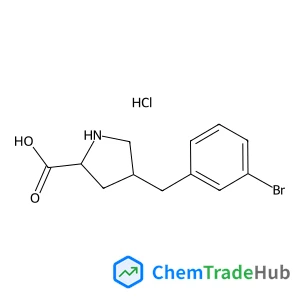
(2S,4R)-4-(3-Bromobenzyl)pyrrolidine-2-carboxylic acid hydrochloride
CAS Number:
1049734-10-2
Molecular Formula:
C12H15BrClNO2
Recommended Suppliers





Disclaimer
This page provides academic journal information for reference and research purposes only. We are not affiliated with any journal publishers and do not handle publication submissions. For publication-related inquiries, please contact the respective journal publishers directly.
If you notice any inaccuracies in the information displayed, please contact us at support@chemtradehub.com. We will promptly review and address your concerns.