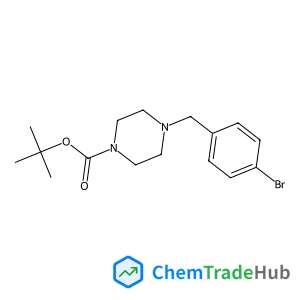
2-Methyl-2-propanyl 4-(4-bromobenzyl)-1-piperazinecarboxylate
CAS Number:
844891-10-7
Molecular Formula:
C16H23BrN2O2
Two different kinds of SWCNT functionalized zigzag edge BN nanoribbons with n chains (n-ZBNNRs), namely, (a) B-edge functionalized by (m,m)SWCNT and N-edge modified with H (nZBNNR-B-(m,m)SWCNTs); and (b) the B-edge modified with H and the N-edge functionalized by (m,m)SWCNT (nZBNNR-N-(m,m)SWCNTs), have been predicted. Amazingly, we find that unlike the semiconducting and nonmagnetic H-modified n-ZBNNRs, the nZBNNR-B-(m,m)SWCNTs are intrinsic ferromagnetic metals, regardless of ribbon widths n and tube diameters (m,m). At a given (m,m), their local magnetic moments, at first, exhibit oscillation with increasing n, whereas when n is larger than 5, they are independent of n. In contrast, unlike the metallic and nonmagnetic (m,m)SWCNTs, the nZBNNR-N-(m,m)SWCNTs are ferromagnetic intrinsic spin-semiconductors with direct band gaps, regardless of n and (m,m). Their local magnetic moments and band gaps are independent of n and (m,m). The DFT calculations reveal that the process of SWCNT functionalization of the n-ZBNNRs does not need any activation energy. Moreover, the formation energies of the SWCNT functionalized n-ZBNNRs are always less than zero. Therefore, the SWCNT functionalized n-ZBNNRs are not only stable, but can also be spontaneously formed. Furthermore, compared with n-ZBNNRs, the SWCNT functionalized n-ZBNNRs show significant improvements in their thermal and mechanical stabilities. Thus, (m,m)SWCNT functionalization of n-ZBNNRs may open new routes toward practical nanoelectronic and optoelectronic as well as spintronic devices based on BNC-based materials.
Ernesto Garcia, Antonio Laganà
DOI: 10.1039/B205377B
Sydney Leach, Martin Schwell, Francois Dulieu, Jean-Louis Chotin, Hans-Werner Jochims, Helmut Baumgärtel
DOI: 10.1039/B205729H
Miyuki Yabuki, Ryoji Takahashi, Satoshi Sato, Toshiaki Sodesawa, Katsuyuki Ogura
DOI: 10.1039/B205645C
Martina Kieninger, Oscar N. Ventura
DOI: 10.1039/B204643A
Patrick Gélin, Laurent Périer-Camby, Hélène Praliaud, Gérard Thomas
DOI: 10.1039/B206336K
DOI: 10.1039/B205061G
Christoph Meier, Volker Engel
DOI: 10.1039/B205417E
Ersin Yurtsever
DOI: 10.1039/B206197J
Jochen Küpper, Michael Schmitt, Karl Kleinermanns
DOI: 10.1039/B205644E
Bengt Kasemo
DOI: 10.1039/B205795F
Waste containing 2-Ethyl-4-Methyl-1H-Imidazole-5-Carbaldehyde (CAS: 88634-80-4) ...
Triethoxy(octyl)silane (CAS: 1385031-14-0) is widely used in the pharmaceuticals...
Several alternatives to 3-iodo-7-nitro-1H-indazole (CAS: 864724-64-1) exist in t...
Yes, there are alternatives to Benzene, bis[(trimethoxysilyl)ethyl] (CAS: 266317...
Isothiazole-3-carbonitrile (CAS: 1452-17-1) is generally considered safe when us...
(3-Chlorophenyl)methanol (CAS: 873-63-2) is considered low to moderately toxic. ...
(2S,3S)-2-Hydroxy-3-({[(2-methyl-2-propanyl)oxy]carbonyl}amino)-3-(2-naphthyl)pr...
Proper handling of methyl 2-(bromomethyl)-5-methoxybenzoate requires the use of ...
6,8-Dibromoimidazo[1,2-a]pyridine-2-carboxylic acid (CAS: 904805-36-3) is an aro...
3-Amino-5-bromo-2-pyridinecarbonitrile is considered safe when handled under pro...

Physical Chemistry Chemical Physics (PCCP) is an international journal co-owned by 19 physical chemistry and physics societies from around the world. This journal publishes original, cutting-edge research in physical chemistry, chemical physics and biophysical chemistry. To be suitable for publication in PCCP, articles must include significant innovation and/or insight into physical chemistry; this is the most important criterion that reviewers and Editors will judge against when evaluating submissions. The journal has a broad scope and welcomes contributions spanning experiment, theory, computation and data science. Topical coverage includes spectroscopy, dynamics, kinetics, statistical mechanics, thermodynamics, electrochemistry, catalysis, surface science, quantum mechanics, quantum computing and machine learning. Interdisciplinary research areas such as polymers and soft matter, materials, nanoscience, energy, surfaces/interfaces, and biophysical chemistry are welcomed if they demonstrate significant innovation and/or insight into physical chemistry. Joined experimental/theoretical studies are particularly appreciated when complementary and based on up-to-date approaches.